

With India’s rabi sowing gaining 4.5%, nearly 85% of coverage complete
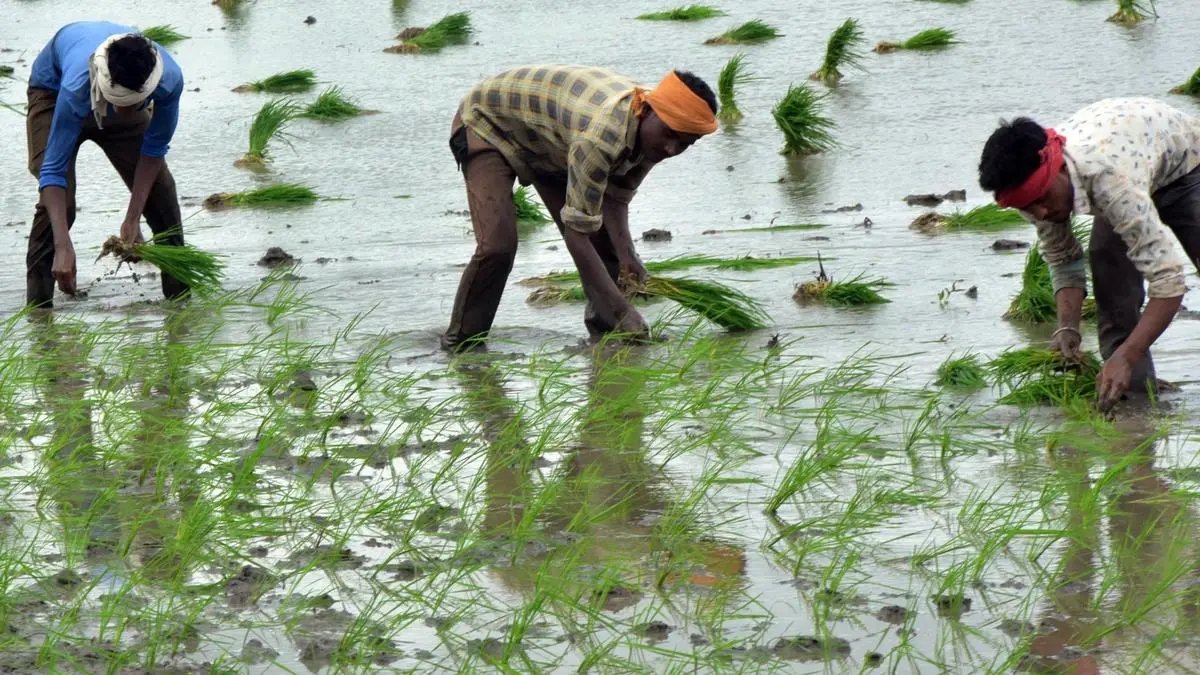
Nearly 85 per cent of the normal area (last 10 years) under rabi crops in India has been completed, with the coverage rising 4.5 per cent year-on-year, data from the Ministry of Agriculture and Farmers’ Welfare showed.
As of December 12, the total acreage was 536.76 lakh hectares (lh) compared with 512.76 a year ago. The normal coverage of all rabi crops is 637.81 lh.
Wheat sowing led the rise, with its area increasing by 6.5 per cent to 275.66 lh against 258.48 lh a year ago. The normal coverage is 312.25 lh.

Progressing well
The ICAR-Institute of Wheat and Barley Research said in a statement that wheat sowing is progressing well, with overall acreage showing an increase. “Post-monsoon moisture has supported good field conditions, although some areas in Punjab and Haryana faced delays due to late paddy harvest and excess rainfall,” it said.
Overall, farmers are completing sowing within the recommended window, and the trend remains positive for the 2025-26 crop season, it said
On the other hand, the Centre’s decision to increase the minimum support price of wheat by ₹160 to ₹2,585 a quintal has helped.
Surplus post-monsoon rainfall has been another positive factor for rabi sowing. For the week-ended December 10, the post-monsoon rainfall was 20 per cent surplus, with all regions getting excess precipitation. The north-west and central parts, however, have received 62 per cent and 39 per cent more precipitation.
Chana up 4%
Sowing in rice increased by 16 per cent, though it is in the early stages. Currently, 12.44 lh have been brought under the crop against 10.64 lh a year ago. (normal 42.93 lh).
With the coverage of most pulses’ crops still trailing, the area has gone up only marginally by 1.5 per cent at 117.11 lh against 115.41 lh a year ago. The area under gram (chana), the main rabi pulses crop, has increased by nearly 4 per cent at 84.91 lh against 81.67 lh a year ago (normal 100.99 lh).
Lentil acreage was higher marginally at 14.6 lh, but the coverage of field pea, kulthi, urad (black matpe at 2.21 lh versus 3.09 lh), moong (0.32 lh vs 0.34 lh) and other pulses was down.
In the case of nutri-cereals, the area under maize (corn) was up by 11.5 per cent at 15.60 lh compared with 13.99 lh a year ago (23.61 lh). The coverage of barley, another important rabi coarse cereal, was up about 5 per cent at 6.78 lh against 647 lh a year ago.
Jowar, bajra down
Sowing in jowar (18.52 lh vs 19.99 lh) and bajra (0.09 lh vs 1.11 lh) was down, but ragi was up (0.66 lh vs 0.48 lh).
Despite prices for oilseeds being lower, and even below the MSP, the area under mustard has gained over 4 per cent at 84.67 lh against 81.16 lh a year ago. However, the coverage topped the normal sowing of 79.17 lh.
The area under groundnut (2.12 lh vs 2.57 lh), sesamum (0.05 lh vs 0.07 lh) and linseed (1.61 lh vs 2.27 lh) dropped. Sunflower (0.34 lh vs 0.30 lh) and safflower (0.73 lh vs 0.56 lh) coverage gained.
While sowing of most crops is set to be completed in the next few days, rice coverage is expected to gather pace over the next few weeks.
Published on December 15, 2025

