

Track electrification in ghat section to boost Mangaluru-Bengaluru rail link
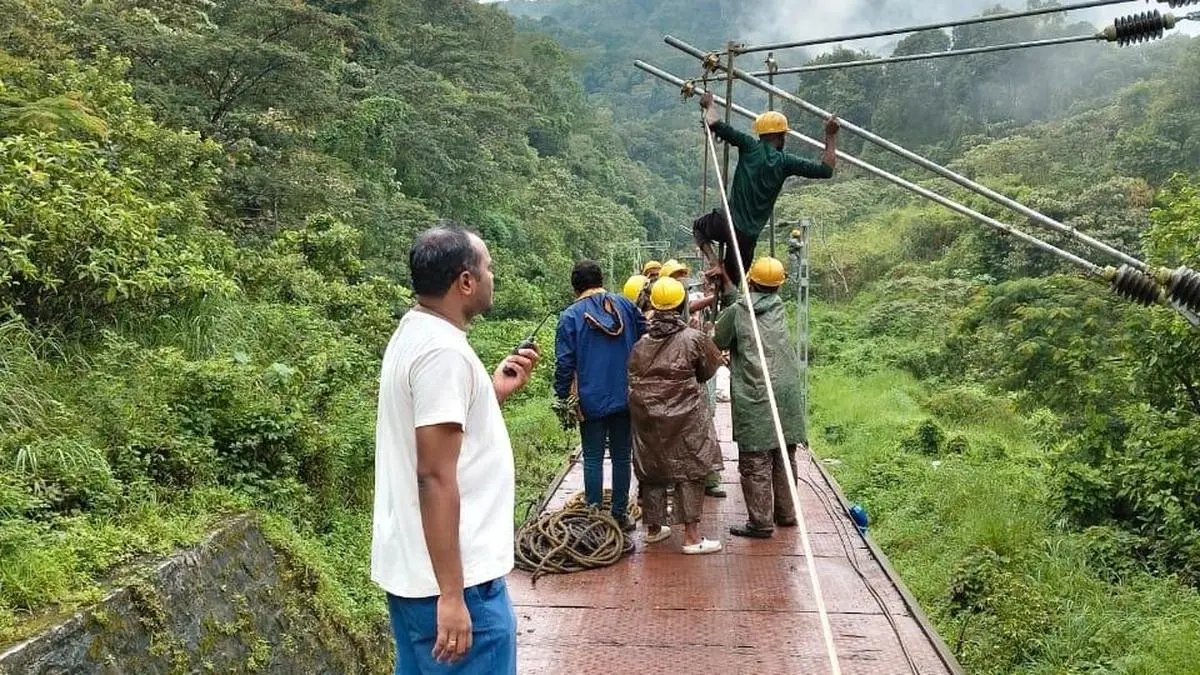

SHARP CURVE AHEAD. Electrification of tracks in the
Sakleshpur-Subramanya Road ghat section
| Photo Credit:
Arranged Photo
The railway network connecting coastal Karnataka with Bengaluru recently received a major boost with the electrification of a 55-km ghat section between Sakleshpur in Hassan district and Subrahmanya Road in Dakshina Kannada district.
Begun in December 2023, the ₹93.55-crore project was completed in 24 months. With a steep 1-in-50 gradient (which means that the track rises by one metre after every 50 m), the route has 57 tunnels, 258 bridges and 108 sharp curves.
Dakshina Kannada Member of Parliament Capt Brijesh Chowta said the railway project’s completion marks a significant progress in meeting a long-pending demand of the region.
Terming the Mangaluru-Bengaluru route as a strategically important corridor for passenger and freight movement, Chowta said the electrification across this difficult terrain enables cleaner, faster and more reliable train operations, improves line capacity and strengthens the foundation for introducing modern high-capacity services.
Railway Minister Ashwini Vaishnaw recently said that the Railways would be able to run Vande Bharat trains on this route to Mangaluru.
N Kumar, an expert from the shipping sector in Mangaluru, said that in the absence of electrification, the Railways required multiple engines to negotiate the steep terrain of the ghat section. This led to an increase in operating costs, fuel usage and turnaround time. He said electrification could help the New Mangalore Port step up its share of rail-bound cargo, such as coal and fertilizers. The port would benefit in terms of resource deployment and railway freight, given the proximity to major hinterland regions in Karnataka.
The project involved the construction of five switching stations and overhead electrification of the entire section. The overhead equipment has been designed for a maximum speed of 120 kmph, with the maximum span between two traction poles limited to 67.5 m to ensure safety and operational reliability.
The execution of the electrification work was complex due to the terrain. Heavy monsoon conditions, frequent landslips, soil erosion and rockfalls impacted work. Materials had to be transported by rail to reach remote and inaccessible sites.
More Like This
Published on January 26, 2026

