


Tech driven modern warfare not cheap, says FM Sitharaman
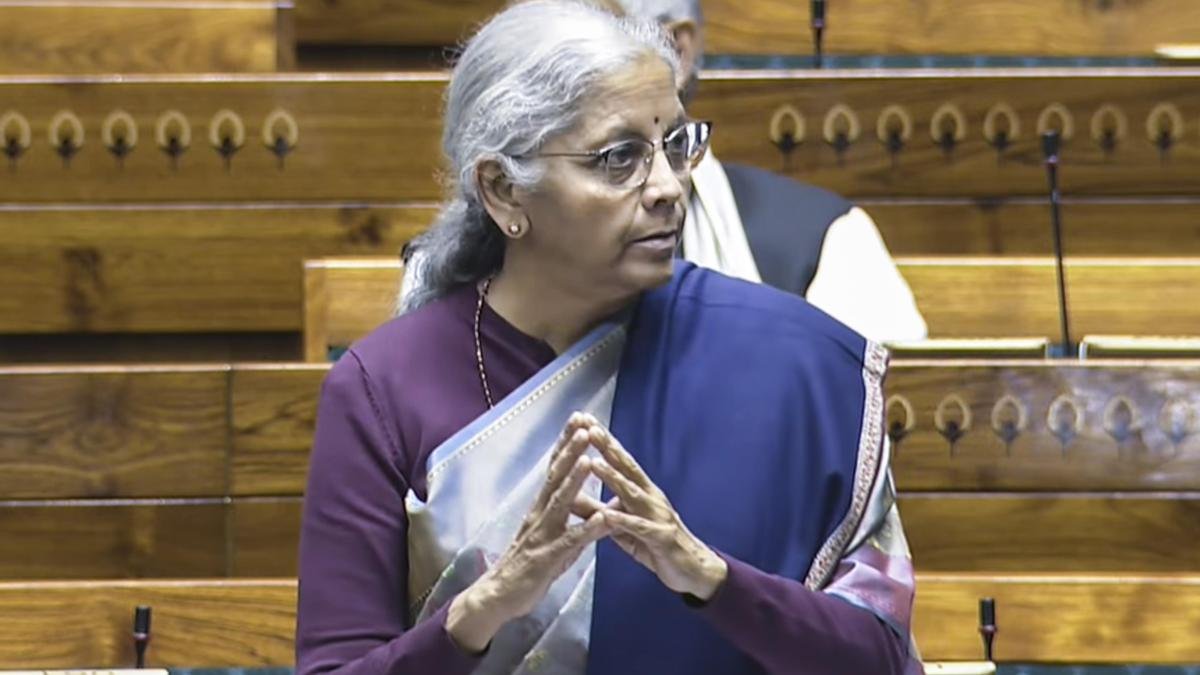

Union Finance Minister Nirmala Sitharaman
| Photo Credit:
–
Finance Minister Nirmala Sitharaman on Friday said that tech driven warfare needs more money. She also reminded to not go back to the days when even arms and ammunition were put on hold due to lack of fund.
She was responding to debate on ‘Health Security se National Security Cess Bill.’ The bill aims to levy cess on Pan Masala over and above GST at 40 per cent. Since, GST mechanism has no provision for cess, so a separate legislation is required. Also, as Compensation Cess Act is going to cease soon, so in order to maintain incidence of GST levy on pan masala, a new law bill has been moved with mobilising fund for health security and national security.
Sitharaman recalled Prime Minister’s statement about Mission Sudarshan Chakra which provides a commitment to build an impenetrable security shield around the nation’s key locations, industrial hubs and public-sector assets. If an adversary dares to breach this shield, our Sudarshan Chakra will decisively neutralise the threat.
national defence
Operation Sindoor demonstrated how seamlessly the three services now operate together. Through the coordinated use of signals intelligence and drones, armed forces neutralised targets without our troops crossing the border – and without a single civilian casualty. “This is the new reality of modern warfare which is technology-driven, precise and reliant on sophisticated systems. However, such systems do not come cheap,” she said.
The Minister also reminded that though public health is a State subject, defence is the Centre’s. “Collecting revenue and ensuring that our nation is well defended is the rightful duty of every government,” she said. She called incidences when for want of resources, Indian soldiers were once left in the Himalayan cold without boots, woollens and sometimes even food. India was able to procure artillery guns for nearly 30 years after the Bofors scandal.
According to the Minister, the Kargil conflict suffered because of this lack of preparedness. Army Generals have stated that, due to budgetary constraints from the early 1990s, the Army was holding only 70–80 per cent of its authorised weapons, ammunition and equipment. “We do not want such a stage to ever return in India,” she said.
The Minister informed that once the GST Compensation Cess comes to an end, the effective tax incidence on pan masala, which is currently about 88 per cent–28 per cent GST plus 60 per cent Compensation Cess – would fall sharply. GST Council approved the proposal to increase the GST rate to 40 per cent which will be effective on a date to be notified.
This will be done once compensation Cess period ends. If tax incidence comes down, it will have unintended consequence of making pan masala considerably more affordable. There was a genuine concern that this unintended outcome of greater affordability of a highly addictive and low-cost demerit good, would not only compromise public-health objectives but also result in a loss of government revenue. “We cannot allow it to become cheaper and also lose revenue,” she said.
Published on December 5, 2025

