


Tax reset 2025 : From new regime slabs and rebates to GST and compliance rules; how India’s tax system changed this year
As 2025 comes to a close, India’s tax framework stands notably altered, shaped by a year-long sequence of reforms that extended well beyond routine income tax changes and into investments, compliance and digital assets.What unfolded over the year was not a single reform but a nuanced reset touching income slabs, rebates, withholding rules, GST rates and the taxation of products ranging from ULIPs to cryptocurrencies. Together, these measures redefined how income is taxed, how mistakes can be corrected, and how emerging financial instruments are regulated.At the centre of the year’s changes was the government’s push to simplify the personal income tax system by strengthening the new tax regime, while simultaneously tightening rules in areas seen as prone to arbitrage or weak oversight.
New tax regime becomes the cornerstone
The most consequential shift in 2025 was the restructuring of personal income tax slabs under the new regime for FY 2025-26, which is also the default option for taxpayers.
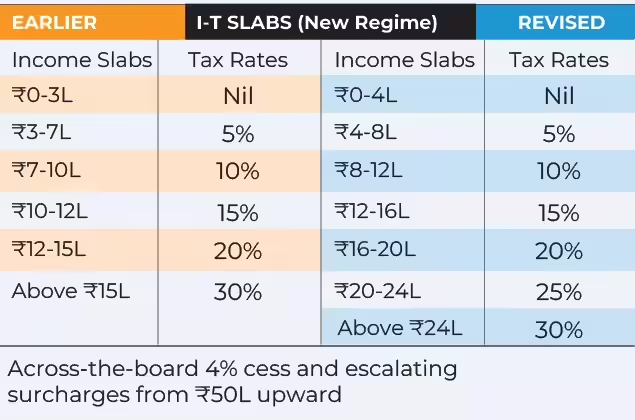
By delaying entry into the highest tax bracket from Rs 15 lakh to Rs 24 lakh, the new structure reduced the tax burden on middle-income earners. Compared with the old regime, which remained unchanged, the redesign translated into annual savings of around Rs 1.10 lakh for certain taxpayers.
Rebate expansion
Alongside slab changes, the enhancement of the Section 87A rebate emerged as one of the year’s most impactful relief measures. Giving the good news to tax payers, the Finance Minister said, “There will be no income tax payable up to income of Rs. 12 lakh (i.e. average income of Rs.1 lakh per month other than special rate income such as capital gains) under the new regime. This limit will be Rs.12.75 lakh for salaried tax payers, due to standard deduction of Rs. 75,000.” Tax rebate is being provided in addition to the benefit due to slab rate reduction in such a manner that there is no tax payable by them, she added.FM Sitharaman said, “The new structure will substantially reduce the taxes of the middle class and leave more money in their hands, boosting household consumption, savings and investment”.
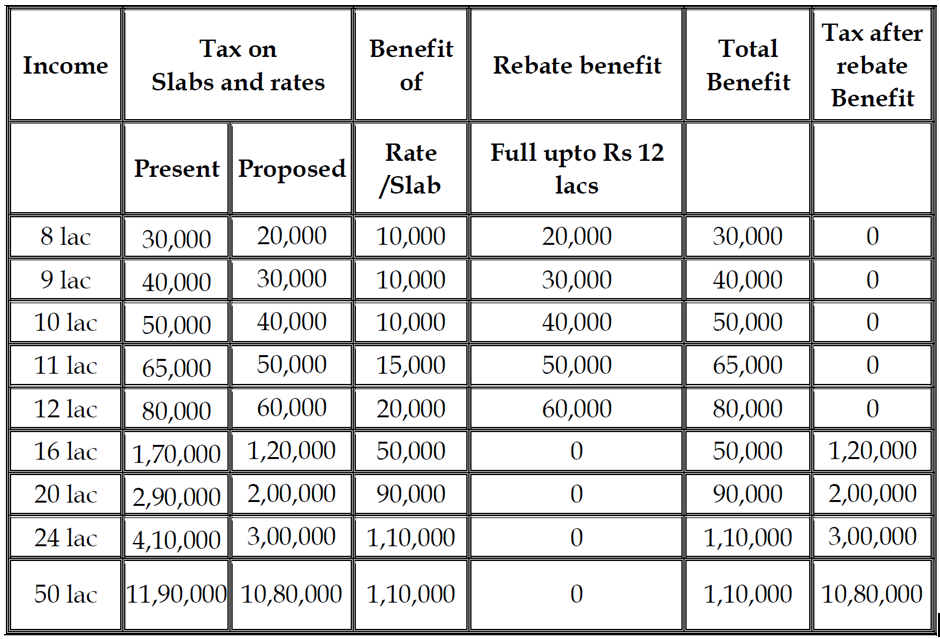
The benefit applies only under the new regime, reinforcing the policy shift towards fewer exemptions and lower headline rates..
Clarity on ULIPs taxation
The Budget also addressed long-standing ambiguity around the taxation of certain unit-linked insurance policies (ULIPs). Clarifying the scope of exemptions under Section 10(10D) of the Income-tax Act, the finance minister said profits from ULIPs that do not qualify for the exemption will be taxed as capital gains.“It is proposed to clarify that the profit and gains from the redemption of unit linked insurance policies to which exemption under section 10(10D) does not apply, shall be charged to tax as capital gains.” FM Nirmala Sitharaman said in the union budget 2025-26.
Crypto regulation tightens
Despite expectations of relief, cryptocurrency taxation remained unchanged through 2025, with a 30% flat tax on virtual digital assets and 1% TDS retained.A new section 285BAA is introduced regarding the obligation to file information on crypto assets. The prescribed reporting entity would be required to furnish information regarding transactions in crypto assets. The amendment is effective from April 1, 2026. An amendment in definition of crypto assets was also introduced through the finance act . The Finance Act 2025 includes any crypto asset that is a digital representation of a value that relies on a cryptographically secured distributed ledger or similar technology to validate and secure transactions within the ambit of a ‘virtual digital asset’ (whether or not already included in the definition of a virtual digital asset). The amendment is effective from the assessment year 2026-27.
GST structure narrowed after years of debate
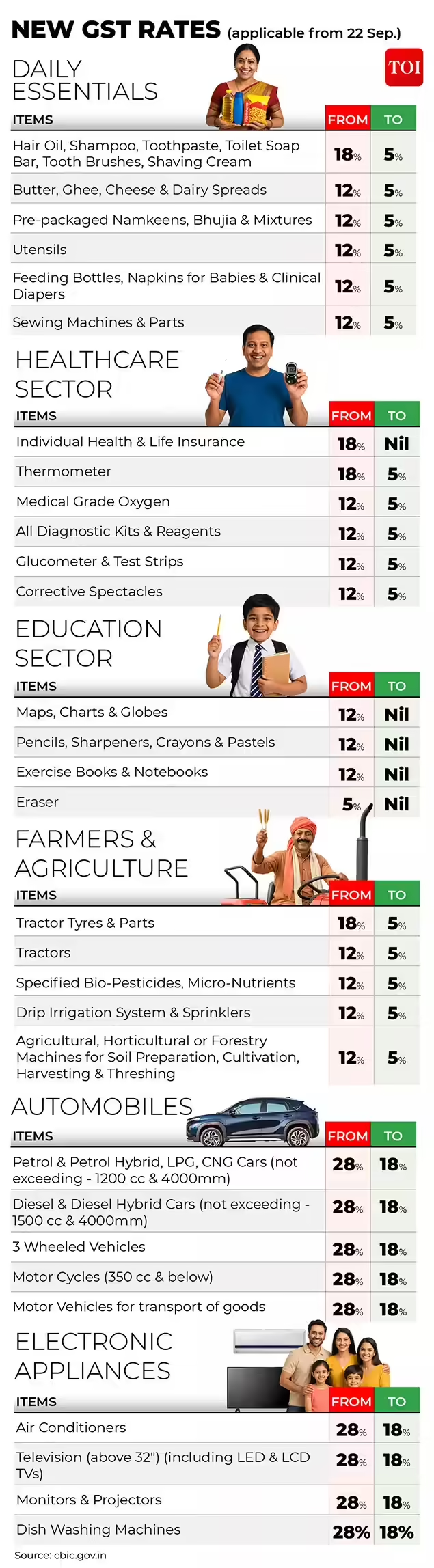
Indirect tax reform returned to the spotlight in September following decisions taken by the 56th meeting of the GST Council. The Council approved a significant rationalisation of GST rates, removing the 12% and 28% standard slabs for most goods and services.Under the revised framework, GST is now centred on two principal slabs — 5% and 18% — for the vast majority of goods and services.However, the government retained a higher demerit levy for select luxury and sin goods, where the effective tax is levied at 40%. These categories include tobacco products, pan masala, certain aerated beverages and other notified demerit goods.
Withholding rules eased to cut friction
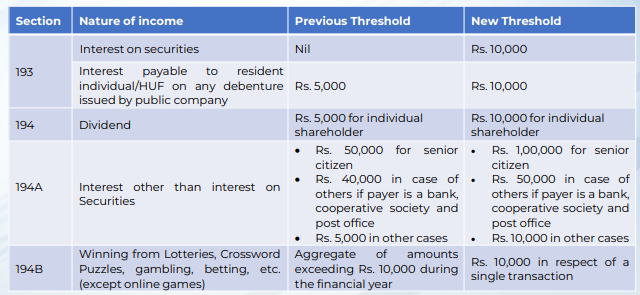
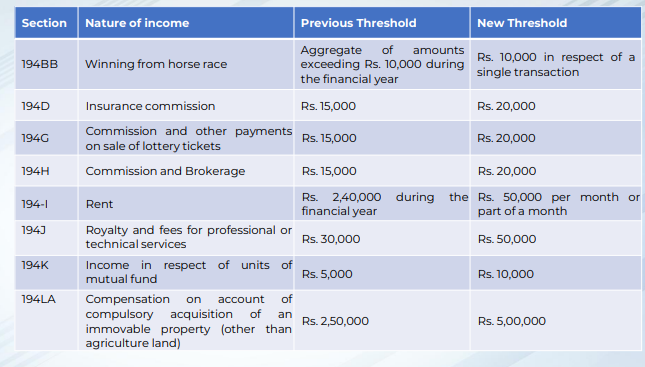
From April 1, 2025, thresholds for TDS were raised across several categories to reduce compliance burden. According to finance act 2025, Sections 206AB and 206CCA, which imposed higher TDS rates on non-filers, were removed entirely.
Foreign remittances get partial relief
Tax collection at source under the Liberalised Remittance Scheme was recalibrated during the year, with the threshold raised from Rs 7 lakh to Rs 10 lakh. “The threshold limit prescribed under Section 206C(1G) for collection of tax at source by authorised dealer from remittance made under Liberalised Remittance Scheme (LRS) & seller of an overseas tour program package is increased from Rs 7 lakhs to Rs. 10 lakhs. It is provided that the authorised dealer shall not collect TCS under Section 206C(1G) on remittances in foreign currency from an education loan obtained under Section 80E(3)(b)” The key highlight of the finance act 2025 noted.
A new income tax law replaces six-decade framework
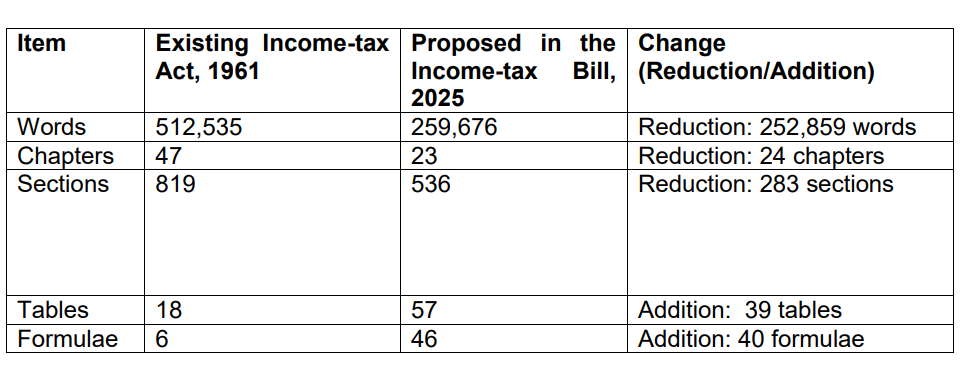
Beyond rate and threshold changes, 2025 also marked a legislative milestone with the enactment of the Income-tax Act, 2025. The new law, comprising 536 sections, will replace the Income-tax Act of 1961 from FY 2026-27.It introduces plain-language drafting, replaces “Previous Year” and “Assessment Year” with a single “Tax Year” concept, and expands faceless processes across assessments and appeals. The stated objective is to simplify compliance and reduce discretionary interaction.
Longer window to fix returns, at a cost
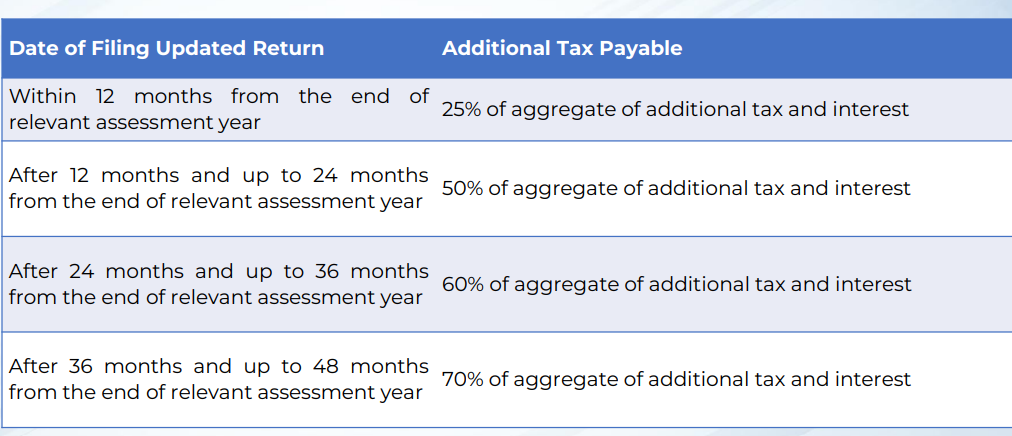
The compliance safety net was widened with the extension of the window for filing updated returns, or ITR-U, to 48 months from 24 months.
Source – Income tax department (Key highlights of finance bill 2025)
A year that reset the tax conversation
Taken together, the changes of 2025 marked a shift in India’s tax philosophy—fewer exemptions, broader bases, longer compliance windows and tighter supervision of complex and digital assets.2025 wasn’t just another budget year—it was the year India rewrote its fiscal contract with citizens. The government bet big on simplification, digitization, and direct relief over indirect benefits.The numbers speak clearly: GST collections doubled in 5 years. Daily essentials got cheaper. And after six decades, India got a new tax law written for the digital age.But the year also brought hard realities. Crypto traders found no respite despite global adoption. And ULIP holders discovered their tax-free wealth accumulation strategy was not continued after the budget announcement.As Finance Minister Nirmala Sitharaman, quoting Telugu poet Shri Gurajada Appa Rao, said: “A country is not just its soil; a country is its people.” The 2025 reforms, for better or worse, reflected a government betting that simpler taxes, clearer rules, and digital efficiency would build a more compliant, consumption-driven, and ultimately prosperous nation.Whether that bet pays off will become clear in 2026—when the Income Tax Act 2025 takes effect, when ULIP taxes kick in, and when taxpayers discover whether “faceless” really means “hassle-free.”For now, 2025 will be remembered as the year India decisively reset both the structure and tone of its tax system.

