

Price of Kashmir’s high-density apple crop declines amid a glut in the market
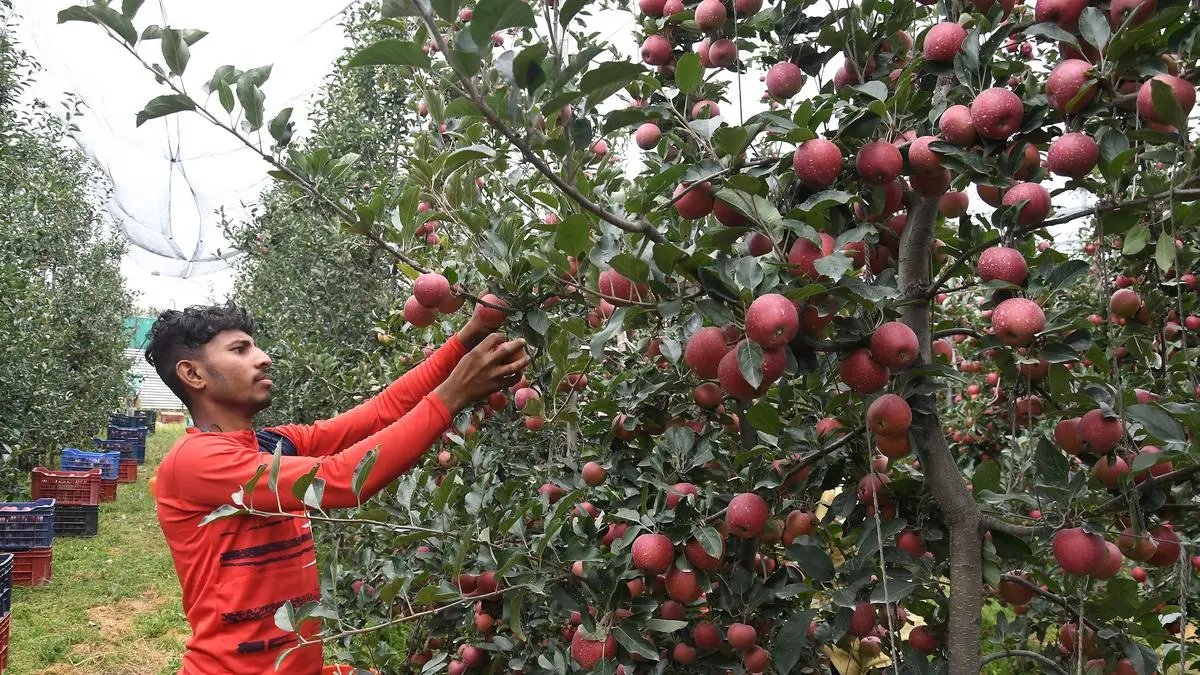
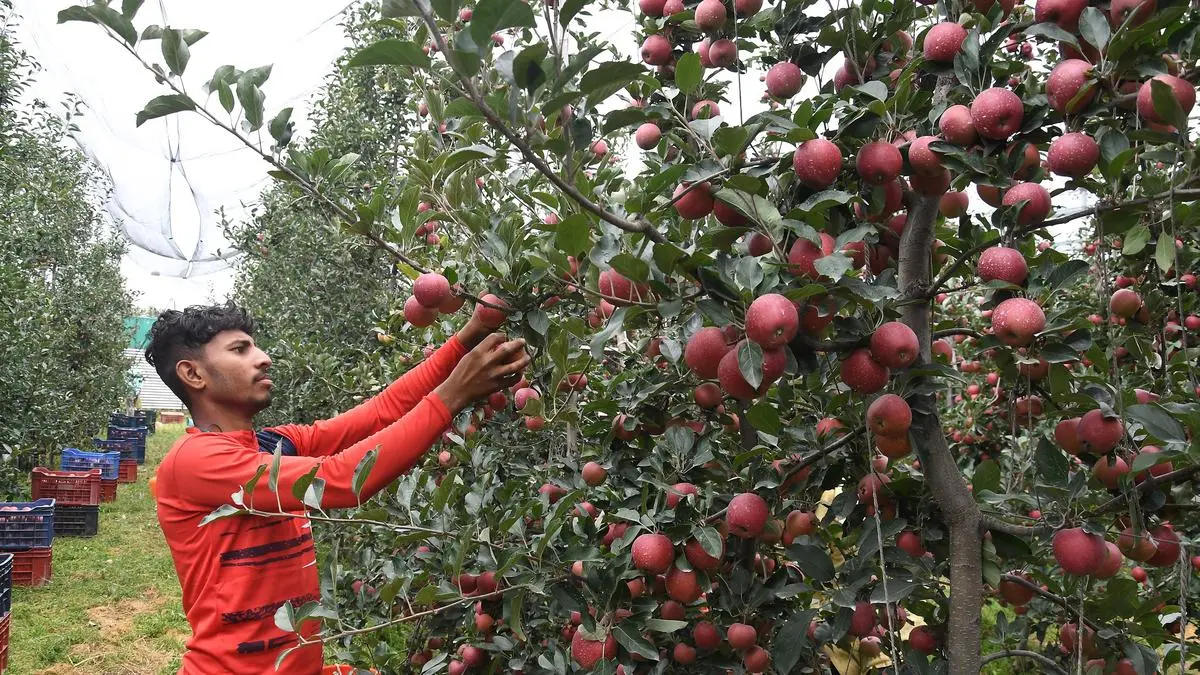
File picture: A farm worker harvests hybrid apples at an orchard in Budgam district of central Kashmir
| Photo Credit:
NISSAR AHMAD
Harvesting of imported apple varieties has begun in Kashmir, but low prices this year have weighed on thousands of growers, who have shifted to high-density cultivation in recent years.
The high-density varieties, largely imported from Italy and the US, include Super Chief, Red Velox, Red Gala, Scarlet Spur II and Gala Redlum. These varieties usually fetch higher prices for their ruby-red colour and strong demand. This year, however, farmers say prices have fallen short of expectations.
“A 10–12 kg carton is selling for ₹750 to ₹1,000 this year, compared with the previous year’s ₹1,300 to ₹1,400,” said Mohammad Ashraf Wani, an apple trader and president of the Fruit Mandi in Shopian.
The mandi receives 30,000 to 40,000 cartons daily, which are shipped to wholesale markets outside the Valley. Overall, Kashmir supplies about 80,000 to 85,000 cartons a day to markets across India.
Traders say prices have slumped as an increasing number of high-density orchards have come into production at the same time, flooding the market with early-harvest varieties.
“Each year around 2 to 3 million new high-density trees are planted across the Valley,” Wani said, adding that the trees begin bearing fruit within two to three years, sharply boosting supply.
He estimated that output this year is 35 per cent to 45 per cent higher than last year.
Kashmir produces over 2.5 to 2.6 million tonnes of apples annually, accounting for 75 per cent of the India’s total output, with around 3.5 million people directly or indirectly relying on the industry for their livelihood.
Over the past few years, farmers have been drawn to high-density apple cultivation as not only do the trees bear fruit within two to three years, the yield per acre is higher than traditional orchards.
The Jammu and Kashmir government aims to bring 5,500 hectares under high-density apple cultivation by 2026 through its Modified High-Density Plantation Scheme, which offers growers a 50 per cent subsidy on costs, according to the horticulture department.
Growers say they are worried about further losses if prices fail to recover later in the season.
“Many farmers had invested heavily in high-density orchards, expecting better returns, but the glut has shaken their confidence,” said Tariq Ahmad, a high-density apple farmer from Pulwama.
Published on August 18, 2025

