
PRavah programme positively impacts over 5 lakh people, says Pernod Ricard India Foundation

Pernod Ricard India Foundation’s PRavah drives integrated, locally tailored and long-term interventions to strengthen water stewardship, sustainable agriculture and rural livelihoods, says company.
Pernod Ricard India Foundation under the PRavah programme positively impacted the lives of over five lakh people across India in 2024-25, according to the company.
PRavah drives integrated, locally tailored and long-term interventions to strengthen water stewardship, sustainable agriculture and rural livelihoods. PRavah is Pernod Ricard India’s unified platform for community development and social impact. It brings together diverse initiatives under a single identity to deliver measurable and scalable outcomes.
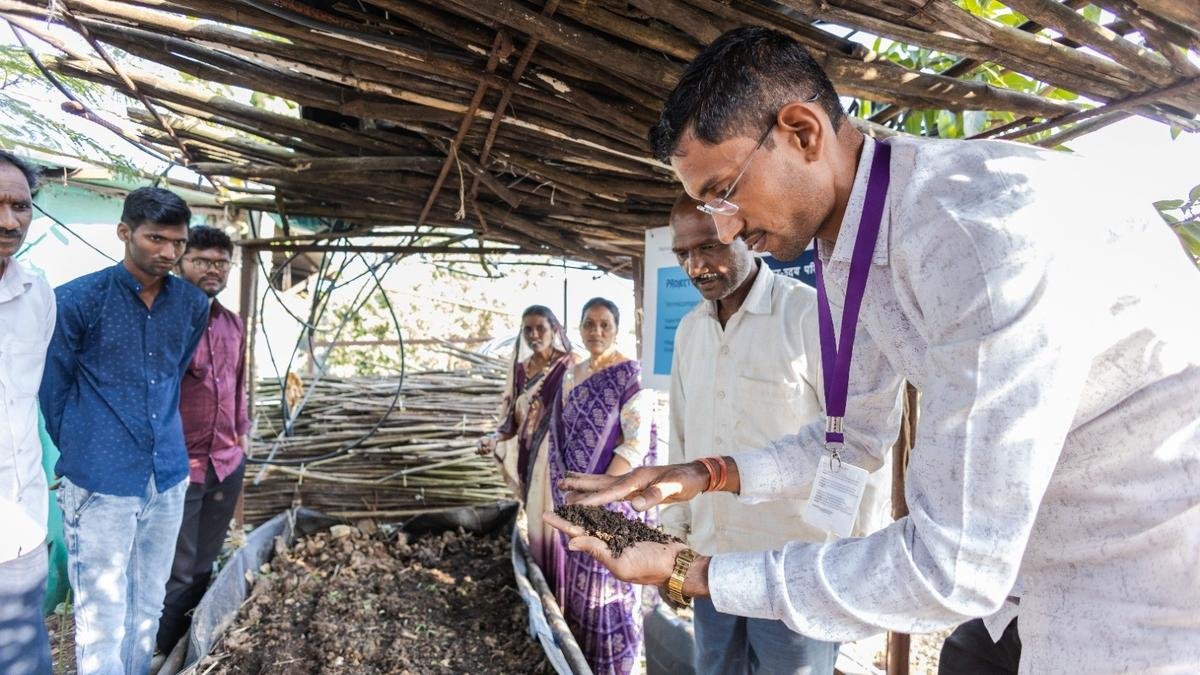
A media statement said that the Foundation’s Water Agriculture and Livelihoods (WAL) framework integrates water security with climate-resilient farming practices and livelihood diversification. During 2024-25, 14 WAL programmes supported 22,430 farmers across 107 villages in eight States, while adding 631 million litres of water harvesting capacity through the creation of 70 water structures.
Addressing inter-connected challenges
PRavah partners with local, mission-based implementation agencies, and design interventions tailored to address specific geographic and socio-economic challenges such as groundwater depletion, declining soil health and market access gaps, ensuring relevance and effectiveness on the ground.
Quoting Gagandeep Sethi, Senior Vice President, Integrated Operations, Sustainability and Responsibility, Pernod Ricard India, the statement said: “PRavah reflects our commitment to meaningful, long-term change in rural India. Anchored in the WAL framework, we address interconnected challenges in water, agriculture and livelihoods while enabling successful models to be adapted and scaled across regions. Our CSR Champions initiative further strengthens employee engagement, fostering shared ownership in building resilient communities.”
In Northern India, WAL-led initiatives respond to groundwater depletion, soil health decline and income vulnerability through targeted initiatives.
Krishak Kranti in Punjab emphasises sustainable agriculture with interventions such as geo-tagged soil testing and micro-irrigation systems, helping farmers improve input efficiency and reduce costs. Gram Uthan in Rajasthan supports climate-resilient cropping and women’s enterprise development. Gram Utkarsh in Kanpur Dehat, Uttar Pradesh, focuses on regenerative agriculture and institutional strengthening.
Women-centric initiative
Sabla, another programme in Uttar Pradesh, is a women-centric initiative that strengthens sustainability and income through diversified cropping and agroecology, enabling farmers to increase individual annual incomes while advancing rural enterprise, it said.
In Western India, PRavah’s programmes address water scarcity, limited productivity and market access, it said.
On Kisan Diwas, PRavah reiterates its commitment to supporting farmers to not only increase productivity but also build resilience, improve livelihoods and catalyse long-term community-led transformation across India, the statement added.
Published on December 22, 2025

