


Oil palm in Telangana: A national lead worth consolidating via timely course correction
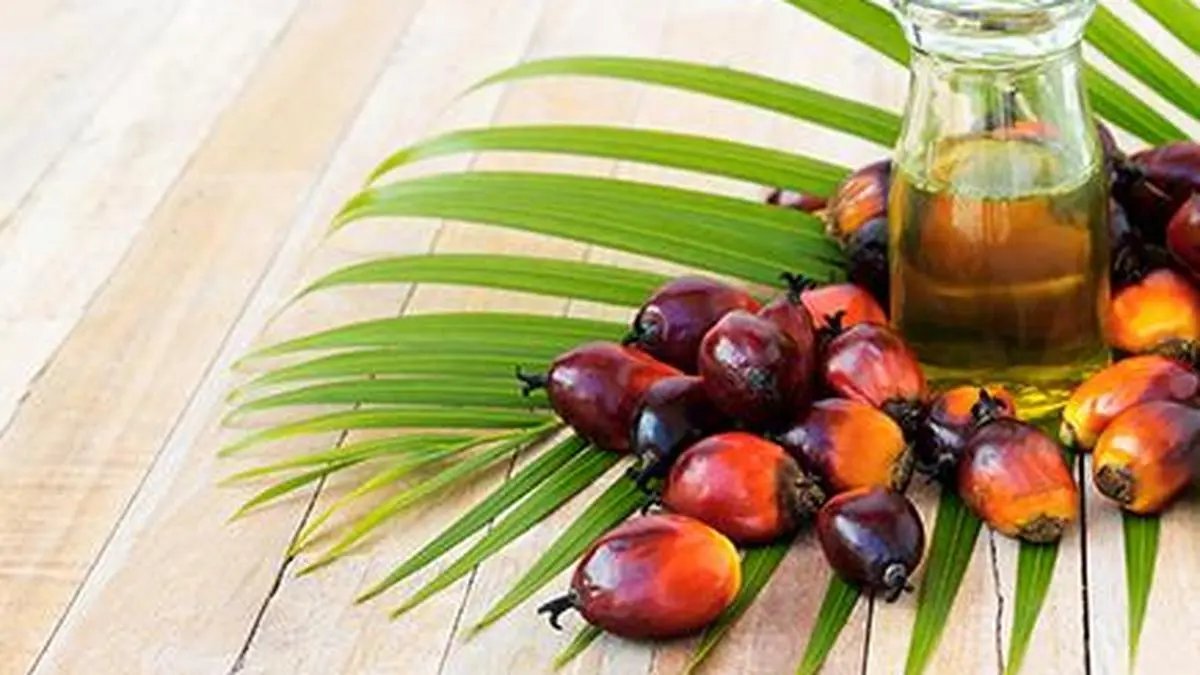
The National Mission on Edible Oils – Oil Palm (NMEO-OP) represents one of India’s most ambitious long-term agricultural reforms, aimed at reducing import dependence, improving farmer incomes, and strengthening domestic edible oil security. Among Indian States, Telangana has emerged as a front-runner in translating this vision into action, laying a strong foundation for oil palm development within a relatively short period.
Since inception, more than one lakh hectares have been brought under oil palm cultivation in Telangana. Even before NMEO-OP formally commenced in FY 2021–22, the State had demonstrated early intent through the efforts of T G OIL FED, Godrej Agrovet Ltd. and Patanjali Foods Ltd., which together developed nearly 18,747 hectares. At present, oil palm operations span 31 districts, with 14 implementing agencies actively engaged. Two oil palm processing mills with a combined crushing capacity of 120 tonnes per hour of Fresh Fruit Bunches (FFB) have been established by T G OIL FED. Telangana has also recorded the highest Oil Extraction Ratio (OER) in the country during the last oil year to the extent of 20 per cent-plus.
With more than 56 per cent of the total planted area under T G OIL FED, Telangana clearly stands out as one of India’s most advanced oil palm States. These achievements reflect strong administrative intent, proactive engagement with stakeholders, and a willingness to take early risks on a long-gestation crop—an effort that deserves recognition at the national level.
Early momentum and emerging reality
Telangana was among the earliest States to operationalise NMEO-OP, with multiple agreements signed during 2021–22. In the first full year of large-scale planting (2022–23), the State achieved nearly two-thirds of its ambitious area expansion target, a notable accomplishment, given the novelty of the crop in many districts.
However, in subsequent years, the pace of expansion moderated. This occurred despite improving FFB prices and continued administrative focus, indicating that oil palm adoption is influenced by factors beyond market prices alone. As a perennial crop with a long economic life, oil palm requires sustained confidence—among farmers, implementing agencies and financial institutions—that policies, institutional arrangements and procurement systems will remain stable over decades.
Farmer economics – risk, return and confidence
Farmers in Telangana operate within a rational economic framework. Seasonal crops such as paddy continue to offer assured procurement, minimum support prices, shorter crop cycles and immediate liquidity, making them appear less risky in the short term.
Oil palm, by contrast, demands patience. Initial investments are higher, gestation is longer, and returns are realised over an extended period. Adoption therefore depends not only on projected profitability, but also on confidence in uninterrupted procurement, processing capacity and policy continuity.
Encouragingly, where this confidence has been sustained, oil palm is already demonstrating strong economic outcomes.
Success stories from the field
Two farmer experiences from Telangana illustrate the real income potential of oil palm when agronomy, irrigation and institutional support come together.
Mr. A. Ramchandra Reddy of Nalgonda district and Mr. P. Ananth Rao of Jangaon district began harvesting commercial yields after the completion of three years of plantation age. Both farmers are currently recording FFB yields of 8 tonne per hectare or more, which is higher than the average yields reported in established oil palm regions of Malaysia and Indonesia at comparable stages.
More importantly, their average net income is around ₹1.0 lakh per hectare per year, even at this early stage of bearing. As plantations mature further, yields and profitability are expected to increase significantly. These outcomes reinforce a critical message: oil palm is not a speculative promise—it is already delivering measurable results for farmers in Telangana.
Such success stories, when communicated consistently, have the potential to strengthen farmer confidence and accelerate adoption across similar agro-climatic zones.
Implementing agencie: Investment with learning curves
Both public and private implementing agencies have made substantial long-term investments in Telangana’s oil palm ecosystem—establishing nurseries, deploying trained manpower, building extension systems, engaging farmers and planning or commissioning processing facilities.
Performance, however, has not been uniform across agencies. Some faced challenges in meeting aggressive expansion targets, aligning nursery production with actual farmer uptake, or commissioning mills within initially projected timelines. These variations are not unusual in large-scale agricultural transitions, particularly for a crop that requires synchronised development of plantations and processing infrastructure.
Importantly, annual target revisions, evolving farmer preferences, irrigation availability and changing ground realities have all influenced outcomes. These factors highlight the importance of realistic, location-specific benchmarks, rather than uniform expectations across districts and agencies.
Government interventions: Corrective intent and sectoral sensitivity
Recent actions by the Government of Telangana to review performance and restructure certain operational arrangements reflect an intent to strengthen implementation and safeguard farmer interests. Judicial directions in legacy cases have also influenced specific decisions.
From a sectoral perspective, however, oil palm’s long-gestation nature calls for calibrated interventions, especially once plantations are established and first harvests are underway. Predictability and continuity are foundational to sustaining farmer and investor confidence.
A consultative approach—grounded in data, regional realities and phased performance evaluation—can help ensure that corrective measures reinforce, rather than disrupt, the momentum already created.
Systemic challenges requiring coordination
Some operational bottlenecks have also contributed to slower expansion. Delays in payments to micro-irrigation providers have affected surveys and new planting, while challenges in liquidation of nursery stock have added financial pressure on operators.
These issues point toward coordination gaps across institutions, rather than failures of individual stakeholders. Oil palm development requires close synchronization between horticulture departments, irrigation agencies, financial institutions, and implementing companies—particularly during expansion phases.
Implications for NMEO-OP
Telangana’s experience holds national significance. As one of the leading oil palm states, its progress—or slowdown—directly influences the overall momentum of NMEO-OP. Early plantations in the state are now entering the yield phase, offering a crucial opportunity to demonstrate income stability and long-term viability to farmers across India.
Any prolonged uncertainty at this stage could dampen expansion just when positive field-level evidence is emerging.
The way forward: Consolidation over correction
The present situation calls not for confrontation, but for consolidation through informed course correction. A comprehensive assessment of cropping economics, irrigation readiness, farmer response, and regional variability can support more nuanced policy decisions.
Reinforcing a partnership-based framework—through transparent benchmarks, differentiated timelines, and structured dialogue—will help restore confidence among farmers and implementing agencies alike.
Above all, stability remains the most powerful incentive for a perennial crop like oil palm.
Conclusion
Telangana’s oil palm programme is not facing failure; it is entering a phase that demands refinement. The state has already built a strong foundation—demonstrated by rapid early expansion, robust infrastructure creation, and compelling farmer success stories.
With timely, consultative adjustments and continued policy stability, Telangana can not only consolidate its leadership but also serve as a national model for long-gestation agricultural reforms under NMEO-OP. The choices made now will shape both the future of oil palm in the state and India’s broader journey toward edible oil self-reliance.
(The author is former CEO-Oil Palm Plantation, Godrej Agrovet Ltd. & Consultant – Palm Oil Production and Plantation Development, Calcutta, West Bengal. Views are personal.)
Published on January 24, 2026

