

No. of FPOs up, but require financial support, handholding: Report
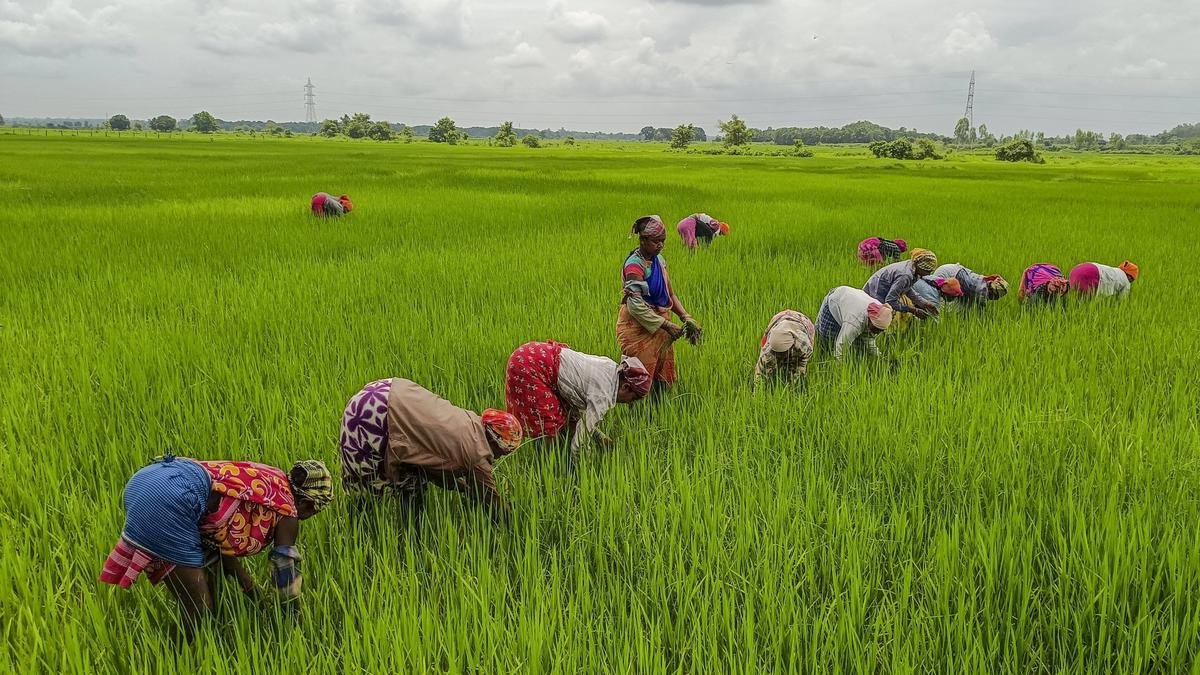
With over 44,000 registered Farmer Producer Organisations (FPOs), the FPO ecosystem has come of age as farmers from both the developed and underdeveloped areas of Bharat join hands to discover better value for their produce and services. They have succeeded in empowering farmers by giving them bargaining power as they give them the power of volumes.
However, everything is not rosy, as most of them face numerous challenges, which include lack of skilled human resources, institutional credit and equity capital, which is required to give muscle to the FPOs.
FPOs evolved over the last 20 years with digital technologies beginning to increase the efficiencies and agri-tech startups providing several services that enhance production and distribution.
“Some point to stories of failed or struggling FPOs, or even the hundreds that closed down their operations. However, remember that failures do occur across various sectors. It is not something unique to the FPOs,” Parvesh Sharma, Chairperson (Steering Committee) of the National Association for Farmer Producer Organisations (NAFPO), said.
The State of the Sector Report 2025 – on FPOs in India, which was released recently at the FPO Conclave organised by the Nabard and Samunnati, captured the challenges and opportunities for FPOs.
The 10,000-FPO scheme announced by the Centre in 2020 successfully enrolled 10,099 FPOs as it offered policy support and institutional support from organisations like Nabard and NAFED.
While Samunnati helped finance ₹3,272 crore to 3,603 FPOs, Nabkisan Finance Ltd (an NBFC promoted by the Nabard) supported over 1,700 FPOs.
“The FPO ecosystem requires a two-pronged approach. One, to strengthen FPOs to help them become institutions. Second, to develop institutional mechanisms to ensure that FPOs reach a stage of organisational stability,” the report said.
Spread of FPOs
However, the distribution of FPOs is not uniform across the country. About one-third of all FPOs are housed in Maharashtra, followed by Uttar Pradesh with 6,524. This indicates that the FPO movement has not gained traction evenly across the country.
Low levels of equity capital is a major challenge that FPOs are facing. “The total number of farmer producer companies with paid-up capital exceeding ₹15 lakh is only 387,” the report pointed out.
This triggered a debate among some FPO leaders at the Conclave. Vilas Shinde, Chairman and Managing Director of Sahyadri Farms, felt that the farmers should seriously think about contributing to the equity capital. “They should treat it as part of the investment on their farm. The collectives can use this capital in building infrastructure, which helps them generate additional income,” he said.
The report pointed out that a significant number of FPOs remained inactive post-registration. Common causes include weak governance, inadequate capital, or the absence of business avenues.
“Filing of returns, conducting annual general meetings, and maintaining records remain a challenge. Many FPOs lack trained staff or support systems for ongoing compliance.
Published on September 9, 2025

