

New coffee varieties to reach growers in shorter timeframe, says CCRI director M Senthilkumar
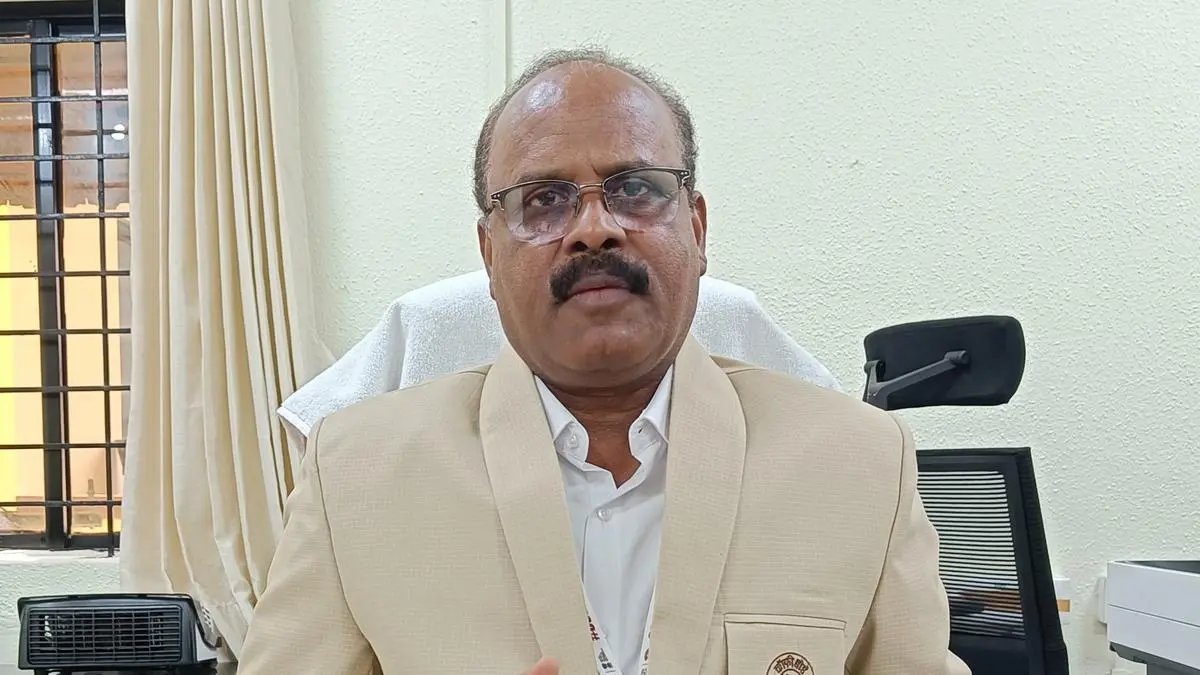

Dr M Senthilkumar, Director of Research, Central Coffee Research Institute, Balehonnur
The Central Coffee Research Institute (CCRI) at Balehonnur in Chikamagaluru district, which is in its Centenary year, is the third oldest research institute in the world focussed on coffee after the one in Indonesia and Uganda. Drawing on one the largest coffee germplasm repositories in the world, the institute is developing new varieties aimed at combining climate resilience with yield stability and improved cup quality, says M Senthilkumar, Director of Research, CCRI, in an interaction with businessline. Interview. Edited excerpts:
What are the top research priorities for CCRI today considering that growers are facing increasing challenges such as climate change and declining yields?
Over the years, CCRI has released around 13 Arabica and three Robusta varieties, underscoring its long-standing commitment to varietal improvement. As part of its centenary celebrations, the institute introduced two new Arabica varieties designed to address key challenges faced by growers.
The first, CCRI-Suraksha (S.4595), is resistant to the white stem borer—one of the most destructive pests in Arabica coffee. Multi-location trials across coffee-growing regions recorded zero infestation, and even in high-pressure WSB zones, Suraksha’s infestation levels did not exceed 10%. Although the bean size is smaller than Chandragiri (the dominant variety), its major advantage lies in sharply reduced production costs, as growers can minimise chemical sprays required for WSB control.
The second variety, CCRI-Shatabdi (S.5086), is a hybrid currently undergoing stabilisation for yield and other desirable traits. Over time, it is expected to be suitable for seed-based propagation.
Climate resilience is a major research priority for CCRI. While climate change poses significant risks to coffee cultivation globally, India is relatively better placed, with its two-tier shade system providing a natural buffer against rising temperatures. India also grows both Arabica and Robusta, each with distinct climatic and soil requirements, offering an added degree of resilience.
To prepare for future challenges, CCRI taps into one of the world’s largest coffee germplasm repositories, giving breeders access to a broad genetic base. Breeding teams are using this resource to develop climate-resilient varieties through extensive crossing and selection. Complementing this work, physiology and agronomy teams are developing practical strategies to help farmers manage drought, moisture stress and erratic rainfall. The broader goal is to deliver varieties that pair high yields with superior cup quality.
Reducing labour dependence—especially during harvesting—is another key focus area. CCRI is collaborating with institutions such as IIT Roorkee and the Central Institute for Agricultural Engineering, Bhopal, to develop harvesting aids, fertiliser spreaders and other equipment suited to coffee’s challenging terrain. The institute is also exploring drone-based spraying solutions customised for shaded plantations, where conventional drones face operational limitations.
Through integrated efforts spanning breeding, agronomy, mechanisation and collaborative research, CCRI aims to lower production costs, build resilience, and ensure the long-term sustainability of Indian coffee cultivation.
What are the new technologies that CCRI is looking at to accelerate the research process?
Actually, we have a dedicated molecular lab and there’s a dedicated team working on technologies such as gene mapping and gene editing. All these works are being undertaken and also incorporating the desired genes and tissue culture is also a component. As you are aware, coffee is a tree crop and so tree breeding always is little tough when compared to breeding annual crops. In tree breeding there is always a possibility of cross pollination because pollination mechanism takes place through various modes. We have recently shifted our biotechnology centre from Mysore to Chettalli and a dedicated team is working on the various aspects of molecular techniques. We are also tying up with Indian Council for Agriculture Research and other institutes for R&D initiatives.
Could you elaborate on the nature of CCRI collaboration with the other institutes?
We are currently collaborating with ISRO on a carbon-sequestration study in coffee. A flux tower has been installed at CCRI to measure carbon uptake in coffee plantations. The study began two years ago, and once the three-year term is completed, we will be able to present findings on the role of coffee plantations in carbon sequestration.
We also have active partnerships with IIT Roorkee and the Central Institute for Agricultural Engineering to develop a coffee harvester suited to India’s terrain. Internationally, we collaborate with World Coffee Research for germplasm exchange, and we are part of a Nestlé-supported programme to evaluate multiple Robusta lines. Superior performers from these trials will be made available to Indian growers.
CCRI has also introduced clonal planting material, which we are promoting vigorously. Last year alone, we conducted 7–8 training programmes in farmers’ fields and developed a strong pool of master trainers. We currently produce about 1 lakh clonal plants annually, and plan to scale up significantly. Additionally, our partnership with Jain Irrigation supports the expansion of elite planting material, facilitating faster adoption by growers.
After the release of Chandragiri in 2007, it has taken almost 18 years for CCRI to release new variety. Any steps being taken to shrink the long development timeline?
Substantial progress has already been made in coffee breeding, and a significant work is still ongoing. Compared to annual crops, tree-crop breeding is inherently complex and time-consuming. Even though Arabica coffee is self-pollinated, there is always the possibility of cross-pollination, and integrating multiple desirable traits into a single variety is a long, incremental process. Breeding is not about introducing one trait in isolation. A new variety must combine higher yield with resistance to diseases and pests, while also meeting quality expectations. Integrating these multiple characteristics cannot be achieved in a single step; each trait has to be stabilised, evaluated and validated over several years and across locations. As a result, a variety that performs exceptionally well in one parameter may fall short in another.
For instance, a high-yielding line may prove inferior in cup quality, which would significantly limit its acceptability among growers and buyers alike. Since the release of Chandragiri, extensive additional research has been carried out, and a large number of promising materials are already under advanced field evaluation.
Given the volume of ongoing trials and the integration of newer tools and methodologies, future variety releases are unlikely to require such long development cycles. With several advanced lines already in the field pipeline, the next generation of coffee varieties is expected to reach farmers in a significantly shorter time-frame, without compromising on yield, resilience or quality.
Published on December 23, 2025

