


More illegal Indian peanut shipments entering Indonesia, says trade
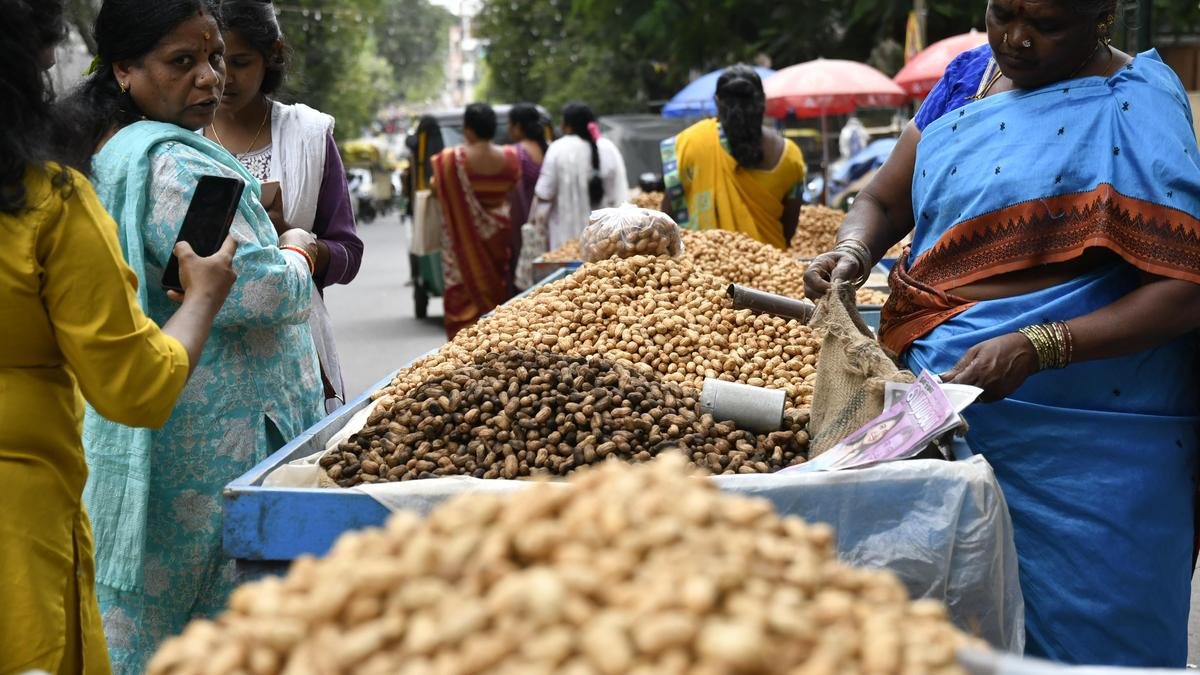

Data accessed by businessline showed that groundnut exports, which had never been above 6,500 tonnes until September 2025, began rising from October.
| Photo Credit:
ALLEN EGENUSE J
Though Indonesia has curtailed imports of groundnuts (peanuts) from India, the curbs are being overcome by illegal shipments via Port Klang in Malaysia.
Global trade sources said that at least 90 per cent of groundnuts imported into Indonesia were done illegally after Jakarta lifted the suspension on Indian groundnut imports late in November.
In related developments, the sources said Thailand has banned groundnut imports from India (since June 2025), while China has issued a mandate to fellow ASEAN (Association of South-East Asian Nations) countries to tighten groundnut quality and buy more of its produce.
“In November, over 825 containers, a huge volume, moved via Dumai illegally, and only 80 containers moved via the official port,” said a Singapore-based trade source.
Popular route
According to sources, the popular route for illegal shipments of the groundnuts is Port Klang in Malaysia. “Between India and Malaysia, there are no strict rules, especially when Port Klang is described as a transit port. From there, barge and small boat operators take the goods in shipments of 20 containers to different places, including Dumai port, which is a major smuggling port of Indonesia,” the trade source said.
“The Port Klang-Dumai route is also accessed for illegal smuggling of rice exports from India. These are giving way to hawala trading,” said an Indian trade source. From Dumai, the consignments are taken to places such as Jakarta or Surabaya by road.
The shipments are initially sent to Malaysia in the name of an importer near Port Klang. “After landing, the consignments change hands. The deal is done through cash,” said another trading source.
Up from September
No trade invoices or purchase bills are offered as the traceability of the consignments gets lost once they are unloaded at Port Klang. “This results in all-cash dealing on both sides,” the source said.
Also, the second-level buyers in Indonesia deal in cash. They prefer not to get invoices. However, food factories cannot follow this route as they are large-scale establishments and cannot avail themselves of tax benefits in that case.
Data accessed by businessline showed that groundnut exports, which had never been above 6,500 tonnes until September 2025, began rising from October.
“Imports to Malaysia surged in October to 8,300 tonnes (6,533 tonnes in October 2024), 15,800 tonnes in November (6,000 tonnes) and 15,000 tonnes in December (3,625 tonnes). This is a clear indication of something illegal,” said a trade source.
Malaysia’s annual imports
Malaysia’s annual groundnut imports are around 55,000 tonnes. “In December, groundnut exports to Indonesia were 20 full containers officially, whereas illegal shipments were 225 full containers,” said the Singapore-based source.
The illegal imports of groundnuts have dragged their domestic prices to 30,000-32,000 Indonesian rupiah a kg from 35,000 rupiah. (1 Indonesian rupiah = ₹1). The current prices include the 5,000 rupiah that smugglers and boat operators charge buyers.
Tax policemen in Indonesia are actively scrutinising Dumai cargoes. However, traders can “manage” them with financial considerations, the sources said.
Wondering why Indian authorities were not awake to the development, trade sources said an exporter was banned on Monday as the aflatoxin levels were found to be high in the shipments from India to Indonesia.
Rain-induced problem
One of the problems this year with Indian groundnuts is the kharif crop being affected by rain during the drying period, particularly September-October. This led to higher levels of aflatoxins.
“Indonesia’s aflatoxin limit is 15 parts per billion (PPB), against India’s 20 PPB. On the other hand, the aflatoxin in Indian groundnuts this year is at least 10 times more than the permitted levels in India,” said the Singapore-based trade source. Even the produce from Tamil Nadu and Andhra Pradesh does not meet the norms.
On the other hand, big groundnut candy producers in South-East Asia are short of supplies. Some of them, who need at least 100 tonnes a day, have hardly a couple of containers (40 tonnes) with them as stocks, said the second trade source.
Beijing’s fiat
The Singapore-based trade source said the situation turned worrisome for India after China sent a mandate to its ASEAN partners. “It told them to tighten quality control on groundnuts. It also asked them to source more from its growers,” the source said.
Following this, only a handful of Indian exporters have received the Thai government’s approval to ship groundnuts to Bangkok. In the case of Indonesia, the list of exporters has been pruned to about 75.
The Singapore trade source said Indonesia has come up with norms despite having “poor inspection facilities”. “It has come up with tough traceability regulations that even the European Union does not stipulate. China is playing a key role in pushing its ASEAN partners to source more from non-partners,” the source said.
Published on January 13, 2026

