

Maharashtra, Tamil Nadu top performers in Niti Aayog’s export preparedness index 2024


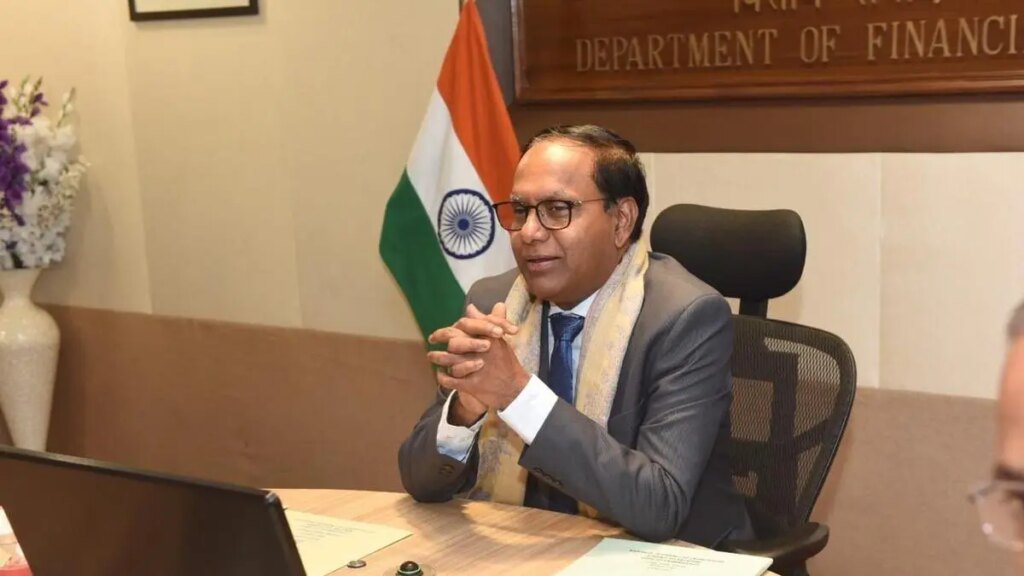
Subrahmanyam said that as India expanded its network of free trade and economic partnership agreements, the importance of strong domestic foundations was growing
| Photo Credit:
Getty Images
Maharashtra has topped the Niti Aayog’s Export Preparedness Index (2024) in the large States category followed by Tamil Nadu and Gujarat in the second and third places respectively.
Uttarakhand, Jammu & Kashmir and Nagaland bagged the top three spots among small States, North East and Union Territories. The report was released by Niti Aayog CEO B V R Subrahmanyam on Wednesday.
EPI 2024 assesses the export capabilities (performance and readiness) and potential of Indian States and Union Territories covering the period FY22-FY24 and has been prepared with the support of Deloitte, the report stated.
“The index is aimed at assessing the readiness of States in terms of their export potential and performance. States and UTs were evaluated using a comprehensive framework comprising 70 parameters across four pillars and13 sub pillars..,” it noted.
It uses a consistent, data-driven approach to evaluate multiple factors, including export policies, business environment, quality of infrastructure, and export outcomes. Data is collected from both State and Central government sources and each indicator is assigned a weight based on its importance.
Other large States classified as `leaders’ featuring in the top eight included UP, AP, Karnataka, Punjab and Telangana, while MP, Haryana, Kerala and WB were ranked lower and classified as `challengers’.
The large States that ranked lowest and classified as `aspirers’ included Odisha, Chhattisgarh, Rajasthan, Bihar and Jharkhand.
Among smaller States and UTs, those classified as `leaders’ apart from the top three also included Dadra and Nagar Haveli & Daman and Diu, Goa, Tripura, Assam, Puducherry and Chandigarh.
Delhi was ranked 12th and placed in the ‘challenger’ class together with Meghalaya, Ladakh, Himachal Pradesh, Sikkim and Arunachal Pradesh.
Subrahmanyam said that as India expanded its network of free trade and economic partnership agreements, the importance of strong domestic foundations was growing.
“For States, this means fostering ecosystems that can respond to new opportunities, align with global standards, and build competitiveness across districts,” he said.
Published on January 14, 2026

