


Govt proposes double sided closed auction as bidding mechanism for Coal Exchange
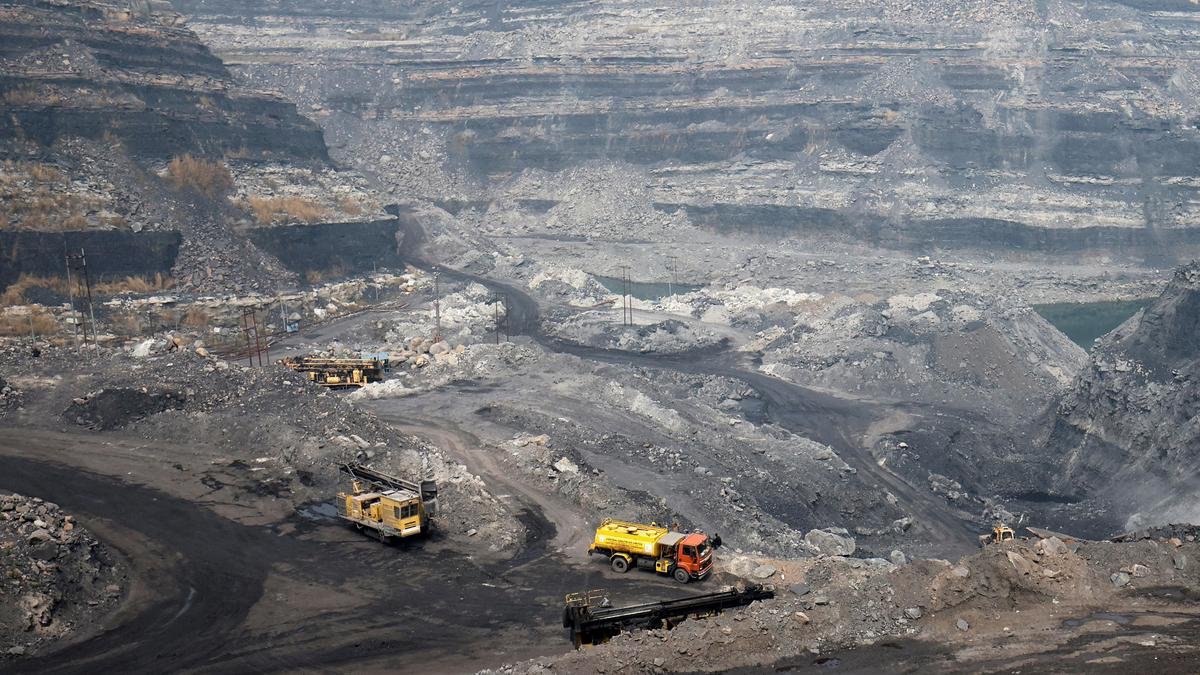

Coal exchange is a mineral exchange where buyers and sellers of the dry fuel transact, trade and enter in to contract on an online platform, which will be regulated by the Coal Controller Organisation (COO)
| Photo Credit:
REUTERS
The government has proposed the national coal exchange will adopt a double sided closed auction bidding mechanism for price discovery on the platform with the aim to maximise economic surplus.
The proposal forms part of the revised draft Coal Exchange Rules, 2025. The first draft rules were issued in September this year. The Ministry has urged stakeholders to share their responses on the revised draft rules by January 13, 2026.
“The bidding mechanism shall be a double sided closed bid auction. The bidding mechanism and price discovery mechanism shall be done in accordance with the mechanism approved by the Authority (Regulator) from time to time, based on the proposal of the coal exchange,” the Coal Ministry has proposed.
The price discovery mechanism shall adopt the principle of maximisation of economic surplus (sum of buyer surplus and seller surplus), taking into account all bid types, it added.
Coal exchange is a mineral exchange where buyers and sellers of the dry fuel transact, trade and enter in to contract on an online platform, which will be regulated by the Coal Controller Organisation (COO).
The regulator will also register coal exchanges, including conducting market oversight and surveillance of their activities. It will prepare detailed regulations for market oversight and surveillance over the activities of the exchanges to ensure compliance and to check market integrity—prevention of cartelisation, insider trading, circular trading, market manipulation, etc.
Market oversight
The regulator (CCO) will work on detecting and preventing market manipulation, insider trading, cartelisation and abuse of dominant position by any market participant.
The regulator will also ensure that market participants have confidence in the integrity and fairness of the exchange and will also ensure that prices are discovered in a transparent and competitive manner, the revised draft norms said.
The market oversight includes procedure for registration of market participants; mechanism for collecting data from these participants; details of participants or any other entities who shall furnish information; and measures to prevent any misuse of or unauthorised access to the information furnished by these participants.
It will also conduct analytics and market surveillance based on the data furnished by the market participants.
Rationale for an exchange
The creation of an alternative market, away from the dominance of the State-controlled mining PSUs, is critical for a mature coal trading platform that is open, transparent and real time.
The government aims to overhaul the decades-old production and supply structure with greater access to commercial mines through coal exchanges that will eventually offer the dry fuel on an on-demand basis to consuming industries, particularly MSMEs.
The exchange can transform India’s old coal sales model from a ‘One-to-Many’ to ‘Many-to-Many’ model.
“With increased availability of domestic coal in the country, it is envisaged that there would be a paradigm shift towards a surplus coal scenario and resultantly the coal sales scenario is expected to undergo a major change from the existing mechanisms of coal sales channels, necessitating a major market reform backed by a Regulatory mechanism,” the Ministry emphasised while releasing the draft norms.
Therefore, in the scenario of increased availability of domestic coal in the country, further reforms are being carried out in the coal sector with focus on promoting competitive markets for sale of coal, and thus, the Ministry proposes to establish Coal Exchange(s).
Published on December 23, 2025

