

Allow import of soya, maize to promote egg exports: Poultry industry
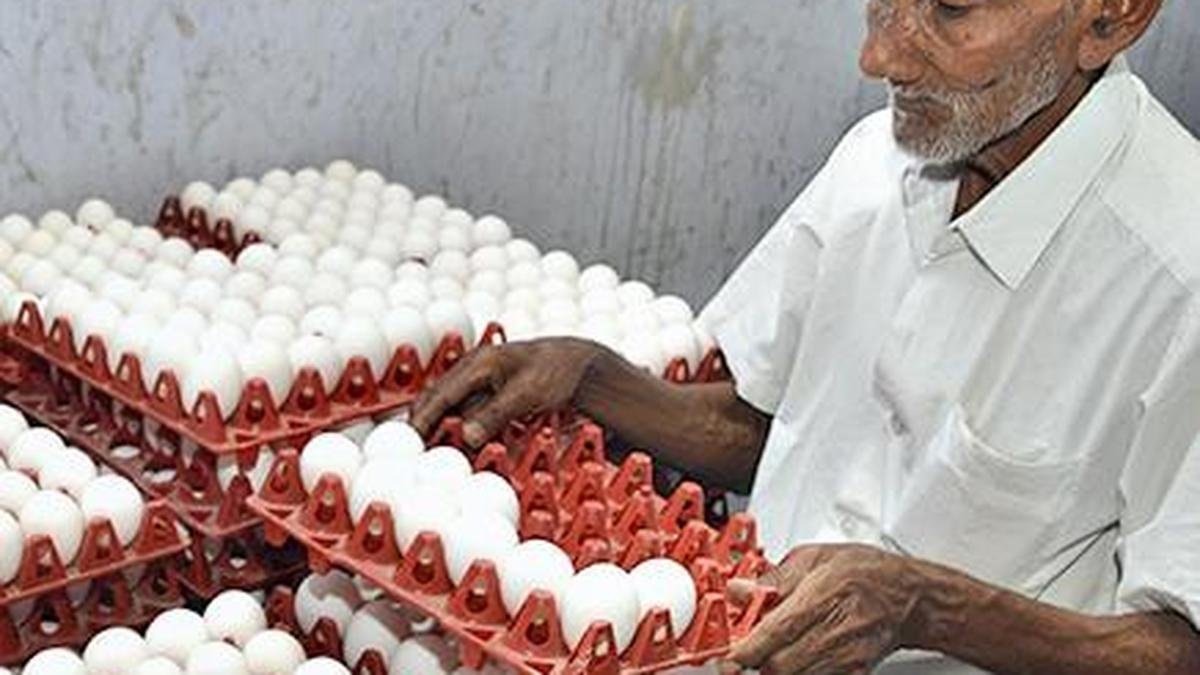
The Indian egg story is a paradox: feed costs, which account for up to 70 per cent of egg production costs, are among the highest in the world. Domestic maize prices are over 35 per cent of global prices due to competition from the ethanol industry. Yet, egg prices in the country are among the lowest globally.
The poultry industry wants the Government to restrict imports of soya to bring down the cost of egg production. This would help them tap into the huge export opportunity, including demand from countries such as Japan, the US, Vietnam, and several African countries.
Suresh Chitturi, Managing Director of Srinivasa Farms and former President of the International Egg Commission (IEC), said that the price of maize in the country was among the highest at ₹23 a kg, compared with ₹15.50 a kg in the US.
“Farmers receive about ₹12 per egg, while the retail price is ₹30 in the US. The gap is much narrower in India with farmers receiving about ₹4.75 for an egg that retails at ₹6 (before the recent price increase),” he said.
Currently, neighbouring countries like Malaysia, Thailand, Indonesia, and Sri Lanka have production costs exceeding ₹8. This demonstrates how efficiently the Indian poultry industry operates despite higher raw material costs and its vital contribution to the Indian economy and public health.
Divya Kumar Gulati, Chairman, CLFMA of India, felt that the egg farmers’ margins can only improve if the feed policy is aligned with ground realities.
“The feed manufacturers association believes India needs a calibrated, trigger-based maize import mechanism that activates during periods of supply stress, along with a clear feed-first principle within the ethanol blending programme to ensure livestock and poultry needs are met before fuel use,” he felt.
“Supporting farmers through feed cost stabilisation, not retail price controls, is the most sustainable way to protect livelihoods while keeping eggs affordable,” he said.
Uday Singh, President of the Indian Poultry Equipment Manufacturers’ Association (IPEMA) and representative of Vijayraj Poultry, pointed out that the per-acre yields of feed crops had not increased over the years. “Either we need to increase the yields significantly or allow imports so that the feed costs are lowered,” he said.
Published on January 16, 2026

