

Renewables help India save ₹4 lakh crore in fossil fuel & pollution costs in 2024
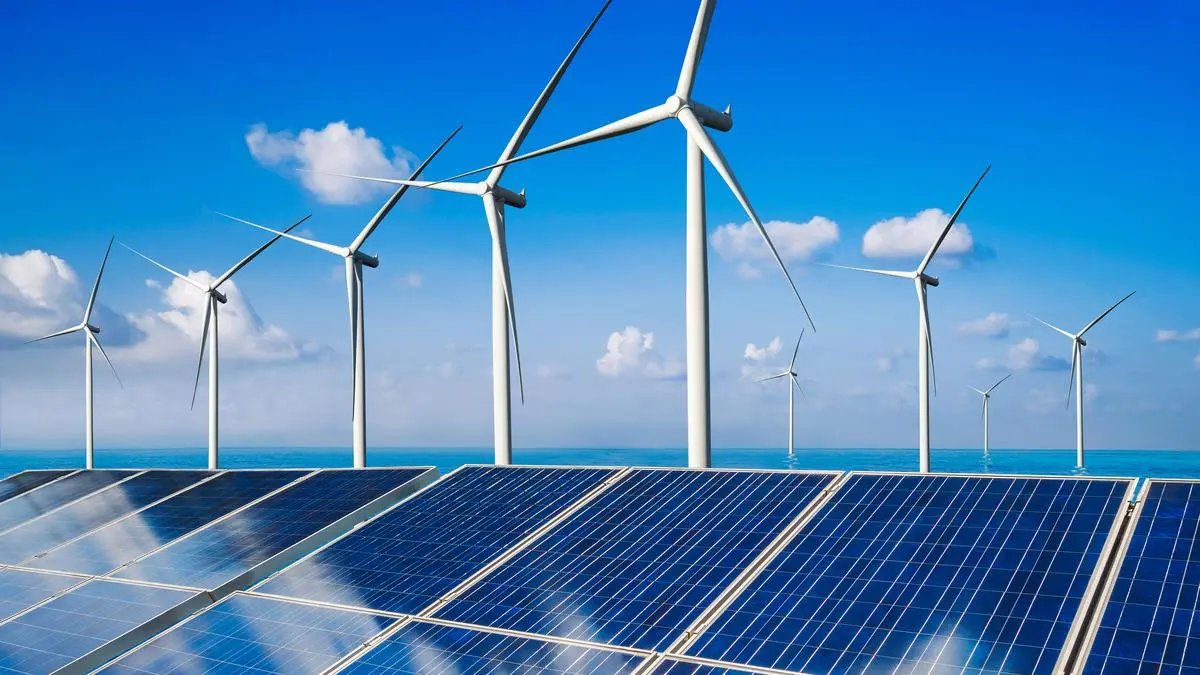
Rising installed capacity of renewables by India in the last calendar year helped the world’s third largest energy consumer save more than $46 billion, or roughly ₹4 lakh crore, in fossil fuel and pollution related costs.
The International Renewable Energy Agency (IRENA) in its report on cost of generating renewable power in 2024 pointed out that the levelised cost of electricity (LCOE) in the world’s fourth largest market for RE is the second cheapest, after China.
The agency via an analysis quantified the avoided costs of fossil fuels, CO₂ emissions and the damage of air pollution by comparing actual renewable generation in 2024 with a counterfactual scenario in which the same electricity would have been produced using coal- and gas-fired power plants.
Based on this, IRENA report revealed “India avoided $14.9 billion in fossil fuel costs and 410.9 million tonnes (mt) of CO₂ emissions, with $31.7 billion in air pollution-related benefits.”
Considering the total renewable capacity in operation worldwide, the report pointed out that the avoided fossil fuel costs in 2024 totalled $467 billion.
In 2024 alone, the addition of 585 gigawatt (GW) of new renewable power capacity avoided fossil fuel use worth $57 billion, the equivalent to the entire gross domestic product (GDP) of a country such as Armenia or Mongolia.
From 2022 to 2024, the LCOE for renewables declined globally, though regional disparities remain stark. China and India consistently recorded the lowest costs across technologies. In China, solar PV costs fell to $0.033 per kilowatt hour (kWh), while in India, they fell to $0.038 per kWh, it added.
Declining costs
Between 2010 and 2024, the global weighted average LCOE of utility-scale solar PV plants declined by 90 per cent, from $0.417 per kWh to $0.043, IRENA said.
The 2024 value, however, remained almost flat in comparison to 2023, registering a slight increase of around 0.6 per cent, year-on-year. This trend reflects changing financial conditions across markets, it added.
“The global weighted average total installed cost of projects commissioned in 2024 was $691 per kW. This was 87 per cent lower than in 2010 and 11 per cent lower than in 2023,” the report noted.
Historically, the downward trend in solar PV module costs has been an important driver in improving competitiveness. Solar PV has also shown the highest learning rates of all renewable energy technologies, achieving a level of 33.8 per cent in 2024. Various factors are expected to continue to increase solar PV technology’s competitiveness in the long term.
“These factors include continued improvement in the efficiency of manufacturing equipment; production optimisation by the implementation of lean processes; more efficient use of materials; standardisation of PV module sizes; and further design innovation,” the IRENA report added.
More Like This
Published on July 23, 2025

