


Texprocil looks to FTA with EU to open new opportunities
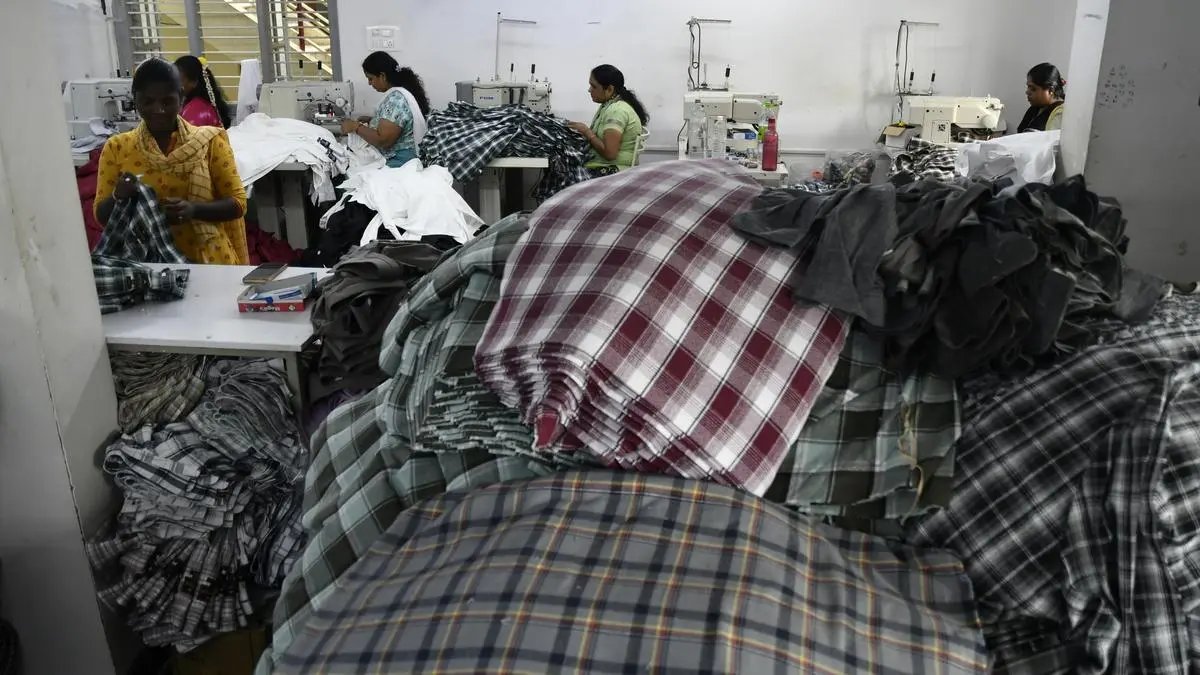

The textile industry accounts for about 4% of GDP and a significant portion of exports.
| Photo Credit:
ALLEN EGENUSE J
The Textile Export Promotion Council of India (Texprocil) expects the trade deal with the European Union will open up new opportunity for exports, particularly with EU withdrawing Generalised Scheme of Preferences (GSP) benefits from January 1.
Withdrawal of GSP benefits has placed Indian goods, including textiles, at a competitive disadvantage against countries with preferential market access.
Textile companies are now looking up to the free trade agreement to level the playing field and achieve ambitious export targets.
Siddhartha Rajagopal, Director, Texprocil, said the Cotton Textiles sector, which provides livelihoods to lakhs of rural artisans, currently exports over $1.3 billion annually to the European Union.
However, tariff barriers in the EU market place Indian cotton-based products at a disadvantage compared to competing countries, he said.
Texprocil has consistently advocated for zero-duty access in the ongoing India–EU negotiations.
“As the India–EU Free Trade Agreement moves closer to conclusion, we once again look towards the visionary leadership of the Prime Minister to secure comprehensive zero-duty market access for all cotton textiles products,” he said.
Such a deal would help restore competitiveness, strengthen farmer-linked value chains, support MSME exporters and promote sustainable, value-added exports and significantly enhance India’s footprint in the European Union market.
The textile industry accounts for about 4 per cent of GDP and a significant portion of exports. The nation targets $40 billion in apparel exports and $100 billion in total textile exports by 2030. In fiscal year 2024-25, textile and apparel exports to the US, EU, and UK collectively reached $21 billion, with $7.6 billion specifically to the EU.
The government support through initiatives such as the Production Linked Incentive scheme and increased budget allocations has laid the foundation for robust growth.
The successful negotiation and implementation of the India-EU FTA are paramount for capitalising on projected growth and achieving the sector’s considerable export ambitions.
Published on January 25, 2026

