

Budget 2026: Building a unified, outcome-driven architecture for Indian agriculture
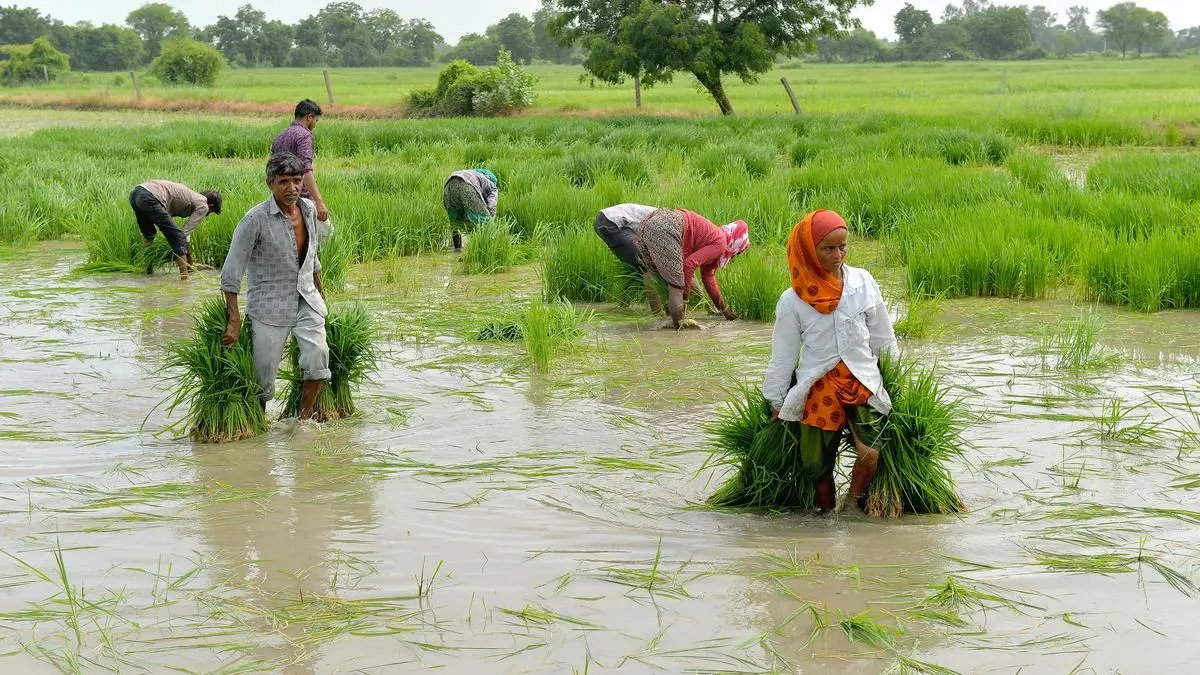
As India approaches Union Budget 2026, agriculture stands at a defining crossroads. The sector contributes approximately (17.8 per cent) to national GDP and provides livelihoods to over (46.1 per cent) of the workforce, yet it continues to face deep-rooted structural inefficiencies. Persistent challenges such as low farm productivity, inefficient water use, fragmented landholdings, and limited market integration have constrained growth despite decades of policy interventions.
Incremental schemes and short-term relief measures have reached their limits. What Indian agriculture now requires is architecture-level reform, a unified, results-driven framework that aligns productivity, sustainability, farmer incomes, and global competitiveness. Budget 2026 presents a critical opportunity to initiate this transformation.
Redesigning subsidies: From consumption to outcomes
India’s agricultural subsidy system, long designed to boost access, has unintentionally begun to reward excess. Subsidies on fertilisers, electricity, and irrigation have driven input-intensive farming practices that strain soils, deplete groundwater, reduce produce quality, and inflate costs, often without delivering proportional gains in productivity or farmer income. What began as support has, in many cases, become a structural inefficiency.
Budget 2026 offers a timely opportunity to correct this course by moving from consumption-led subsidies to efficiency-driven incentives. A phased transition toward Package of Practice (PoP)–linked support can realign public spending with measurable outcomes such as higher yields, improved soil health, and optimal water use. Incentives tied to performance encourage farmers to adopt scientifically sound practices rather than maximise input usage.
Performance-based support has the dual advantage of conserving critical resources while directly improving farm profitability. Mechanisation subsidies, in particular, should be routed through Direct Benefit Transfer (DBT) and restricted to FMTTI or BIS-approved equipment, do away with state-wise, department-wise, schemewise product approval processes, but retain the state government’s role in selecting beneficiaries, ensuring that public funds translate into reliable, high-impact technology on the ground. Such targeting not only improves outcomes but also reduces leakages and enhances accountability across the subsidy ecosystem.
Integrated water–soil–climate management
The future of Indian agriculture will be determined not by how much it produces, but by how intelligently it manages its natural resources. Water, soil, seeds, and climate resilience are deeply interconnected, yet policy interventions in these areas have traditionally been designed and implemented in isolation. This fragmented approach has limited impact at a time when resource stress and climate uncertainty are intensifying.
Budget 2026 must break these silos by adopting a mission-mode, systems-based approach to water–soil–climate management. At the core of this shift should be accelerated investment in next-generation seeds, varieties engineered to deliver higher yields with lower water consumption, reduced nutrient dependence, and minimal chemical inputs. Equally important is the scientific package of practices, and promotion of diversified crop rotations, which play a critical role in restoring soil organic matter, improving nutrient balance, and reducing the risks associated with monocropping. Additionally, the government must allow agri-businesses to set up Model Farms to showcase and prove the efficacy of new seeds, machinery, and packages of practices to the farmers.
When aligned under a single framework, these interventions can deliver compounding benefits: healthier soils, sustained groundwater levels, better quality produce, and farms better equipped to withstand climate volatility. An integrated resource strategy is not just an environmental imperative, it is essential to securing long-term productivity and farmer livelihoods in a climate-constrained future.
Digitised land records: A foundational reform
No agricultural transformation can succeed without addressing land ownership clarity. Universal, digitised land records with legally enforceable titles are essential for unlocking the sector’s potential.
Clear land titles enable farmers to access affordable institutional credit, undertake long-term investments, and participate more effectively in modern value chains. They also enable data-driven policymaking, accurate beneficiary targeting, and transparent subsidy delivery.
Without comprehensive land digitisation, farmers remain dependent on informal finance, land values remain suppressed, and the impact of other budgetary interventions is significantly diluted. Budget 2026 should set clear timelines and accountability mechanisms for nationwide land record reform.
A corollary of this digitisation is the data collection for each stage of crop from land-preparation, sowing, pest & disease management to harvesting; and then sharing this data at suitable granularity with stakeholders for planning their support or intervention. It will aid farmers also in choosing crops or variety; to harvesting and selling their produce.
Technology-enabled supply chains and market access
Post-harvest losses remain one of the biggest silent drains on farmer incomes and national food security. A significant share of agricultural produce is lost each year due to inadequate storage, inefficient logistics, and the absence of standardised grading. Farmers or the nation cannot afford these losses and it can be fixed by policy changes.
Budget 2026 should accelerate investments in technology-enabled supply chains, spanning purity of seeds and then produce at farm, standardised grading, packaging, modern storage, traceability systems, and integrated logistics. These interventions can sharply reduce wastage, improve farmgate price realisation, and unlock higher value for farmers. Stronger supply chains will also enhance India’s export readiness by ensuring consistent quality and compliance with global standards.
Policy stability for global competitiveness
In global markets, consistency is as important as quality. Frequent shifts in policies, whether on residue norms, exports, or certification, undermine credibility and discourage long-term investment. Budget 2026 must signal a clear commitment to stable, multi-year policy frameworks, enabling producers, supply chain intermediaries, and exporters to plan confidently, adopt technology, and integrate seamlessly into global value chains.
Towards a unified reform architecture
The true measure of Budget 2026 will lie in its coherence. Subsidy reform, natural resource management, land digitisation, supply chain modernisation, and global market alignment must operate as interconnected levers, not standalone initiatives. If executed in unison, these reforms can stabilise farm incomes, embed sustainability into everyday agricultural practice, and position India as a globally competitive food producer. Indian agriculture no longer needs incremental course corrections; it needs a decisive structural reset. Budget 2026 has the potential to deliver exactly that.
The author is Chairman, KisanKraft Ltd
Published on January 25, 2026

