

New Year trade blow: India loses EU duty preferences ahead of key summit
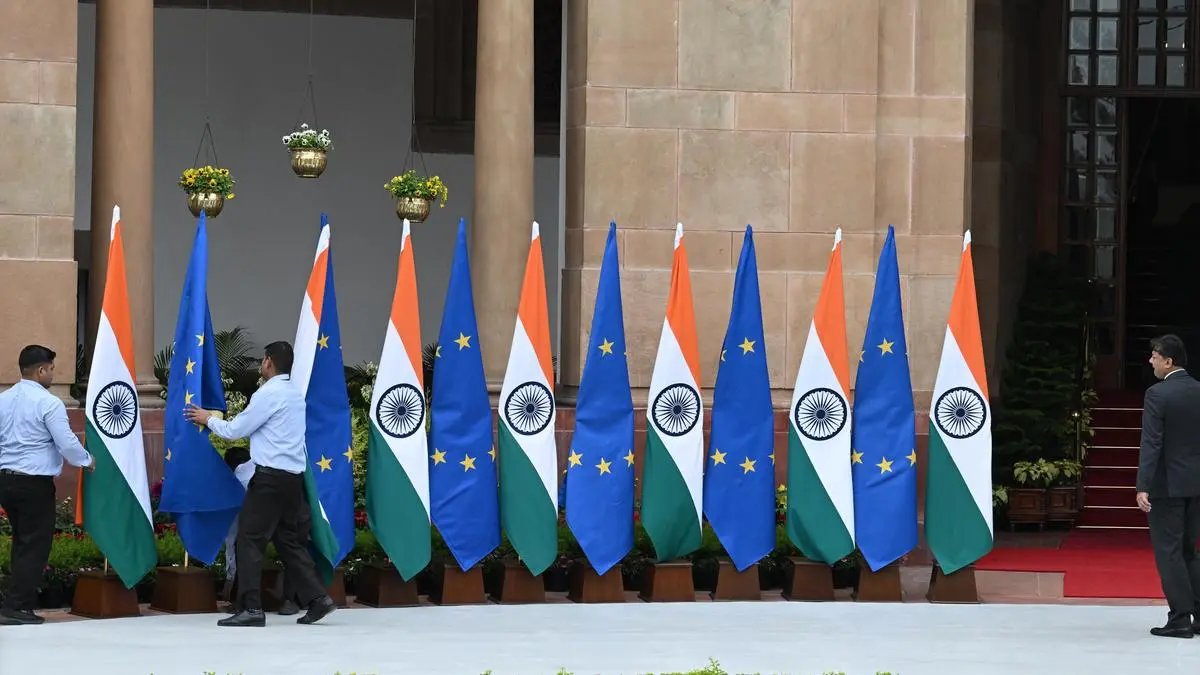

Bridging gaps. India and the EU are actively engaged to close the remaining gaps in the ongoing FTA negotiations
| Photo Credit:
SUSHIL KUMAR VERMA
In yet another blow to Indian exporters already grappling with US tariffs, import tariff preference being extended by the EU to India under the generalised system of preferences (GSP) has been fully suspended on an estimated 87 per cent of the country’s exports to the bloc from January 1, 2026.
The new items on which the GSP benefits (lower import tariffs) stand suspended from this month include mineral products, chemicals, plastics, iron & steel, rubber, textiles, pearls & precious metals, motor vehicles, machinery and electrical appliances.
“Now concessions are suspended for 87 per cent value of Indian goods exports to EU and these have to face full MFN tariffs. Even if India signs its FTA (free trade agreement) deal with the EU right away, it may take one year or more to get implemented. Indian exporters will feel the pinch till that time,” Ajay Srivastava, Founder, GTRI, told businessline.
Trade talks
India and the EU are actively engaged to close the remaining gaps in the ongoing FTA negotiations before the India-visit of EU President Ursula von der Leyen and European Council President António Luís Santos da Costa on January 25-27.
Faced with high tariffs and continuous tariff threats from the US, both sides are trying for an early deal. Bilateral trade between India and the EU in 2024 was about $140 billion, making the bloc India’s largest trading partner, per EU figures.
GSP benefits
According to an EC update on December 1 2025, the new products from India were losing their GSP benefits from January 1, 2026, as the average value of their imports exceeded the threshold limits set under the scheme for three consecutive years.
Indian products on which GSP benefits still continue, such as agriculture and food, leather goods, wood & paper, footwear, optical and medical instruments and handicrafts, account for less than 13 per cent of the country’s exports to the bloc, a GTRI analysis pointed out.
“The latest GSP withdrawals significantly erode price competitiveness vis-à-vis countries such as Bangladesh and Vietnam, which continue to benefit from duty-free or lower-duty access,” pointed out Ajay Sahai from the Federation of Indian Export Organisations.
Under GSP, eligible exporters receive a margin of preference (MoP) — a percentage reduction in the EU’s MFN tariff, the GTRI report explained. For most textiles, garments and industrial goods, this MoP averaged about 20 per cent, it added. “For instance, an apparel product facing a 12 per cent MFN tariff paid only 9.6 per cent under GSP. From January 1, this benefit ends and exporters must pay the full 12 per cent duty,” the report highlighted.
“India currently makes considerable use of GSP trade preferences and exports about 79 per cent of eligible products at preferential rates… As a number of sectors have already graduated out of the GSP, only about 21 per cent of total EU imports from India were eligible for preferences in 2023,” according to information on the EU’s GSP hub updated in March 2025.
Published on January 22, 2026

