

Indian govt plans to hike agri infra fund credit to ₹5 crore in limbo
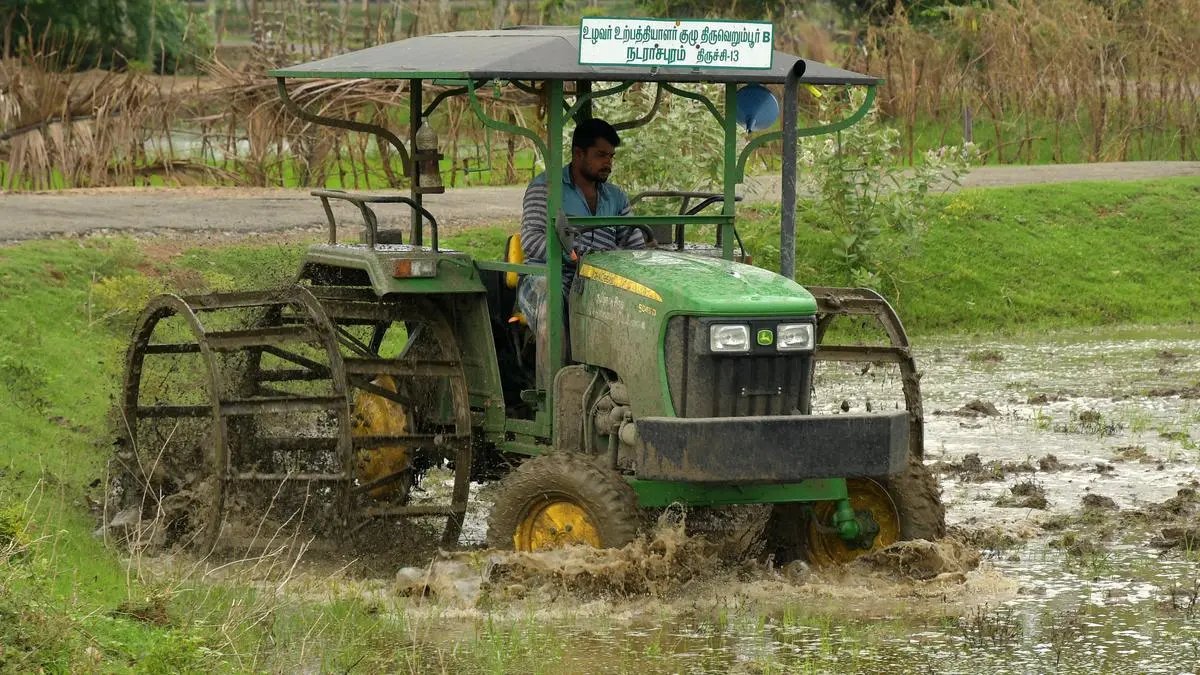

Launched in May 2020 amid the Covid-19 pandemic, the ₹1-lakh crore Agri Infrastructure Fund was designed to build farm-gate infrastructure across the country
| Photo Credit:
MOORTHY M
The Indian government’s proposal to raise the cap on credit under the Agriculture Infrastructure Fund (AIF) to ₹5 crore from the current ₹2 crore is hanging fire. There are doubts over whether it will find a place in the Budget to be present on February 1, after the Prime Minister’s Office reportedly flagged its reservations. The uncertainty is in view of the fact that three major agriculture-related announcements made in the last year’s Budget are yet to be implemented.
Launched in May 2020 amid the Covid-19 pandemic, the ₹1-lakh crore Agri Infrastructure Fund was designed to build farm-gate infrastructure across the country. Under the scheme, loans up to ₹2 crore attract a 3 per cent interest subsidy for a maximum tenure of seven years. Borrowing beyond this threshold of ₹2 crore does not qualify for the subsidy.
With inflation pushing up the cost of infrastructure projects, government officials felt that a higher credit ceiling was necessary. But the proposal ran into trouble after the government failed to raise limits under the Kisan Credit Card (KCC) scheme, prompting the AIF enhancement to be put on hold. “Since the KCC limit could not be increased, the AIF proposal was also shelved for now, though there is still a chance that it could be announced in the Budget,” a government source said.
Robust offtake
Despite this, the AIF has seen robust uptake. Banks have sanctioned more than 1.5 lakh projects, including 10,225 by cooperative banks and a loan amount of ₹80,149 crore has been sanctioned. Of this, ₹59,000 crore have been disbursed for 1,39,165 projects. The project costs of all these sanctioned proposals are ₹1,27,385 crore, according to AIF dashboard.
Maharashtra, Madhya Pradesh and Uttar Pradesh are among the major States that received maximum projects with an investment of ₹29,990 crore, ₹23,114 crore and ₹22,120 crore, respectively.
“The scheme which are performing better should be rewarded, rather than linking it with non-performer or where the progress is slow. The more the credit limit under AIF, the more activities on the ground,” said a former official of the Agriculture Ministry. He said it unfortunate that the KCC limit was not raised despite being announced in last year’s Budget, warning that repeated delays risk eroding the credibility of such announcements.
In her previous Budget speech, Finance Minister Nirmala Sitharaman had said the loan limit under the Modified Interest Subvention Scheme for KCC borrowers would be enhanced from ₹3 lakh to ₹5 lakh. Currently, small farmers can access crop loans of up to ₹3 lakh (including ₹1.6 lakh without collateral) at an effective interest rate of 4 per cent, factoring in interest subvention and incentives for prompt repayment. The 2025–26 Budget Estimate has earmarked ₹22,600 crore for interest subvention on farm loans.
Last year’s Budget also announced a five-year Mission for Cotton Productivity to boost yields and sustainability, along with a National Mission on High Yielding Seeds to strengthen agricultural research. These are initiatives that, like the KCC enhancement, are still awaiting approval.
Published on January 21, 2026

