


ICRISAT, ICAR launch path-breaking pearl millet hybrid
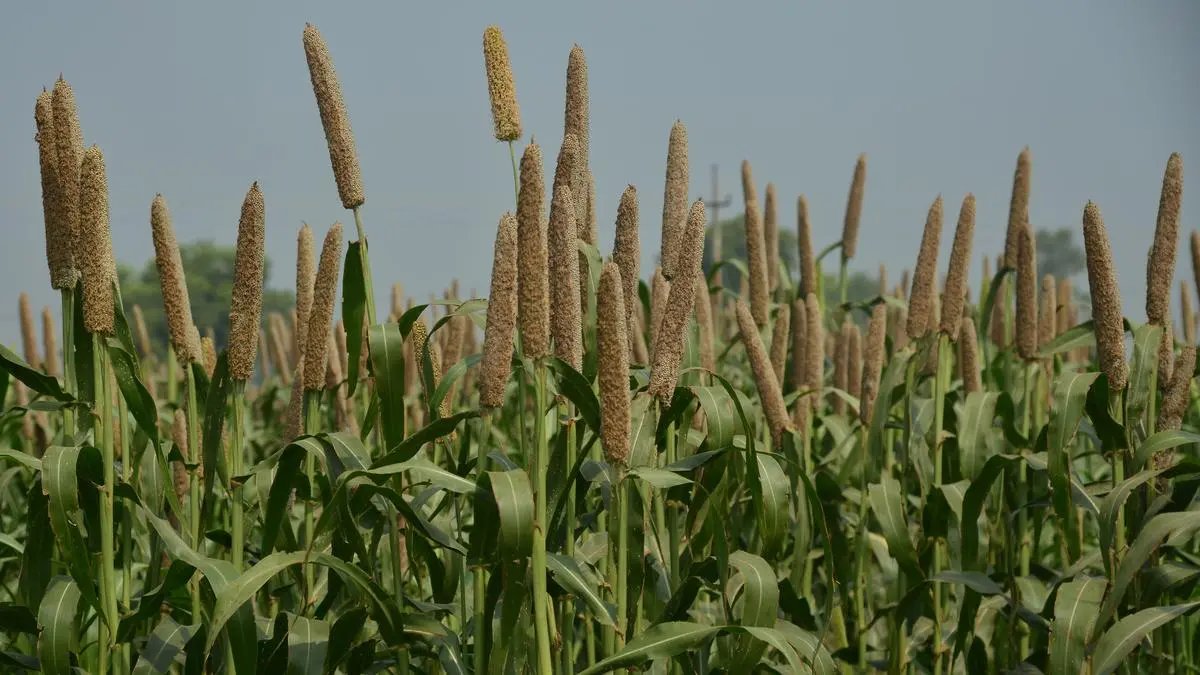
Farmers now have access to a novel pearl millet hybrid that offers high yields, drought tolerance, and superior fodder quality. Touted as the world’s first three-way hybrid, it was developed using three parental lines, enabling the integration of multiple traits.
Unlike conventional pearl millet hybrids that involve two parents, a three-way hybrid combines three parental lines, enabling the integration of multiple traits such as high yield, drought tolerance, and superior fodder quality.
The International Crops Research Institute for Semi-Arid Tropics (ICRISAT), in collaboration with the Indian Council of Agricultural Research (ICAR) through the All India Coordinated Research Project on Pearl Millet (AICRP) centre at the Rajasthan Agricultural Research Institute (RARI), has developed the hybrid.
The hybrid demonstrated exceptional adaptability and productivity following three years of extensive multi-location testing between 2022 and 2024 across 30 sites in three states. It recorded an average grain yield of about 2,230 kg/ha, translating to approximately 13–27 per cent yield advantage over regional varieties.
It outperformed the widely cultivated HHB 67 Improved by about 28% and shows good resistance to key diseases, including downy mildew, blast, and smut. It also offers better buffering capacity against biotic and abiotic stresses, making it well-suited to stress-prone ecologies.
The hybrid RHB 273 was among the 184 improved crop varieties across 25 crops released by Union Minister of Agriculture and Farmers Welfare Shivraj Singh Chouhan early this month. It has been notified for cultivation in areas with annual rainfall below 400 mm.
“Millets are a lifeline for drought-prone regions in Asia and Africa. Pearl millet, in particular, is known for its ability to withstand high temperatures and low water availability,” said Himanshu Pathak, Director General, ICRISAT.
“RHB 273 is an innovative hybrid, and its adoption, especially in the A1 belt (with low annual rainfall), will significantly strengthen pearl millet production in drought-prone states of north-western India, contributing to food, nutrition and fodder security,” Tara Satyavathi, Director, ICAR-Indian Institute of Millets Research (IIMR), said.
Fodder shortage
In the arid and hyper-arid belts of Rajasthan, Gujarat, and Haryana, chronic water scarcity frequently leads to acute shortages of fodder. Beyond strengthening food and nutrition security for vulnerable farming communities, RHB 273 also delivers enhanced fodder availability, helping sustain livestock, an ICRISAT official said.
Published on January 21, 2026

