

Wholesale inflation rate surges to 0.8% in December
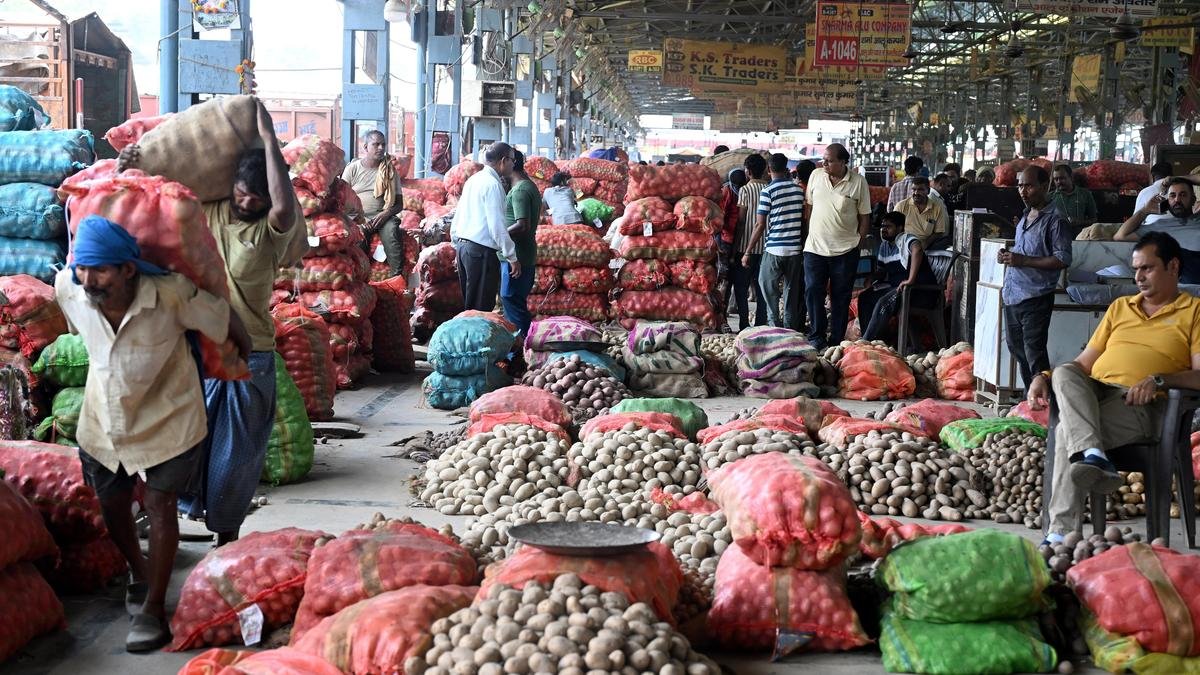

The uptick was primarily driven by a moderation in food price deflation and higher inflation in manufactured products.
| Photo Credit:
SUSHIL KUMAR VERMA
With retail inflation rate based on Consumer Price Index (CPI) touching a three-month high in December, wholesale inflation rate turned positive in December and surged to 0.8 per cent in December against the deflation of 0.3 per cent in November, government data showed on Wednesday.
“Positive rate of inflation in December is primarily due to an increase in prices of other manufacturing, minerals, manufacture of machinery and equipment, manufacture of food products and textiles, etc,” the Industry Ministry said in a statement. Wholesale inflation has no say in reviewing policy interest rate as the Monetary Policy Committee takes retail inflation rate for deliberation and decision.
According to WPI data, deflation in food articles was 0.43 per cent in December against 4.16 per cent in November. In vegetables, deflation was 3.50 per cent in December, compared to 20.23 per cent in November.

Moderation in food prices
According to Rajni Sinha, Chief Economist with CareEdge, this uptick was primarily driven by a moderation in food price deflation and higher inflation in manufactured products. “Looking ahead, robust agricultural activity, favourable base effect and adequate reservoir levels are expected to help contain food price pressures,” she said. Deflation in the fuel and power category remained unchanged at 2.3 per cent. Overall, WPI inflation continues to remain at comfortable levels, she added.
In case of manufactured products, WPI inflation inched up to 1.82 per cent from 1.33 per cent in November 2025. The non-food articles category showed an inflation of 2.95 per cent in December, against 2.27 per cent in November. Negative inflation or deflation continued in the fuel and power sectors, at 2.31 per cent in December, against 2.27 per cent a month ago.
Barclays India Chief Economist Aastha Gudwani said narrowing deflation in “food articles” and a rise in inflation in “manufacturing products” drove the increase in the headline WPI inflation in December. “We expect modest increases in WPI inflation to continue”.
ICRA Senior Economist Rahul Agrawal expects the WPI-food inflation to harden further in January and continue on an upward trajectory thereafter owing to an unfavourable base. Besides, global commodity prices have continued to rise on a sequential basis in January 2026 led by sharp gains in precious metals, as well as some hardening in prices of some industrial metals, even though oil prices have cooled. “Led by the hardening in YoY food inflation owing to an unfavourable base, rise in global commodity prices, and sustained pressure on the USD/INR pair over the past few months, ICRA expects the YoY WPI inflation to rise to 1.5 per cent in January 2026, the highest level in 10 months,” he said.
Data released earlier this week showed the country’s retail inflation inching up to 1.33 per cent in December, from 0.71 per cent in November, driven by rising food prices.
Published on January 14, 2026

