

December retail inflation seen between 1.6-1.7%
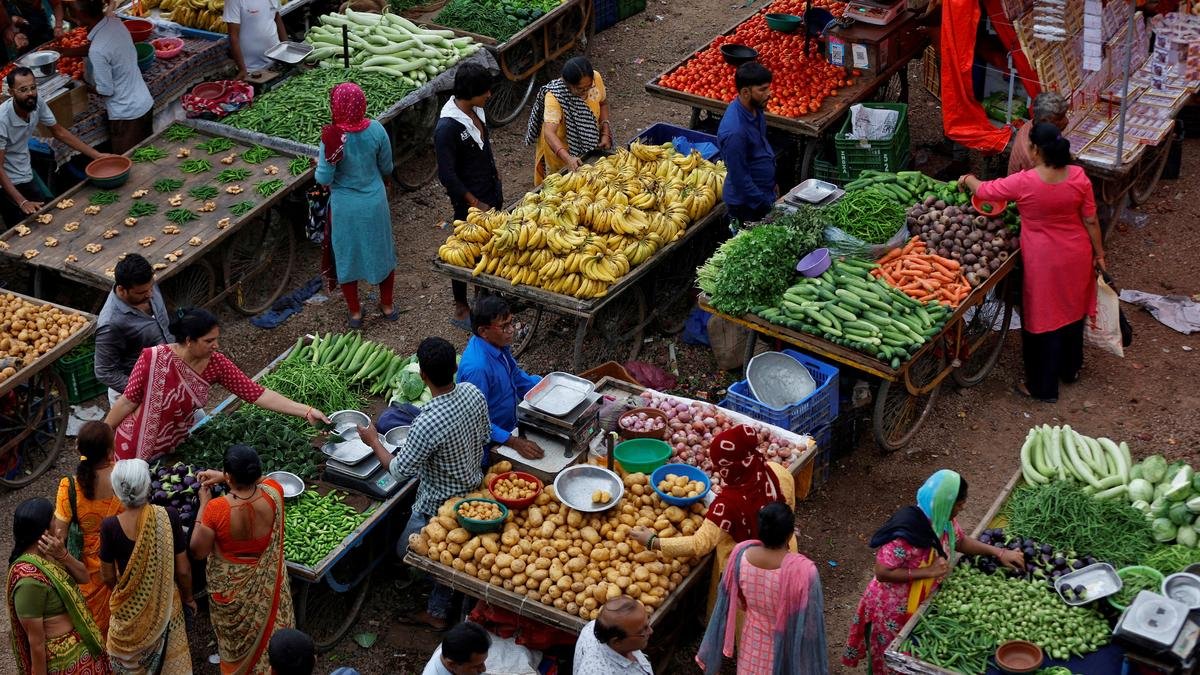
With food prices on the rise, retail inflation based on the Consumer Price Index (CPI) is likely to have surged up between 1.6 per cent to 1.7 per cent in December. The rate was 0.71 per cent in November.
The Statistics Ministry will release the data officially on Monday.
Though there could be a significant rise in the headline number, it will still be lower than the median rate of the targeted inflation range, i.e., 4 per cent and even lower than the lower band of range i.e., 2 per cent. There is a possibility of another round of rate cut in February or April meeting of the Monetary Policy Committee.
“December 2025 inflation numbers are likely to signal a further bottoming out in trend, rising to 1.6 per cent year-on-year (y-o-y) y/y from 0.7 per cent y-o-y the month before, en route to the official 2-6 per cent tolerance band. Sequential firmness in food and precious metals is likely added to the lift in the month, besides seasonal pressure on services (ex-housing),” said Radhika Rao, Executive Director and Senior Economist at DBS Bank.
Adding to this, a report by Barclays noted that CPI inflation rose to 0.7 per cent y-o-y in November (still below the lower bound of inflation target range). Slower food deflation drove the moderate rise in headline, alongside modest disinflation in core CPI. “We are tracking Dec CPI inflation at 1.55 per cent y-o-y , posing upside risk to MPC’s Q3FY26 forecast,” it said.
During December, while food inflation is expected to be in negative territory, food prices are going up sequentially. A report by Union Bank of India, taking inputs from Consumer Affairs Ministry’s data, expects food CPI to print (-)1.19 per cent as against (-)2.78 per cent last month and a high base of 7.7 per cent last December. Sequentially, food inflation has gone up as food prices across the board (barring a few segments like milk) gained further momentum during the month.
This is generally unusual for a winter month when the food price levels normally recede. “Highest price gain was seen in tomatoes (12.7 per cent m/m) as early onset of winter led to a spike in demand and October rains impacted the supply,” it said. June-August and October -November are normally lean production months for tomatoes leading to a price rise which gradually cools down into the winter months. “Month‑on‑month vegetables inflation in Dec likely went up to 1.56 per cent as against 2.55 per cent last month even though y-o-y inflation in vegetables was still negative at (-)14.72 per cent due to high base effect of 26.6 per cent last year,” the report added while projecting December headline at 1.66 per cent.
This is generally unusual for a winter month when food price levels normally recede. “The highest price gain was seen in tomatoes (12.7 percent month‑on‑month) as early onset of winter led to a spike in demand and October rains impacted supply,” it said. June‑August and October‑November are normally lean production months for tomatoes, leading to a price rise which gradually cools down into the winter months. “Month‑on‑month vegetables inflation in December likely went up to 1.56 percent, as against 2.55 percent last month, even though year‑on‑year inflation in vegetables was still negative at -14.72 percent due to the high base effect of 26.6 percent last year,” the report added while projecting December headline at 1.66 percent.
Meanwhile, GST rate cut could provide some relief. A report by HDFC Bank expects GST rate cuts and healthy agricultural output is likely to keep inflation below 3 per cent for the rest of the year. “For FY26, we revise down our inflation forecast to 1.8 per cent (from the earlier 2.0%) with 0.7 per cent in Q3FY26 and 2.3 per cent in Q4FY26,” it said.
Published on January 11, 2026

