

Rupee slide trigger crisis for India’s cashew sector despite export gains
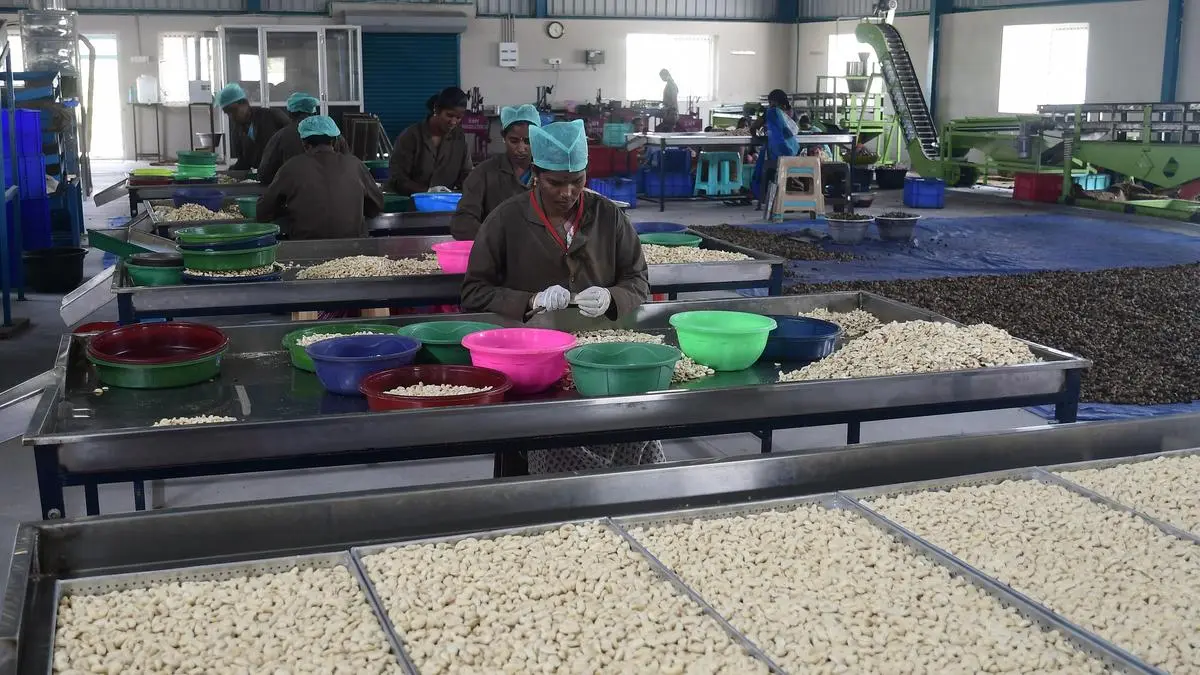

Raw material costs have risen by nearly 20–25 per cent in rupee terms, while domestic selling prices have remained largely stagnant. This imbalance has pushed many processors and traders into losses as they sell below cost merely to maintain cash flow and clear inventory.
| Photo Credit:
SRINATH M
India’s cashew industry is navigating one of its most turbulent phases with the depreciation of the rupee creating uneven impacts across the sector.
While a weaker rupee has provided a temporary cushion for exporters, it has pushed up raw material costs for processors who depend heavily on imports. India’s cashew processing capacity far exceeds domestic raw cashew nut production, forcing processors to rely on imports primarily from West African countries. The sharp rise in the dollar has made imports significantly more expensive, said J. Rajmohan Pillai, Chairman and Managing Director of Beta Group, which owns the brand NutKing.
“The rupee breaching the ₹90–₹92 per dollar mark in early 2026 may appear positive for exports, but it has triggered a systemic crisis for the processing industry,” he said.
Illegal imports
Raw material costs have risen by nearly 20–25 per cent in rupee terms, while domestic selling prices have remained largely stagnant. This imbalance has pushed many processors and traders into losses as they sell below cost merely to maintain cash flow and clear inventory.
As retail prices inch up to cover higher production costs, local demand has weakened. Adding to this is the illegal import of finished cashew kernels from Africa and Vietnam being misdeclared as cattle feed or husk to evade the 25–30 per cent import duty. These low-cost, low-quality imports are flooding the domestic market, undercutting Indian processors who already face higher labour and power costs, he said.
Rohit Zantye, President, Goa Cashew Manufacturers Association, told businessline that illegal import of cashew kernels from Vietnam—misdeclared as roasted cashews to avail nil import duty—is beginning to impact the domestic market. There has been a significant rise in such consignments, forcing the association to approach the government for remedial measures.
Processing capacity up
Export-oriented units are reporting record shipments with export values rising by over 100 per cent recently. However, this represents only a small share of the overall trade. For most of the industry, the high dollar has made raw cashew imports nearly unaffordable, creating a widening disparity between processing costs and market prices, Pillai said.
India’s cashew processing capacity has increased, thanks to mechanisation, leading to setting up of new processing facilities in Gujarat, Rajasthan, West Bengal, and Visakhapatnam. This expansion has led to higher domestic supply. However, as more companies enter the sector, it remains to be seen how many will be able to derive sustainable financial benefits. While the Indian cashew market is expected to grow at 8–10 per cent, demand has remained subdued in the post-Diwali period, he said.
Pratap Nair, Managing Director of Vijayalakshmi Cashew Company, Kollam, said domestic demand is expected to pick up by mid-January with the onset of the wedding season, which typically lasts for the next two to three months. In India, about 70 per cent of kernel demand is met through imports, while the remaining 30 per cent comes from domestic production.
Published on January 8, 2026

