



Indian economy and financial system face near-term risks from external uncertainties: FSR
While India’s economy continues to grow strongly and the domestic financial system remains sound, both face near-term risks from external uncertainties from further escalation in geopolitical and trade tensions and widening geo-economic fragmentation, according to the latest Financial Stability Report (FSR).
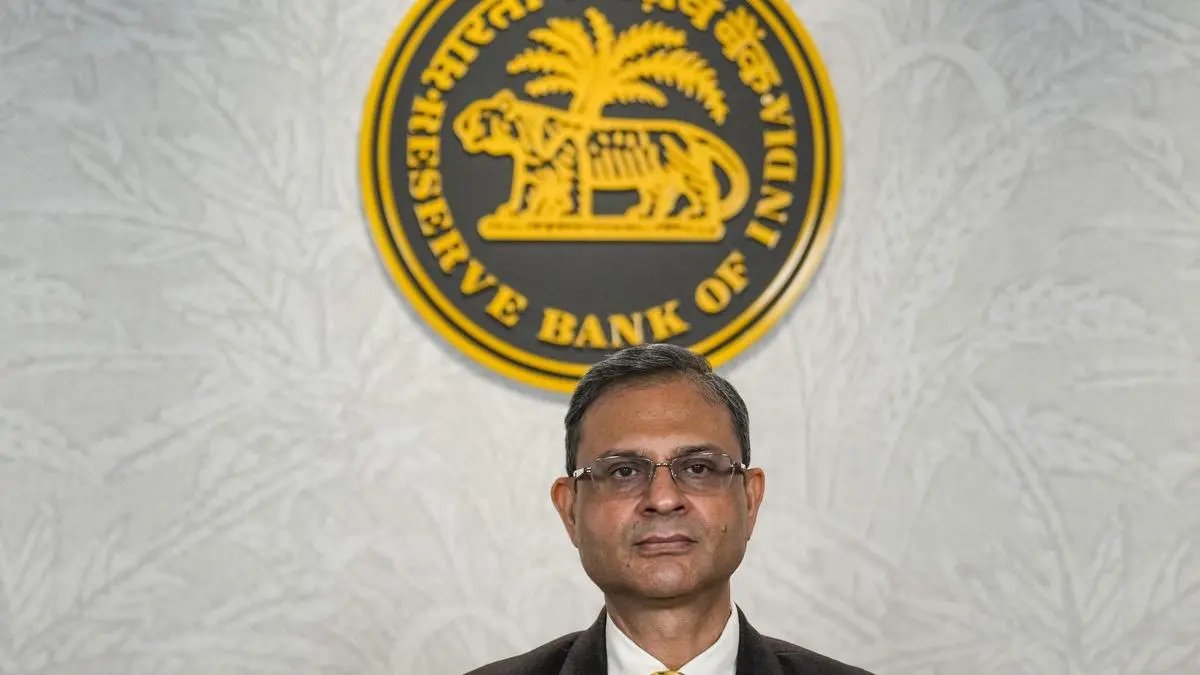
In his foreword to the half-yearly FSR, to which all financial sector regulators have contributed, RBI Governor Sanjay Malhotra highlighted that despite a volatile and unfavourable external environment, the economy is projected to register high growth, driven by strong domestic consumption and investment.
resilient economy
The Governor noted that the economy and the financial system remain robust and resilient supported by strong growth, benign inflation, healthy balance-sheets of financial and non-financial firms, sizeable buffers and prudent policy reforms.
“Nonetheless, we recognise the near-term challenges from external spillovers and continue to build strong guardrails to safeguard the economy and the financial system from potential shocks,” he said.
Malhotra underscored the stability of the domestic financial system in terms of both institutional soundness and systemic resilience.
“Banks and NBFIs (non-banking finance institutions) remain healthy, bolstered by strong capital and liquidity buffers, robust earnings and improved asset quality. Stress tests also endorse the resilience of banks and non-banking financial companies (NBFCs). Financial markets, however, remain susceptible to global spillovers,” he said.
The FSR cautioned that near-term risks from external uncertainties could increase exchange rate volatility, dampen trade, reduce corporate earnings, and lower foreign investment.
“A sharp correction in US equities could influence domestic equities and tighten financial conditions. However, the economy and financial system have strong buffers to withstand adverse shocks,” per the report.
Stress tests
Stress tests results reaffirmed the resilience of banks to withstand losses under adverse scenarios and maintain capital buffers well above the regulatory minimum, the FSR said. The report cautioned that the current steepening of the yield curve and relatively higher exchange rate volatility, if sustained, could impact treasury income.
In the case of NBFCs, stress tests results showed, barring a few outlier ones, aggregate capital position would remain well above regulatory requirements under adverse shocks.
The insurance sector continues to display balance-sheet resilience, supported by adequate capital buffers, steady capital accretion and solvency ratios that remain above prescribed regulatory thresholds at the aggregate level.
Household debt up
Household debt stood at 41.3 per cent of GDP as at end-March 2025, marking a sustained increase compared to its 5-year average of 38.3 per cent. However, relative to most of the peer EMEs (emerging market economies), India’s household debt remained lower.
Among broad categories of household borrowings, non-housing retail loans extended mostly for consumption purposes continue to be the dominant segment, accounting for 55.3 per cent of total household borrowing from financial institutions as of September 2025. Their share has risen over the years, with growth consistently surpassing that of housing loans, and agriculture and business loans.
- Benign inflation, fiscal consolidation, and prudent macroeconomic policies have enhanced economic resilience
- Domestic financial system remains sound, supported by strong balance sheets, easy financial conditions, and low market volatility
- Health of scheduled commercial banks continued to remain robust
- Capital position of NBFCs remained strong
Published on December 31, 2025

