



US tariffs land India’s seafood exports in troubled waters in 2025
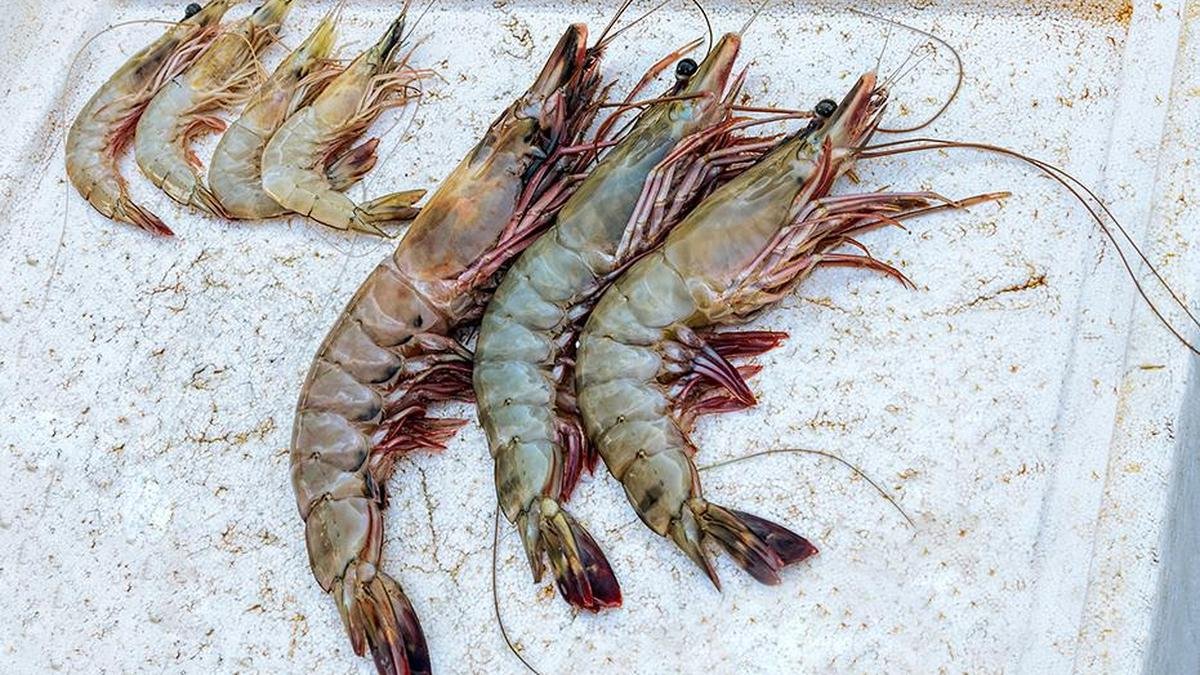
2025 will be remembered as one of the most challenging periods for India’s seafood export sector with a series of tariff shocks, eroding the industry’s competitiveness in its largest market, the United States.
The year with the imposition of a 5.77 per cent Countervailing Duty (CVD) by the United States Department of Commerce, in addition to an existing 2.49 per cent Anti-Dumping Duty (ADD).
The situation worsened with the first round of retaliatory US tariffs, which proposed a 26 per cent levy. This placed Indian seafood exporters at a clear disadvantage vis-à-vis competitors Ecuador and Vietnam.
Although the US decision to temporarily suspend the country-specific tariffs for three months and impose a uniform duty of 10.5 per cent on all imports offered brief relief, the respite proved short-lived, said K.N.Raghavan, Secretary General of Seafood Exporters Association of India.
From August, a second round of tariffs came into effect, with the US imposing a basic customs duty of 25 per cent along with an additional 25 per cent “penal tariff”.
The combined burden delivered a severe blow, intensifying cost pressures and undermining market access at a time when global demand was already showing signs of weakening, he said.
Up in small markets
Seafood exports to the US from April to October of 2025 show a fall by $62 million (4.2 per cent) in value terms, compared with corresponding period of the previous year.
However, a closer examination of the export data say that exports from August to October 2025 fell by $174.57 million (33.34 per cent) in value terms compared with the corresponding period of last year.
The fall in US shipments was made good to some extent by an increase in exports to existing big markets such as the EU (39 per cent) and China (19.6 per cent).
Exports have also risen considerably to smaller markets like Vietnam (109 per cent) and Russia (52 per cent). This has helped to show overall buoyancy (16 per cent) in seafood exports from April to October 2025 ($4875 million) as against $4193 million, he said.
Nitin Awasthi of InCred Research says that a structural shift in the competitive landscape has bolstered India’s position. Ecuador’s previous cost advantage, built on unsustainable subsidies, has collapsed following fiscal corrections.
Consequently, farm-gate prices between Ecuador and India have converged, eliminating the artificial competitive overhang that Indian farmers faced for nearly four years.
With Ecuador’s advantage neutralized and limited replacement capacity from ASEAN or LATAM regions, India’s dominance in the US market remains structurally protected.
The 2026 outlook, he said, remains strong with India’s export share in the US expected to sustain above 40 per cent, supported by a revival in demand. The industry is poised for transformative growth through potential EU and UK trade agreements.
Historically constrained by tariffs and non-tariff barriers, the 500,000 tonnes EU market presents a significant opportunity for diversification into premium, higher-realization products.
The combination of restored pricing parity, stabilized input costs, and new market access positions the Indian shrimp sector to strengthen its role as a global anchor supplier, he added.
Published on December 31, 2025

