



Fresh snowfall revives tourism in Gulmarg after Pahalgam attack slump
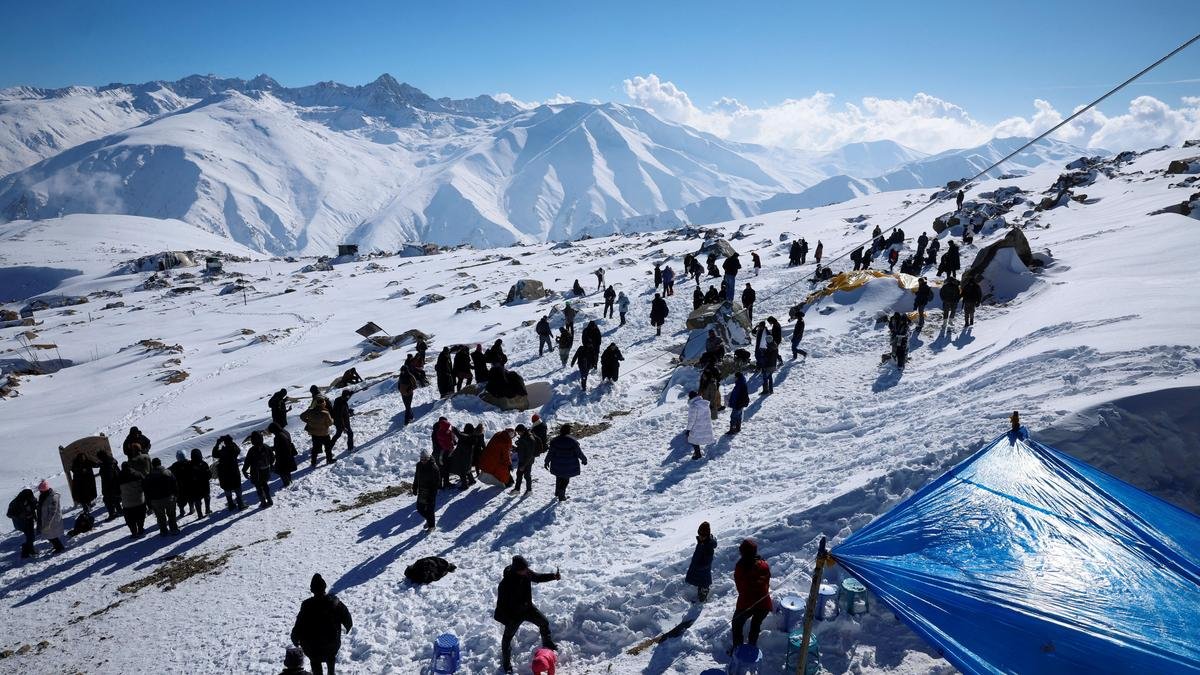

Tourists gather at Afarwat Peak, the upper reaches of Gulmarg, a ski resort and one of the main tourist attractions in the Kashmir region
| Photo Credit:
REUTERS
Following the recent spell of snowfall, Gulmarg, the popular ski resort in north Kashmir, has witnessed a notable revival in tourist footfall, with visitors from across the country arriving to experience fresh snow, skiing and winter holidays.
The uptick comes after tourism in the Valley suffered a major setback following the April 22 attack in Pahalgam, in which 26 people were killed. “The incident triggered widespread fear among travellers, leading to a sharp decline in arrivals,” according to industry sources.
Tour operators estimate that around 100 bookings were cancelled in the days following the attack, while the government temporarily shut down at least 48 tourist destinations across Kashmir as part of heightened security measures. Although several destinations were later reopened in two phases, many locations continue to remain out of bounds for tourists.
Things are now changing and Gulmarg appears to be leading the recovery, aided largely by fresh snowfall that has restored the resort’s winter appeal. Hotels in the area are reporting a steady rise in occupancy after weeks of sluggish business.
“Around 50 to 55 per cent of hotels are booked at present,” said Mohammad Sharif, manager at Hotel Grand Mumtaz, Gulmarg. He said the snowfall had renewed interest among tourists who were earlier reluctant to travel. “This season was going slow, but snowfall has brought tourists back. Enquiries and bookings have increased significantly after the fresh spell,” he said.
renewed rush
Tourists visiting Gulmarg echoed similar views. Rahul Sharma, a tourist from Delhi, said he had postponed his trip earlier due to the prevailing situation but decided to visit after tracking weather updates. “We were unsure earlier, but the snowfall and improved arrangements encouraged us to come. Gulmarg looks beautiful, and the overall experience has been very positive,” he said, adding that skiing and snow activities were the main attractions.
The renewed rush was also visible at the Gulmarg Gondola, where increased tourist activity was noticeable throughout the day. Large numbers of visitors were seen waiting at the terminals, prompting authorities to put additional systems in place to manage the growing turnout and ensure smooth movement.
Tourism officials said efforts are being intensified to sustain the momentum. Deputy Director Tourism Kashmir, Waseem Raja, said the tourism department, in collaboration with other stakeholders, is organising a series of events to attract more visitors. He noted that there has been a gradual improvement in tourist inflow following the fresh snowfall and expressed hope that arrivals would pick up further in the coming days.
With peak winter still ahead, stakeholders hope that snowfall-driven tourism will help offset losses suffered earlier in the season.
Official data for 2025 reflects the impact of the April incident on tourist movement. The Valley recorded a total footfall of 10.47 lakh tourists, including 21,361 international travellers. Tourist arrivals remained strong during the first four months of the year. In January, Kashmir received 1,48,438 domestic tourists and 3,385 foreign visitors, followed by 1,43,444 domestic and 4,116 international tourists in February. March recorded 1,74,349 domestic tourists and 2,006 foreign arrivals, while April saw 1,75,197 domestic and 4,145 international visitors.
The impact of the Pahalgam attack became evident in May, when domestic tourist numbers dropped sharply to 18,246, while international arrivals declined to 607. Although some recovery was seen in subsequent months, numbers remained largely below average. June recorded 57,458 domestic tourists and 844 foreign visitors, while July saw 98,424 domestic and 1,172 international arrivals. In August, domestic tourist arrivals stood at 62,430, while foreign tourist numbers rose to 1,399.
Published on December 25, 2025

