

Contextual policymaking critical for emerging economies, say experts
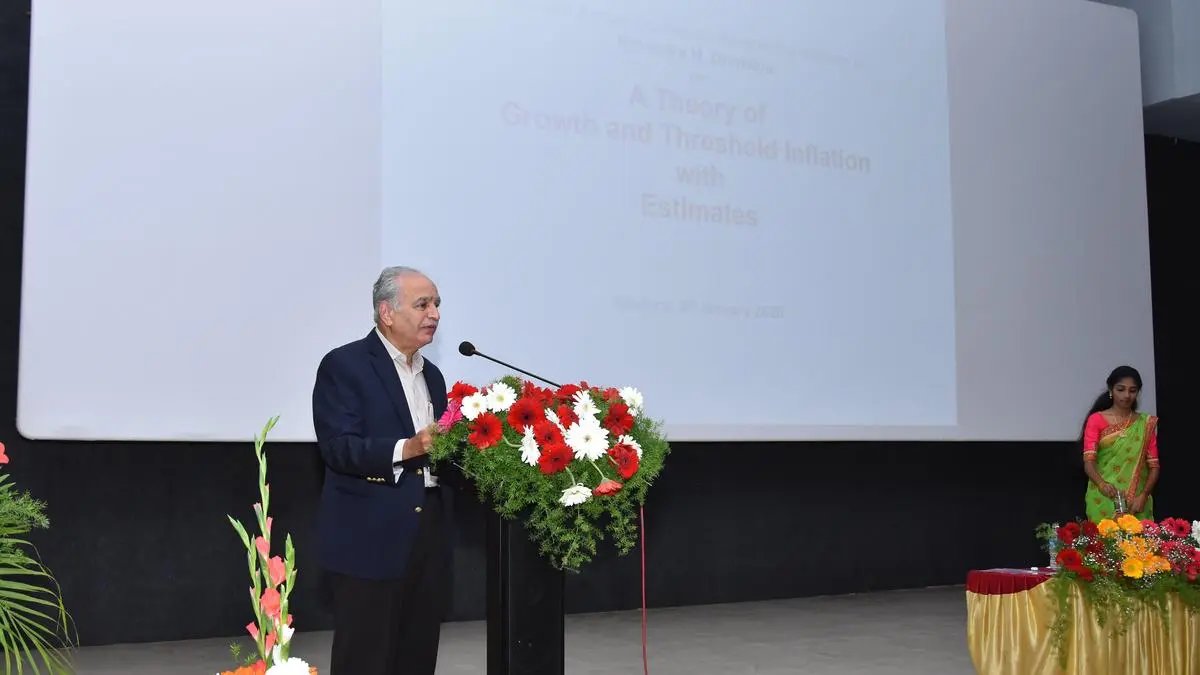

Ravindra Dholakia, economist and Director on RBI’s Central Board
| Photo Credit:
MA09DHOLAKIA
The contextual difference in India’s emerging economy particularly with respect to urbanisation, high growth, inflation and structural shifts in employment cannot be ignored while framing policies, according to experts speaking at a joint meeting of Madras Management Association (MMA) and Chennai chapter of IIM Ahmedabad Alumni Association.
The event was hosted by MMA and the German Konrad Adenauer Stiftung (KAS).
Ravindra Dholakia, economist and Director on RBI’s Central Board suggested that inflation targeting needs to be dynamic to achieve current growth targets.
“It would be impossible to achieve 8-8.5 per cent growth targets at the current levels. To maximise growth, it should be revised from current levels to a range of 4-5 per cent with a tolerance band of 3 to 6-7 per cent,” he said.
Dholakia believes that the current exchange rate depreciation could have been avoided if the economists and rating agencies had understood the dynamics of growth and debt between advanced economies and India. “If the rating agencies had been more balanced in their assessment, there may be no need for rapid depreciation; on the contrary there is scope for appreciation,” he said.
Author and columnist V Kumaraswamy proposed a separate pensioners’ inflation index, reflecting their lower exposure to housing, commute and dietary costs.
Lokeshwarri SK, Associate Editor, The Hindu businessline, who moderated the session, mentioned that the role of the media was to interpret policies and convey them to readers in a lucid and comprehensible way. RBI could help readers by translating their policies and dissemination in regional languages, she added.
Published on December 9, 2025

