

Kashmir’s prized saffron faces crisis as dry spell deepens
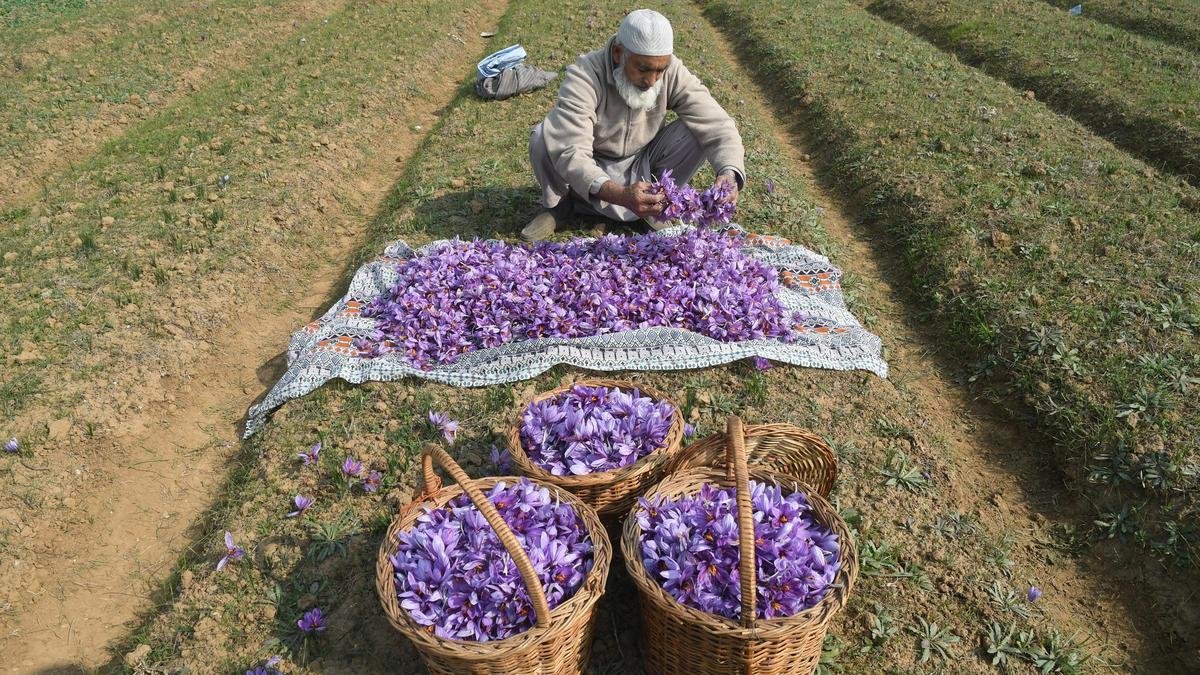

If the current weather conditions persist, they will impact the growth of saffron corms
| Photo Credit:
NISSAR AHMAD
A prolonged dry spell has raised alarm among thousands of saffron growers across Kashmir, with experts warning of further depletion in output if the weather remains dry through December.
The Valley has witnessed persistent dry conditions since October, leaving farmers anxious about the survival of saffron corms and the prospects of next season’s harvest.
“Rains are crucial at this stage for saffron,” said Irshad Ahmad, a farmer from Pampore, the heart of Kashmir’s saffron belt. He said the prolonged dryness would severely impact next year’s crop.
Official data shows Pulwama and Budgam —the two major saffron-producing districts — have recorded a sharp rainfall deficit between October 1 and December 3, 2025. Pulwama received 29.4 mm of rainfall against a normal 47.6 mm, a 38 per cent deficit, while Budgam received 23.1 mm compared with a normal 54.2 mm, a deficit of 57 per cent, one of the steepest in the Valley.
The decline in precipitation is expected to worsen moisture shortages, affecting corm development, groundwater recharge and potentially intensifying the cold wave, officials said.
“If the current weather conditions persist, they will impact the growth of saffron corms,” said Tariq Rasool, associate professor at Sher-e-Kashmir University of Agricultural Sciences and Technology (SKUAST), Kashmir. “The corms will not develop properly as the lack of moisture affects nutrient uptake,” he added.
Another difficult season
Farmers said that the rainfall deficit has compounded an already difficult year after saffron production fell by nearly 60–70 per cent due to erratic weather, prolonged dry spells and porcupine attacks.
“If this dry spell continues and we don’t get timely rain or snowfall, our saffron fields will suffer even more. We have already lost nearly 70 per cent of our production this year,” said Ali Mohammad, a grower from Pulwama.
About 20,000 to 25,000 families in Kashmir depend on saffron cultivation, which typically produces 13–14 tonnes annually.
With fears of another failed season looming, growers said that they have little financial cushion left after consecutive years of fluctuating yields and rising input costs.
Many are urging the government to step in with emergency support and irrigation assistance if the dry spell continues. For now, farmers continue to watch the sky, hoping for a change in weather that could salvage the coming crop and prevent deeper distress.
Published on December 3, 2025

