

Why technology is ‘boss’ in supply chain management

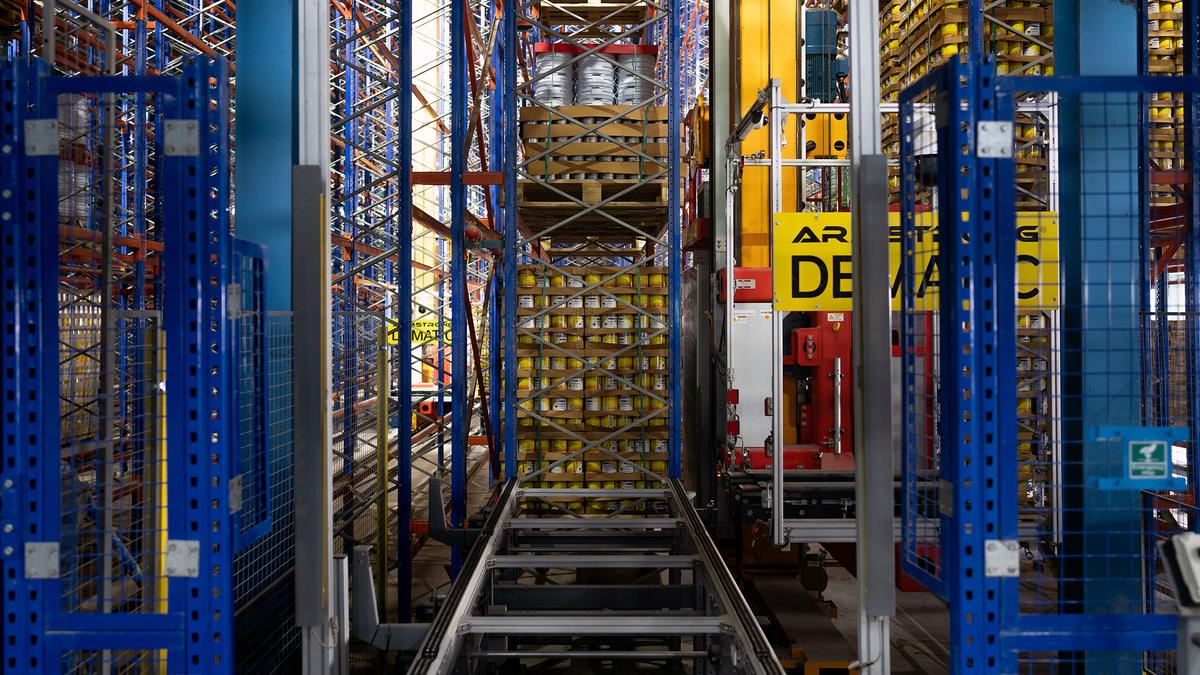
DIGITAL STACK: Automated warehousing systems can enhance storage
capacity by up to 25 per cent
| Photo Credit:
Anindito Mukherjee
In today’s hyper-connected and rapidly evolving world, supply chain is no longer a backend operation; it is the central nervous system of business. And at the helm of this transformation is not a traditional executive, but technology.
Much like a visionary CEO, technology is now driving strategy, managing risk, orchestrating execution, and adapting in real time. This includes artificial intelligence-driven forecasting, optimising warehouse space, predictive logistics and real-time visibility.
Growth enabler
Traditionally, supply chains prioritised efficiency — for instance, moving goods from point A to B at the lowest possible cost.
However, beyond efficiency, businesses today require supply chains that are agile, intelligent, and responsive. Technology is making this possible by elevating supply chains from reactive cost centres to proactive growth enablers.
A recent McKinsey report estimates that AI-powered supply chain companies could reduce logistics costs by 15 per cent and improve inventory accuracy by up to 35 per cent, leading to faster turnaround times and substantial business value for customers.
AI planning
AI and machine learning tools are helping businesses forecast demand and identify trends with far greater accuracy than traditional models.
The result is a shift from hindsight to foresight.
Businesses can respond faster to supply-demand mismatches, adjust production schedules, and reallocate resources in real time.
In sectors like retail and manufacturing, such planning has helped reduce inventories by up to 30 per cent, while improving service levels and cutting waste.
India’s warehousing market is set to witness a CAGR of 10-12 per cent over the next five years. However, space constraint is a challenge, especially near urban centres. AI-driven layout optimisation and automation have improved productivity by 30-40 per cent and reduced picking errors by over 50 per cent.
Automated systems can enhance storage capacity by up to 25 per cent within the same footprint, enabling companies to meet rising fulfilment demands without proportional increases in real estate costs.
Autonomous decision
Imagine a supply chain that can reroute itself during a flood, redistribute inventory in response to a sudden sales spike, or renegotiate freight rates based on live market data, all without human intervention. Agentic AI does this, with early results indicating faster resolution, enhanced resilience, and reduced costs.
It moves beyond generating insights to acting on them, creating systems that can sense, decide, and respond autonomously. It supports operations ranging from demand planning to route optimisation across industries.
Unique opportunity
India is uniquely positioned to lead this technology-led supply chain evolution. Government initiatives like Gati Shakti, National Logistics Policy, and the Unified Logistics Interface Platform (ULIP) are laying a strong foundation for digital integration across stakeholders.
With the right policy push, infrastructure upgrades, and public-private collaboration, the country’s supply chain could reduce logistics costs from around 12 per cent to single digit, unlocking enormous economic value and making Indian businesses globally competitive.
(The writer is Managing Director, TVS Supply Chain Solutions)
More Like This

Published on December 1, 2025

