

Boost for EVs and Defence: Government launches ₹7,300 cr scheme to secure critical magnet supply chain
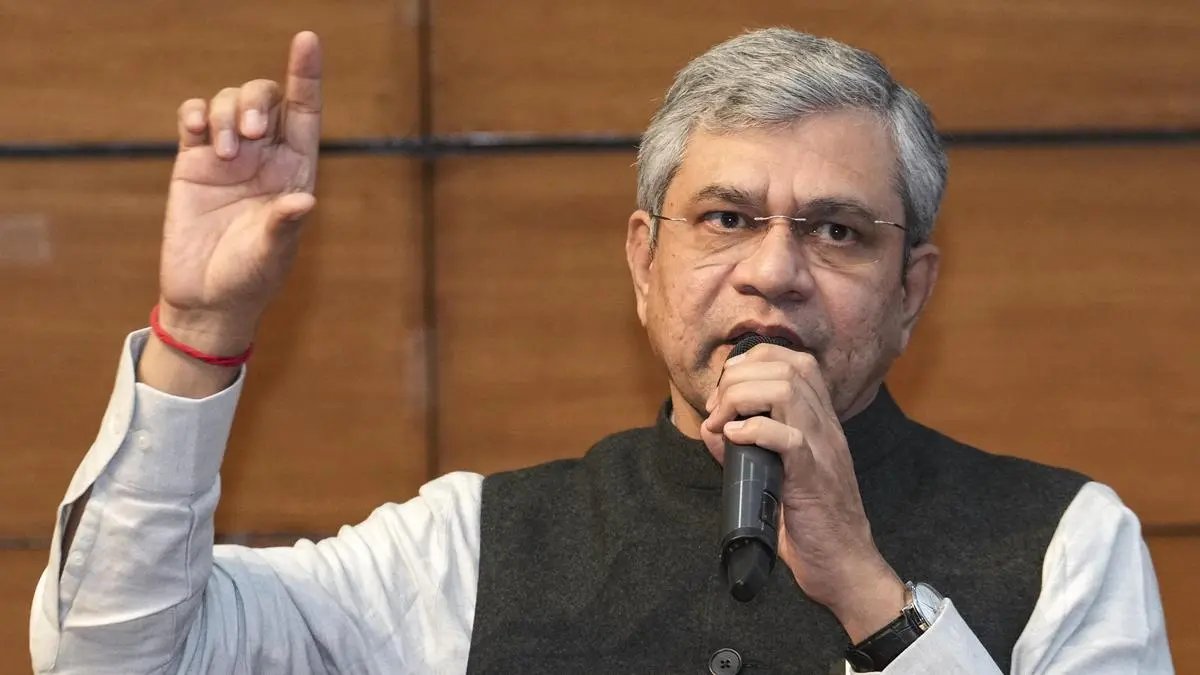

Union Minister for Information and Broadcasting, Ashwini Vaishnaw, addressing the cabinet briefing in New Delhi on Wednesday
| Photo Credit:
KAMAL KISHORE
In the backdrop of shortages seen across strategic sectors due to China’s export restrictions on rare earth magnets, the Union Cabinet on Wednesday approved an incentive scheme of around ₹7,300 crore to promote the manufacturing of sintered rare earth permanent magnets (REPMs).
The scheme aims to enhance self-reliance by scaling up domestic production of REPMs that would reduce dependency on China as well as position India as a key player in the global REPM market. India expects to attract investments of over ₹20,000 crore in the manufacturing of REPMs, a vital input for electric vehicles, mobile handsets, aerospace, defence applications and electronic toys among others.
Giving details of the Cabinet decision, Information and Broadcasting Minister Ashwini Vaishnaw said that the scheme to promote manufacturing of REPMs aims to create a capacity of 6,000 TPA ( Tonnes Per Annum). “With the incentive, the actual investment could rise to three times more than that,” Vaishnaw said.
Mineral drive
India has about of 6.9 million tonnes of rare earth element reserves, which can support the production of over 20 million tonnes of REPM. Unlike China, which holds a near-monopoly in REPM production owing to its dominance across the entire supply chain, especially in the processing technology and downstream manufacturing, India has so far lagged in harvesting its rare earth element reserves. With the new scheme, the government aims to bridge that gap.
The total financial outlay of the scheme is ₹7,280 crore, comprising sales-linked incentives of ₹6,450 crore on REPM sales for five years and capital subsidy of ₹750 crore for setting up an aggregate of 6,000 TPA of REPM manufacturing facilities. “The scheme envisions allocating the total capacity to five beneficiaries through a global competitive bidding process. Each beneficiary will be allotted up to 1,200 TPA of capacity,” a government statement said.
Sustainable path
Commenting on the decision, Shailesh Chandra, President of SIAM, said: “By strengthening indigenous manufacturing capabilities, it will contribute to reducing carbon emissions and lowering dependence on crude oil imports, further enhancing the nation’s energy security.”
Said Raju Kumar, Energy Tax Leader at EY India: “The real test now is disciplined implementation: ensuring access to technology, developing high-quality processing capability, building responsible mining practices and maintaining ESG safeguards.”
Published on November 26, 2025

