

Monsoon, oceanographic changes influence fluctuations in sardine availability: CMFRI study

The study, published in Current Science highlights how climate-driven oceanographic changes have been shaping the boom-and-bust cycles of this vital fishery, underscore the urgent need for dynamic fishery forecast models and harvest rules
A latest study by ICAR-Central Marine Fisheries Research Institute (CMFRI) has found that monsoon rainfall trends caused the sudden surge of juvenile Indian Oil sardines along Kerala’s coast in 2024.
The study, published in Current Science highlights how climate-driven oceanographic changes have been shaping the boom-and-bust cycles of this vital fishery, underscore the urgent need for dynamic fishery forecast models and harvest rules.
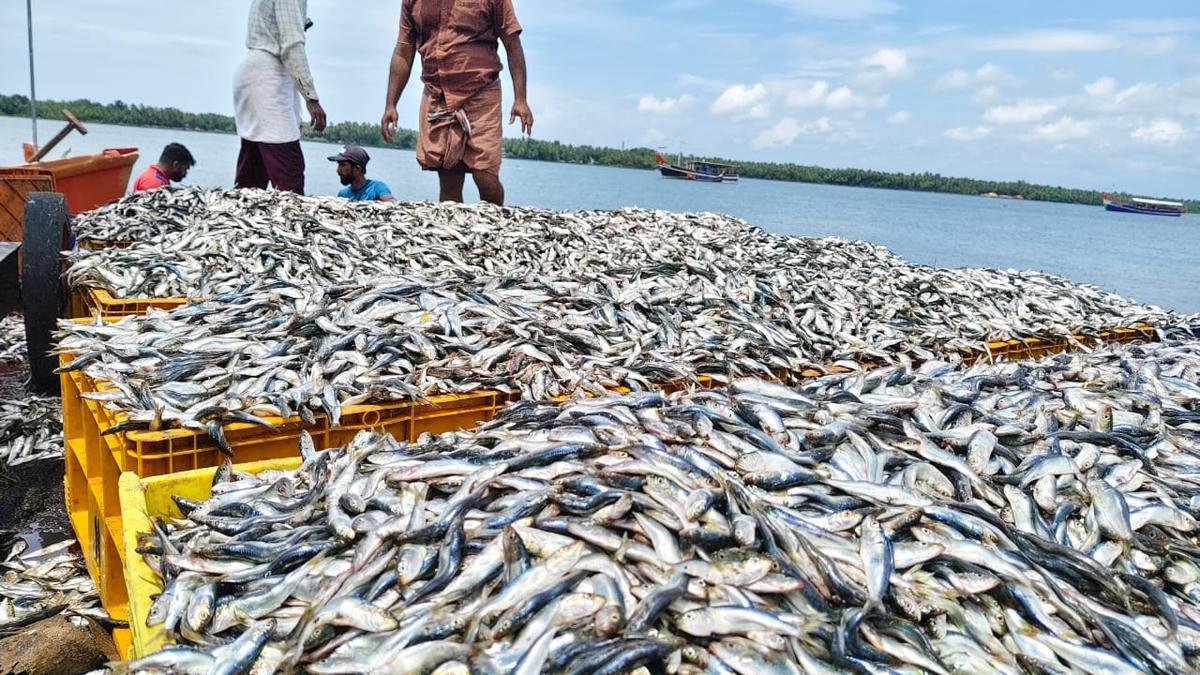
A lifeline for Kerala’s fishing communities and a major contributor to India’s marine landings, oil sardine had witnessed a steep decline from a record catch of four lakh tonnes in 2012 to just 3,500 tonnes in 2021. However, in 2024, an unusual influx of young sardines, averaging 10 cm in size, was reported across Kerala’s coast, with instances of mass beaching in districts like Kozhikode and Thrissur.
With an eco-regional approach, CMFRI study integrated fisheries biology and oceanographic data from Kochi, Vizhinjam, and Kozhikode.
According to the study, the phenomenon was triggered by positive monsoon rainfall trends coupled with nutrient-rich upwelling that boosted microplankton growth — the primary food source for sardine larvae. This spike in microplankton enhanced larval survival, leading to an unprecedented surge in recruitment.
Economic impact
Later, this condition also increased competition for food resources among the recruits leading to poorly fed fish and lower weight gains for the zero year-class fishes. The economic impact was felt in massive crash of the market prices for the sardine and led to suspension of fishing for juveniles, said U Ganga, Principal Scientist who led the study.
The study also pointed out that ecosystem productivity indicators — especially the microplankton component of chlorophyll-a — played a stronger role in sardine recruitment than the traditionally emphasized spawning stock biomass. The marine heat waves phenomenon varied in intensity and duration in the three eco-regions and likely affected maturation and distribution trends of oil sardine spawners.
With climate change intensifying these fluctuations, CMFRI researchers have called for the development of species-specific, short-term fishery forecast models and dynamic local harvest rules to ensure sustainability.
Within a broader fisheries management framework, dynamic local harvest control approaches for the highly environment driven sardine fishery are also important for safeguarding livelihoods and food security, Ganga said.
Published on September 30, 2025

