

42 GW RE projects awaiting off take contracts threat to India’s 2030 target: BNEF
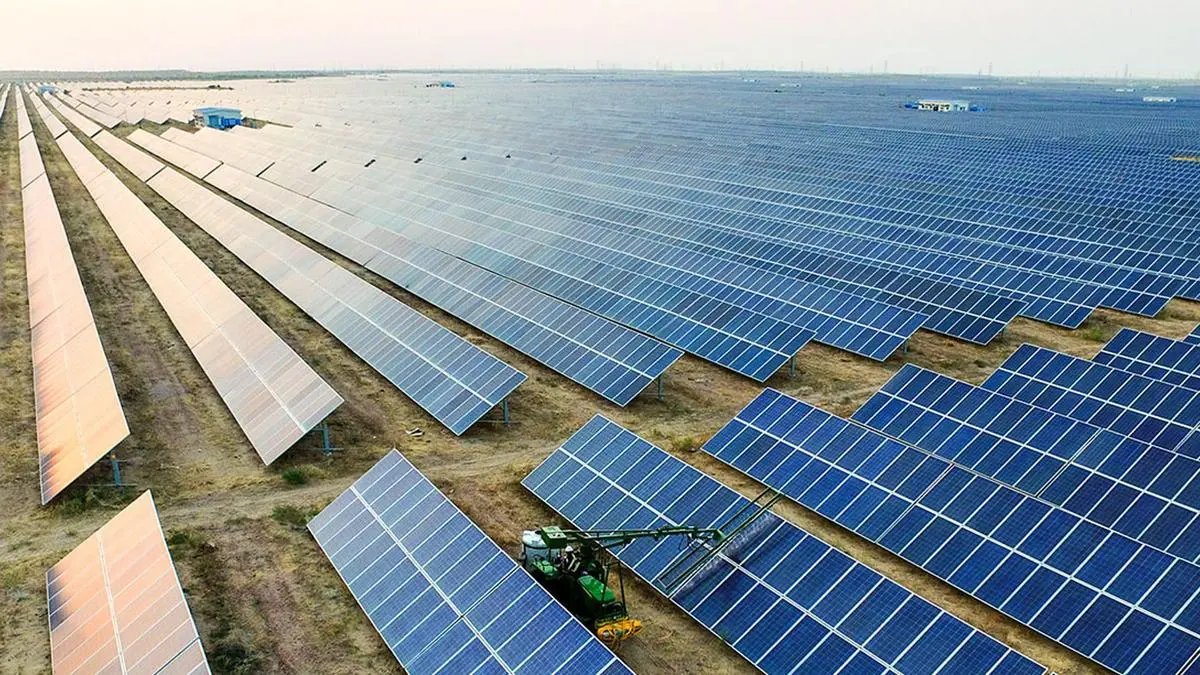

Renewable energy auctions have been the bedrock of the sector’s growth.
Even as India is likely to overtake the US as the world’s second-largest solar power market this year, the issue of 42 GW of renewable energy (RE) capacities languishing due to no takers is a major threat to meeting the 2030 target, said BloombergNEF.
Even as the global solar build is set to fall for the first time as China slows, solar power capacity additions in India will rise 6 per cent year-on-year in 2026 to just over 50 gigawatts (GW), according to BloombergNEF forecasts.
Utility-scale plants will continue to account for most new capacity, while government subsidies are propping up residential rooftop systems.
India added a record 35 GW AC (alternating current) of solar capacity in the first 11 months of last year. This pace of new capacity deployment puts the country on track to meet its 2030 goal of 500 GW (AC) of non-fossil fuel capacity, it added.
Offtake contracts
Renewable energy auctions have been the bedrock of the sector’s growth. India auctioned a record 60 GW (AC) of renewables in 2024, which led to 42 GW (AC) of projects awaiting firm offtake contracts, BNEF said.
“If this capacity remains unsigned, the projects may be cancelled. This presents a downside risk to future capacity additions and a major threat to meeting the 2030 goal,” it added.
India’s policymakers are focusing on increasing localisation of the photovoltaic (PV) supply chain. Projects can only use modules that are on the approved list of models and manufacturers (ALMM), which has consistently excluded overseas factories.
This has acted as an effective trade barrier and driven a surge in domestic manufacturing investment. Leading solar makers, such as Waaree Energies, Vikram Solar and Premier Energies have listed in the last two years. More manufacturers are looking to go public to raise capital for future capacity expansion, it pointed out.
“Module manufacturing capacity in India stands at around 125 GW per year, raising concerns about overcapacity and potential consolidation. Capacity for upstream components used to make modules remains lower than domestic demand, leading to continued reliance on imports,” BNEF said.
Second largest
India is set to overtake the US as the world’s second-largest solar market in 2026, supported by modest installation growth even as the US sees a sharp pullback, BNEF noted.
US solar installations are forecast to fall 14 per cent this year to 44 gigawatts, driven by the One Big Beautiful Bill Act. Projects that begin construction after 2025 must comply with foreign entity of concern rules to qualify for tax credits, adding another obstacle for developers. As a result, the US is set to relinquish second place, a position it has held since 2019, it added.
China remains, by a wide margin, the world’s largest solar market despite an expected fall in annual additions.
BNEF forecasts 321 GW of projects to be added in 2026, a 14 per cent y-o-y decrease. As a result, global solar installations are set to decline for the first time this year. Although some markets are poised for strong growth in 2026, this will not offset the significant shortfall left by China, it pointed out.
Published on January 14, 2026

