








How Prefabricated Smart Stays Could Solve India’s Seasonal Tourism Accommodation Crisis
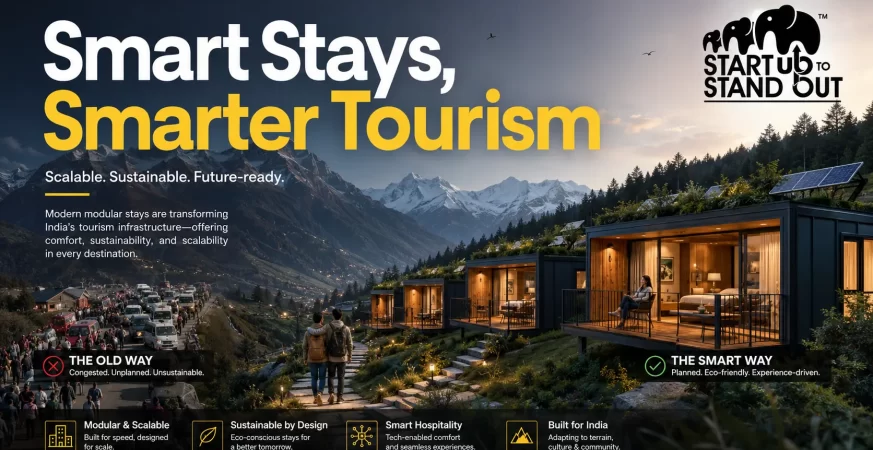
How Prefabricated Smart Stays Could Solve India’s Seasonal Tourism Accommodation Crisis Introduction Every year, India’s most popular tourist destinations face the same challenge: demand far exceeds capacity. Whether it’s the snow-covered landscapes of Manali, the valleys of Kashmir, or major pilgrimage destinations during peak travel seasons, accommodation shortages have become a recurring problem. Travelers struggle to find rooms, prices surge dramatically, and local infrastructure comes under immense pressure. While tourism continues to drive economic growth, the hospitality sector often struggles to adapt quickly enough to seasonal spikes in demand. The result is a mismatch between permanent infrastructure and temporary demand. A growing solution may lie in an unexpected place: prefabricated smart stays—modular accommodation systems designed to be deployed rapidly, scaled efficiently, and relocated when demand shifts. Based on the business concept outlined in the source document, these flexible housing units offer a compelling vision for the future of tourism infrastructure in India. Why Traditional Accommodation Falls Short Most hotels, resorts, and homestays are built for long-term use. While this makes sense for stable demand, it creates challenges in destinations that experience extreme seasonal fluctuations. During peak tourism periods: Accommodation becomes scarce. Prices rise sharply. Travelers face uncertainty and inconvenience. Local authorities struggle with overcrowding. During off-seasons: Occupancy rates fall significantly. Infrastructure remains underutilized. Businesses face declining revenue. This cycle highlights a fundamental problem: tourism demand is flexible, but accommodation infrastructure is not. A New Approach: Prefabricated Smart Stays Prefabricated smart stays are modular accommodation units that can be assembled, deployed, and dismantled far more quickly than traditional buildings. Unlike permanent hotels, these structures are designed for mobility and adaptability. Units can be installed in high-demand tourist regions during peak seasons and relocated or repurposed when demand decreases. Key advantages include: Faster deployment Lower construction costs Reusability across locations Reduced environmental impact Scalability based on demand The concept builds on a model already proven in disaster relief operations, military camps, and large-scale temporary events. The innovation lies in applying this approach to mainstream tourism infrastructure. The Value Proposition Affordable Accommodation During Peak Demand One of the biggest frustrations for travelers is price inflation during peak seasons. Modular accommodation can help increase room availability, reducing pressure on pricing and providing more affordable options. Guaranteed Availability Additional temporary capacity means travelers are less likely to face fully booked destinations during high-demand periods. Flexible Infrastructure Instead of investing in permanent buildings that may remain partially empty for much of the year, operators can scale capacity up or down as needed. Sustainable Development Many tourism hotspots are located in environmentally sensitive regions. Temporary modular structures minimize permanent land disruption and allow more responsible tourism expansion. Enhanced Visitor Experiences When designed thoughtfully, these stays can offer unique nature-focused experiences that blend comfort with scenic locations. Building a Scalable Tourism Business The commercial potential of prefabricated smart stays extends beyond simply renting rooms. Potential revenue streams include: Nightly accommodation rentals Dynamic seasonal pricing Travel and sightseeing packages Food and beverage services Corporate retreats Festival and event-based bookings Adventure tourism partnerships This diversified model reduces dependence on a single source of income while creating opportunities for higher profitability during peak periods. According to the business model presented, estimated accommodation pricing could range from ₹2,500 to ₹5,000 per night depending on demand and location. Overcoming Key Challenges Regulatory Approvals Tourism projects often require permissions related to land use, environmental compliance, and local governance. Public-private partnerships and collaboration with tourism authorities could accelerate adoption while ensuring regulatory compliance. Logistics and Transportation Many high-demand destinations are located in mountainous or remote regions. Lightweight modular designs, local logistics partnerships, and pre-assembled components can significantly reduce deployment complexity. Seasonal Occupancy Risk Demand naturally fluctuates throughout the year. To maintain utilization during slower periods, operators can target: Corporate retreats Remote work accommodations Wellness experiences Festivals and special events Temporary workforce housing This flexibility helps create a more resilient business model. The Broader Impact on Tourism The benefits of modular tourism infrastructure extend beyond business profitability. Supporting Local Economies Increased visitor capacity can generate additional opportunities for: Local food vendors Transportation providers Tour guides Small tourism businesses Reducing Infrastructure Pressure Temporary accommodation helps destinations absorb tourist overflow without requiring large-scale permanent construction projects. Encouraging Sustainable Tourism Modular infrastructure offers a more environmentally conscious approach to growth, particularly in ecologically sensitive destinations. Improving Traveler Access Greater accommodation availability creates more options for travelers and improves the overall tourism experience. Insights & Analysis What makes prefabricated smart stays particularly compelling is their alignment with broader global trends. The hospitality industry is increasingly moving toward flexibility, sustainability, and asset-light expansion models. At the same time, travelers are seeking unique experiences, remote destinations, and environmentally responsible accommodation choices. Modular infrastructure sits at the intersection of these trends. Rather than replacing traditional hotels, smart stays can complement existing hospitality ecosystems by addressing overflow demand, seasonal surges, and emerging travel patterns. The concept also has applications beyond tourism. The same infrastructure could be adapted for disaster response, remote workforce housing, event accommodation, and temporary community development projects. That versatility significantly strengthens the long-term business case. Conclusion India’s tourism sector is growing faster than ever, but infrastructure development has struggled to keep pace with seasonal demand. Prefabricated smart stays present a practical solution to this challenge. By combining modular design, rapid deployment, and scalable operations, they offer a flexible alternative to traditional accommodation models. The opportunity extends beyond profitability. These systems have the potential to support local economies, improve traveler experiences, reduce environmental impact, and help destinations manage growth more effectively. As tourism continues to evolve, the future may not belong solely to larger hotels or permanent developments. It may belong to smarter, more adaptable infrastructure that can move wherever demand takes it. About the Authors This article was collaboratively prepared by: Sarvesh Bang Abhijeet Kasar Sandesh Chavan Tushar Malkhede Niraj Ghuge Siddhi Deshmukh Jayant Jadhav Teena Tadavi Aman Kakate Syed Mursaleen
manjula
- June 13, 2026
- 0 Comments
- 167 Views
-
