








How 3D Concrete Printing Could Transform Affordable Housing and Infrastructure
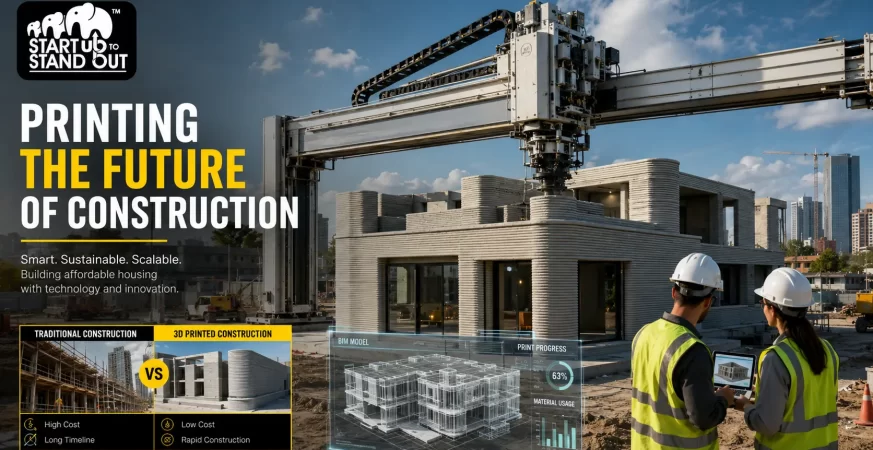
How 3D Concrete Printing Could Transform Affordable Housing and Infrastructure Introduction The construction industry has changed remarkably little over the past century. While industries such as manufacturing, logistics, and healthcare have embraced automation and digital transformation, construction remains heavily dependent on manual labor, lengthy timelines, and material-intensive processes. The consequences are visible everywhere: housing shortages, project delays, rising costs, safety risks, and growing environmental concerns. As cities expand and demand for affordable housing continues to increase, the need for a faster, more efficient construction model has never been greater. One technology attracting growing attention is 3D concrete printing. By combining digital design, automation, and advanced construction materials, it offers the potential to dramatically reduce construction time, improve precision, and make housing more accessible at scale. Why Traditional Construction Is Struggling Modern construction faces several interconnected challenges. Labor Dependency Many construction projects still rely heavily on manual labor. This dependence often leads to workforce shortages, inconsistent quality, and increased safety risks on project sites. Material Waste Traditional building methods can generate significant material waste through over-ordering, spillage, cutting losses, and rework. Delays and Cost Overruns Infrastructure and housing projects frequently experience delays due to labor constraints, weather disruptions, supply chain issues, and inefficient project coordination. Limited Design Flexibility Conventional construction often favors standardized designs because customization can increase costs and complexity. These challenges are particularly significant in affordable housing, where balancing cost, speed, and quality remains a persistent challenge. The Rise of 3D Concrete Printing 3D concrete printing reimagines how buildings are constructed. Instead of assembling structures using traditional formwork, brickwork, and manual labor, specialized printers deposit concrete layer by layer based on digital design files. The process begins with Building Information Modeling (BIM) and Computer-Aided Design (CAD) systems that convert architectural plans into machine-readable instructions. Large-scale printers then construct walls and structural elements with millimeter-level precision. The result is a highly automated construction workflow that can dramatically accelerate project delivery while reducing material waste. What Makes 3D Printed Construction Different? Faster Project Completion One of the most significant advantages of 3D printing is speed. Projects that traditionally require months of construction can potentially be completed in weeks—or even days—depending on project size and complexity. Reduced Material Waste Unlike conventional methods that often generate excess material consumption, additive manufacturing places material only where it is needed. This improves efficiency while reducing construction waste. Improved Precision Digital construction workflows minimize human error and improve consistency across projects. Greater accuracy translates into fewer defects, less rework, and improved structural performance. Enhanced Worker Safety Automation reduces worker exposure to hazardous construction activities, helping improve overall site safety. Design Freedom Complex geometries and customized designs can be produced without the significant cost increases typically associated with traditional construction methods. A New Model for Affordable Housing The housing sector stands to benefit significantly from construction automation. Affordable housing projects often face immense pressure to balance quality, cost, and delivery speed. 3D concrete printing addresses all three. Potential applications include: Affordable housing developments Government housing initiatives Disaster relief shelters Rural housing projects Smart city infrastructure Institutional and commercial buildings Because digital designs can be rapidly adapted, communities can receive housing solutions tailored to local climate, geography, and cultural needs without sacrificing efficiency. The Business Opportunity Behind Construction Automation Beyond technological innovation, 3D printing presents a compelling business model. Revenue opportunities can include: Construction project contracts Housing development partnerships Government infrastructure programs Design and engineering services Equipment leasing Building maintenance and support services The proposed model also benefits from a diversified customer base that spans residential, commercial, institutional, government, and humanitarian sectors. This creates multiple growth pathways while reducing dependence on a single market segment. Sustainability Benefits Sustainability is becoming a central requirement for future infrastructure. 3D concrete printing contributes to environmental goals through: Lower Material Consumption Precise material placement reduces waste and improves resource efficiency. Reduced Construction Waste Additive manufacturing generates significantly less waste compared to conventional construction methods. Efficient Resource Utilization Digital planning optimizes material use before construction even begins. Climate-Resilient Infrastructure Advanced material formulations can improve durability and resilience against environmental conditions. These advantages align closely with global efforts to create more sustainable and resource-efficient built environments. Social Impact Beyond Buildings The potential impact of 3D construction extends beyond technology and profitability. Faster construction can accelerate access to safe housing for underserved communities. Disaster relief agencies can deploy shelters more quickly after emergencies. Governments can address housing shortages more efficiently. Importantly, automation does not eliminate human involvement. Instead, it shifts employment toward higher-value technical roles involving machine operation, digital modeling, quality assurance, and project management. This evolution supports workforce modernization while improving safety and productivity. Insights & Analysis 3D concrete printing represents one of the most significant shifts in construction methodology since the introduction of reinforced concrete. Its true value is not simply faster construction—it is the digitization of the entire building process. By connecting design, engineering, manufacturing, and construction into a single automated workflow, the technology removes many of the inefficiencies that have historically plagued the industry. As housing demand rises, labor shortages intensify, and sustainability requirements become stricter, the economic case for automated construction will continue to strengthen. While adoption remains in its early stages, the direction of travel is increasingly clear: construction is becoming digital. Conclusion The future of construction will be defined by speed, precision, sustainability, and scalability. 3D concrete printing brings all four together in a single technology platform. By reducing construction timelines, minimizing waste, improving safety, and enabling affordable housing development, it offers a practical solution to some of the industry’s most pressing challenges. As governments, developers, and communities search for better ways to build, 3D concrete printing is moving from experimental innovation to real-world implementation. The buildings of tomorrow may not be built brick by brick—they may be printed layer by layer. About the Authors This article was collaboratively prepared by: Haritosh Ugile Manish Waste Shrishailya Sakole Abhijeet Wanave Saket Suryawanshi Pravin Wadekar Anjali Thorave Neel Kadam Ksthija Mane Shahuraj Nalawade
manjula
- June 16, 2026
- 0 Comments
- 187 Views
-