








How AI-Powered Farm Intelligence Could Transform Smallholder Agriculture
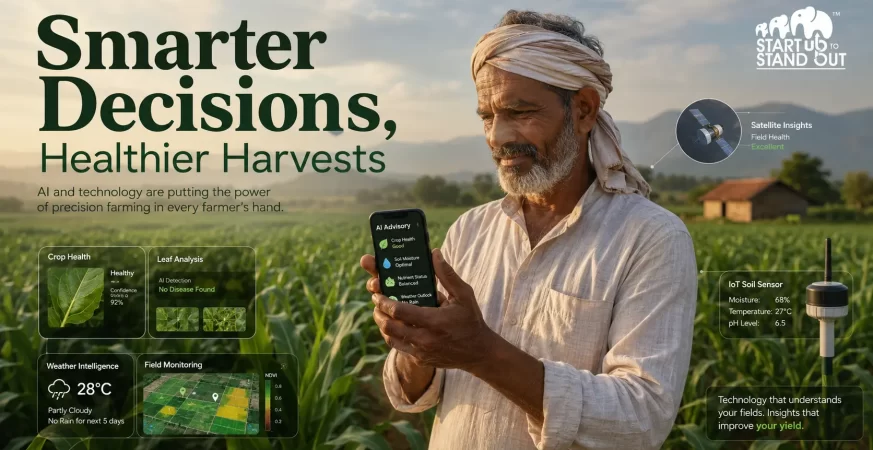
How AI-Powered Farm Intelligence Could Transform Smallholder Agriculture Introduction Agriculture remains the backbone of India’s economy, yet millions of farmers continue to make critical decisions with limited information. Despite employing nearly half of the country’s workforce and contributing significantly to India’s GDP, agriculture still relies heavily on experience, local advice, and unpredictable weather patterns. For smallholder farmers, every planting decision, irrigation schedule, or pesticide application carries financial risk. The consequences are substantial. Crop diseases often go undetected until yields are severely affected. Fertilisers are frequently overused due to a lack of accurate soil intelligence. Climate variability has made traditional farming calendars increasingly unreliable, leaving farmers exposed to losses that could have been prevented with timely information. While large agribusinesses increasingly benefit from satellite monitoring, precision farming, and data analytics, these technologies remain inaccessible to most small and medium farmers. AgriSense AI seeks to bridge this gap by delivering artificial intelligence, computer vision, IoT sensing, and real-time agricultural intelligence through an affordable mobile-first platform built specifically for Indian agriculture. The Information Gap Holding Farmers Back Technology has transformed almost every major industry. Agriculture, however, continues to suffer from a significant information imbalance. Large commercial farms have access to: Precision agriculture tools Satellite imagery Soil analytics Agronomists Predictive weather intelligence Smallholder farmers often have access to none of these resources. Instead, important farming decisions are commonly based on: Personal experience Neighbouring farmers’ advice Traditional farming practices Delayed government advisories This lack of timely, localized information contributes to: Lower crop productivity Higher cultivation costs Excessive pesticide usage Soil degradation Financial uncertainty The challenge is not simply agricultural productivity—it is access to actionable intelligence. Bringing Precision Agriculture to Every Farmer AgriSense AI is designed to make precision farming affordable rather than exclusive. Instead of requiring expensive machinery or specialized expertise, the platform delivers intelligent recommendations directly through a smartphone and WhatsApp. Its core capabilities include: Crop Yield Optimization Machine learning models analyze: Soil conditions Crop variety Local weather Regional agricultural data to recommend optimal planting, irrigation, and harvesting schedules. Early Disease Detection Using computer vision, farmers can upload crop images for AI-based identification of: Diseases Pest infestations Nutrient deficiencies before visible damage significantly affects production. Input Cost Optimization The platform recommends precise fertilizer and pesticide applications using real soil data, reducing unnecessary expenditure while improving environmental sustainability. Real-Time Advisory Actionable recommendations are delivered through both the mobile application and WhatsApp, ensuring accessibility even for users with limited digital familiarity. Technology Designed for Rural India One of AgriSense AI’s strengths is that it has been designed around how Indian farmers actually use technology. Rather than expecting users to adopt unfamiliar digital platforms, the solution integrates technologies already widely available. Its technology stack includes: Artificial Intelligence Machine Learning Computer Vision IoT soil sensors Satellite agricultural datasets Android mobile applications WhatsApp-based communication This practical approach significantly lowers adoption barriers while maximizing usability across rural communities. Building an Ecosystem Instead of a Standalone Product AgriSense AI is not positioned as an isolated application. Its business model depends on strategic partnerships across the agricultural ecosystem. Key collaborators include: Government Agriculture Departments Partnerships with agricultural agencies improve credibility and distribution. Krishi Vigyan Kendras Local agricultural extension centres help reach farmers at scale. Farmer Cooperatives Existing community networks accelerate onboarding and trust. AgriTech Sensor Companies Affordable IoT hardware supports data collection. Seed and Fertiliser Companies The platform creates new digital engagement opportunities while maintaining farmer-focused recommendations. These partnerships strengthen both adoption and long-term scalability. A Business Model Built for Accessibility Many agricultural technologies struggle because they are priced beyond the reach of small farmers. AgriSense AI addresses affordability through a layered revenue strategy. Freemium Model Basic weather alerts and crop calendars remain free. Subscription Plans Premium plans ranging from ₹99 to ₹499 per month unlock: AI advisory Disease detection Personalized recommendations Predictive insights Premium Agronomy Services Advanced consultations serve progressive farmers and cooperatives. B2B Agricultural Analytics Aggregated and anonymized agricultural insights can support: Seed companies Agri-businesses Government planning agencies without compromising farmer privacy. Marketplace Commissions An integrated marketplace allows agricultural input companies to reach farmers directly while generating commission-based revenue. This diversified model balances affordability with commercial sustainability. Why Data Becomes the Competitive Advantage Perhaps the strongest aspect of the platform is not the mobile application. It is the data. Every farmer using AgriSense AI contributes new agricultural observations that improve future recommendations. This creates a powerful network effect. More users generate: Better disease datasets More localized recommendations Improved prediction accuracy Stronger AI models Better recommendations attract more farmers. This continuous improvement cycle creates a competitive moat that becomes increasingly difficult for competitors to replicate. Scaling Across India’s Agricultural Economy The proposal outlines a focused go-to-market strategy. Initial deployment targets: Farmer cooperatives in Maharashtra Farmer cooperatives in Telangana Government agricultural pilot programs Successful early adopters then become local advocates who encourage wider community adoption. Looking ahead, AgriSense AI aims to evolve beyond an advisory platform. Its long-term vision includes supporting: Crop insurance underwriting Agricultural retailers Input demand forecasting Government planning Food security monitoring This positions the platform as agricultural infrastructure rather than simply another farming application. Insights & Analysis The most valuable product AgriSense AI offers is not artificial intelligence. It is confidence. Farmers constantly make high-stakes decisions under uncertainty. Whether to irrigate, spray pesticides, or harvest a crop can determine an entire season’s profitability. By reducing uncertainty through localized intelligence, AgriSense AI improves not only productivity but decision quality. Its strongest competitive advantage may ultimately lie in its combination of affordability, localized data, government partnerships, and WhatsApp-first accessibility. Many precision agriculture startups build advanced technology. Few design it around the realities of India’s smallest farmers. That focus could become AgriSense AI’s greatest strength. Conclusion Indian agriculture is entering a new era where information may become just as valuable as land, water, or machinery. Smallholder farmers increasingly need access to timely insights that help them improve productivity while reducing costs and environmental impact. AgriSense AI demonstrates how artificial intelligence, computer vision, IoT sensors, and satellite intelligence can be combined into
manjula
- July 3, 2026
- 0 Comments
- 488 Views
-