








Beating Heat Naturally: How Earthen Cooling Walls Could Redefine Sustainable Comfort
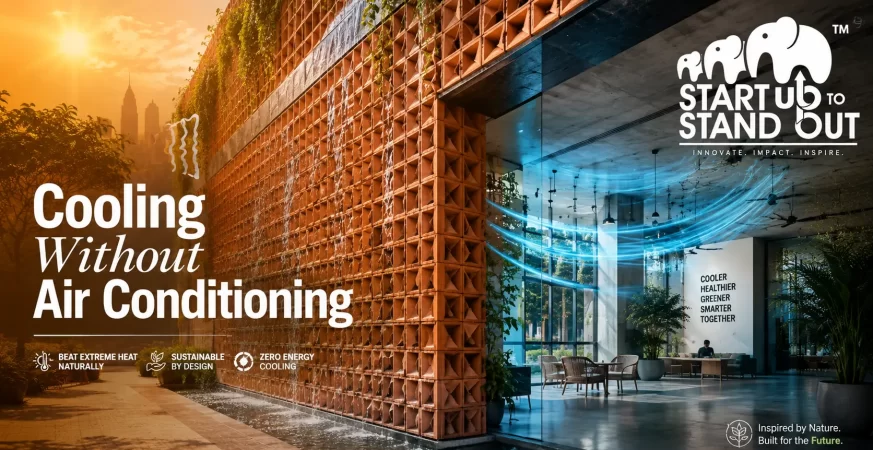
Beating Heat Naturally: How Earthen Cooling Walls Could Redefine Sustainable Comfort Introduction As global temperatures continue to rise, cooling is no longer a luxury—it is becoming a necessity. For millions of people living in hot climates, staying comfortable indoors often means relying on air conditioning. But conventional cooling comes with a cost: rising electricity bills, growing energy demand, and increasing environmental impact. This challenge has created an urgent need for solutions that can keep buildings cool without consuming large amounts of energy. One emerging approach combines centuries-old building wisdom with modern engineering: Earthen Evaporative Cooling Walls. By using natural materials and the science of evaporation, this technology offers a practical, affordable, and environmentally responsible way to improve indoor comfort while reducing dependence on mechanical cooling systems. The Growing Cooling Challenge Heatwaves are becoming more frequent and intense across many regions of the world. In areas where temperatures regularly reach 35–45°C, indoor thermal discomfort has become a serious quality-of-life issue. Traditional air conditioning helps solve this problem, but it introduces new challenges: High installation costs Rising electricity bills Increased energy demand Greater greenhouse gas emissions Dependence on refrigerants with environmental impacts For many households and small businesses, especially in developing regions, these costs can make effective cooling financially difficult. As cooling demand grows, the world faces a critical question: how can buildings stay comfortable without increasing energy consumption at the same pace? A Cooling Solution Inspired by Nature Earthen Evaporative Cooling Walls are designed around a simple natural principle: evaporation absorbs heat. The system combines porous earthen materials such as terracotta tiles and compressed stabilized earth blocks with a controlled water circulation mechanism. As water moves through the wall and gradually evaporates, heat is absorbed from the surrounding air. The result is a natural cooling effect that lowers surface temperatures and improves indoor comfort without relying on energy-intensive cooling equipment. According to the business model, the technology can: Reduce wall surface temperatures by 5–12°C Lower indoor temperatures by 2–5°C Cut cooling-related energy consumption by 20–40% Require only minimal electricity for water circulation Why Earthen Cooling Walls Stand Out Lower Energy Consumption Unlike traditional air conditioning systems that cool indoor air after heat has entered a building, earthen cooling walls help reduce heat transfer at the source. This preventive approach significantly reduces the amount of energy needed to maintain comfortable indoor conditions. Affordable Long-Term Operation While air conditioning often leads to recurring electricity expenses, passive cooling systems operate at a fraction of the cost. Homeowners can potentially save thousands of rupees annually through reduced cooling expenses while maintaining improved thermal comfort. Sustainable Building Materials The use of locally available earthen materials reduces embodied energy and supports environmentally responsible construction practices. Terracotta and earth-based materials also align well with growing demand for sustainable architecture and climate-responsive design. Scalable Applications The technology can be adapted across multiple building types: Residential homes Apartment developments Schools Offices Hostels Community buildings Its flexibility makes it suitable for both small-scale installations and large infrastructure projects. A Strong Business Opportunity Beyond its environmental benefits, earthen cooling technology presents a compelling commercial opportunity. The proposed business model generates revenue through multiple channels: Installation services Site-based cooling projects Component sales Design consulting Maintenance contracts This diversified approach creates recurring revenue while helping customers reduce operating costs. The model also benefits from strong margins due to relatively low material costs and increasing demand for energy-efficient building solutions. According to the projections in the source document, a growing operation could scale from local residential projects to large institutional developments while maintaining profitability. Environmental Impact at Scale Perhaps the most compelling aspect of earthen cooling walls is their potential impact when adopted widely. Reduced air conditioning usage directly translates into: Lower electricity consumption Reduced carbon emissions Decreased strain on power grids Less dependence on fossil fuels Because the system relies on natural cooling processes, it avoids many of the environmental concerns associated with conventional HVAC systems. As cities continue to urbanize and temperatures rise, passive cooling technologies could play an increasingly important role in creating more resilient and sustainable communities. Social Benefits Beyond Energy Savings Cooling is often discussed as an energy issue, but it is also a public health and economic issue. Improved indoor comfort can positively influence: Health outcomes during heatwaves Workplace productivity Learning environments Sleep quality Overall well-being Affordable cooling solutions are particularly important for low- and middle-income households that may not have access to expensive mechanical systems. In addition, the deployment of these systems creates opportunities in manufacturing, installation, maintenance, and green construction sectors, supporting local economic development. Insights & Analysis The future of cooling will likely depend on a combination of technologies rather than a single solution. Air conditioning will remain important in many environments, but rising energy costs and climate concerns are accelerating interest in passive cooling systems that reduce dependence on mechanical equipment. Earthen evaporative cooling walls are especially interesting because they merge traditional building knowledge with modern performance requirements. Instead of fighting heat with more energy, they use natural processes to prevent excessive heat buildup in the first place. As governments, developers, and homeowners increasingly prioritize sustainability, solutions that lower both operating costs and environmental impact are positioned for significant growth. Conclusion The cooling challenge of the future cannot be solved by increasing energy consumption alone. Earthen Evaporative Cooling Walls offer a smarter approach—one that leverages natural materials, passive design principles, and sustainable engineering to create comfortable indoor environments with minimal energy use. As temperatures continue to rise worldwide, innovations like these demonstrate that effective cooling does not always require more electricity. Sometimes, the most powerful solutions come from working with nature rather than against it. About the Authors This article was collaboratively prepared by: Samruddhi Yadav Pratik Shahu Shaman Tembhekar Shaurya Dubey Nirzara Shinde Bhakti Shirke Prutha Sonkusare Malhar D. Yadav Laxmi Saluke Juee Salunkhe
manjula
- June 13, 2026
- 0 Comments
- 218 Views
-
