






Tag: Intelligent transportation

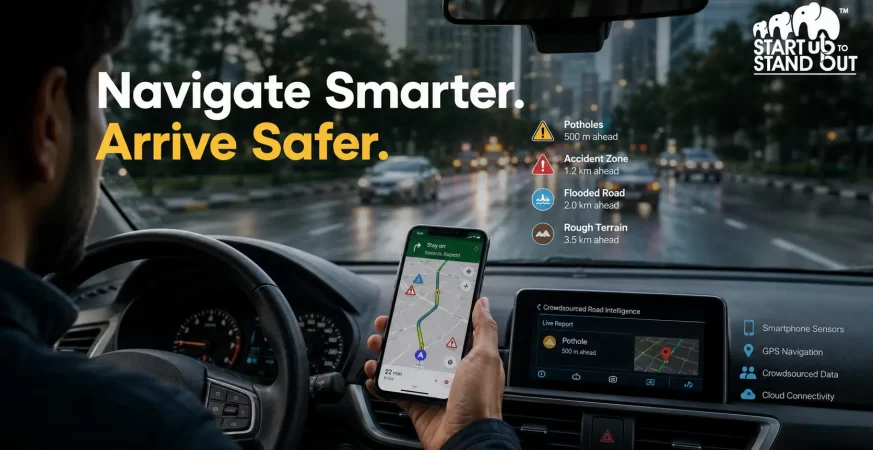
Driver using a smartphone navigation app displaying real-time road hazard alerts, potholes, accident zones, and safer route recommendations on a modern city road.
NextGen Innovators

How Vehicle-Sensed Road Intelligence Could Make Every Journey Safer

How Vehicle-Sensed Road Intelligence Could Make Every Journey Safer Introduction Most navigation apps are designed to answer one question: “What’s the fastest route?” But speed is only one part of a safe journey. Drivers frequently encounter potholes, damaged roads, flooded streets, construction zones, and accident-prone stretches with little or no warning. These hazards often appear unexpectedly, increasing the risk of accidents, vehicle damage, and stressful driving experiences. Despite advances in digital navigation, road safety intelligence remains largely absent from mainstream mapping platforms. The proposed Vehicle-Sensed Road Risk Visualization System addresses this gap by transforming smartphones into real-time road safety sensors. Using built-in GPS, motion sensors, and crowdsourced data, the platform identifies hazardous road conditions and warns drivers before they encounter them, shifting navigation from simply finding the quickest route to finding the safest one. Why Current Navigation Falls Short Modern navigation systems excel at optimizing travel time. However, they rarely account for rapidly changing road conditions. Drivers often receive no advance warning about: Deep potholes Waterlogged roads Uneven surfaces Dangerous mountain roads Accident-prone locations For professional drivers—including cab operators, delivery personnel, and fleet operators—these hazards are encountered daily, resulting in increased accident risks, higher maintenance costs, and operational inefficiencies. Turning Smartphones Into Road Safety Sensors The proposed platform leverages technology already available in nearly every smartphone. Using built-in sensors such as: GPS Accelerometers the application continuously analyzes vehicle movement to detect irregular road conditions. When multiple users report similar disturbances at the same location, the platform validates the information through a crowdsourced intelligence model, improving both accuracy and reliability. This approach eliminates the need for expensive roadside hardware while making the solution highly scalable. From Road Data to Actionable Safety Intelligence Simply collecting road data is not enough. The platform transforms raw sensor information into meaningful guidance through a dynamic risk scoring system. Each road segment is evaluated based on: Severity of road conditions Frequency of reported incidents Confidence level derived from multiple users Drivers then receive real-time alerts about potential hazards before reaching dangerous locations, enabling safer driving decisions. Serving Multiple Stakeholders The platform creates value across several customer groups. Individual Drivers Safer daily commuting with advance warnings about hazardous roads. Professional Drivers Reduced vehicle wear, fewer accidents, and improved operational efficiency. Logistics & Fleet Companies Better route planning while minimizing maintenance and downtime. Government & Smart City Authorities Access to real-time road condition intelligence that supports infrastructure planning. Insurance Companies Improved risk assessment through aggregated road safety data. This diversified customer base strengthens both commercial potential and long-term scalability. Building a Data-Driven Mobility Platform Delivering real-time safety intelligence requires several core capabilities. Key activities include: Mobile application development Risk analysis algorithm development Cloud-based data processing Continuous system improvements User experience optimization The platform relies on essential resources such as smartphone sensors, cloud infrastructure, software development tools, mapping APIs, and a skilled technical team specializing in software engineering and data analytics. Strategic Partnerships Enable Scale No mobility platform grows in isolation. The proposed system benefits from collaborations with: Navigation platform providers Government transportation authorities Cloud infrastructure providers Smartphone manufacturers Automotive companies Fleet operators These partnerships improve data quality, expand adoption, and accelerate nationwide deployment. A Diversified Revenue Model The business combines multiple revenue streams to support sustainable growth. Revenue opportunities include: Freemium Subscriptions Basic safety features remain free while advanced analytics and premium routing capabilities are available through paid plans. API Licensing Third-party navigation platforms can integrate road risk intelligence. Government Data Services Aggregated infrastructure insights support smart city initiatives. Fleet Partnerships Commercial agreements with logistics and transportation companies. Advertising & Data Monetization Targeted promotions and anonymized analytical insights create additional revenue opportunities. This diversified structure reduces dependence on any single source of income. Future Opportunities The platform has significant room for expansion. Potential future developments include: AI-powered accident prediction Smart city integration Advanced insurance risk analytics International deployment Predictive infrastructure maintenance As road intelligence improves, the platform evolves from a navigation application into an essential component of connected transportation infrastructure. Insights & Analysis The most important innovation is not navigation. Navigation already exists. The true value lies in transforming millions of smartphones into a distributed road intelligence network. Every journey contributes fresh information. Every driver strengthens the accuracy of the system. Every reported hazard improves safety for future travelers. This creates a powerful data network where the platform becomes increasingly valuable as adoption grows. Rather than helping drivers arrive faster, it helps them arrive safely—a value proposition that becomes more important as urban mobility continues to evolve. Conclusion Road safety remains one of the most pressing transportation challenges worldwide. While existing navigation platforms focus primarily on efficiency, the Vehicle-Sensed Road Risk Visualization System introduces a fundamentally different approach by prioritizing safety through real-time intelligence. By combining smartphone sensors, crowdsourced reporting, cloud analytics, and predictive risk scoring, the platform creates a scalable solution capable of reducing accidents, lowering vehicle maintenance costs, and improving the overall driving experience. As connected mobility and smart city initiatives continue to expand, platforms that transform everyday devices into intelligent safety networks may become a vital part of the future of transportation. The smartest route is not always the shortest—it is the safest. About the Authors Utkarsha Gavande Hitesh Chaudhary Yashvi Smart Shrelekha Swain Vedant Bagtharia Om Gaupale Payal Ghidode Ainesh Mukherjee

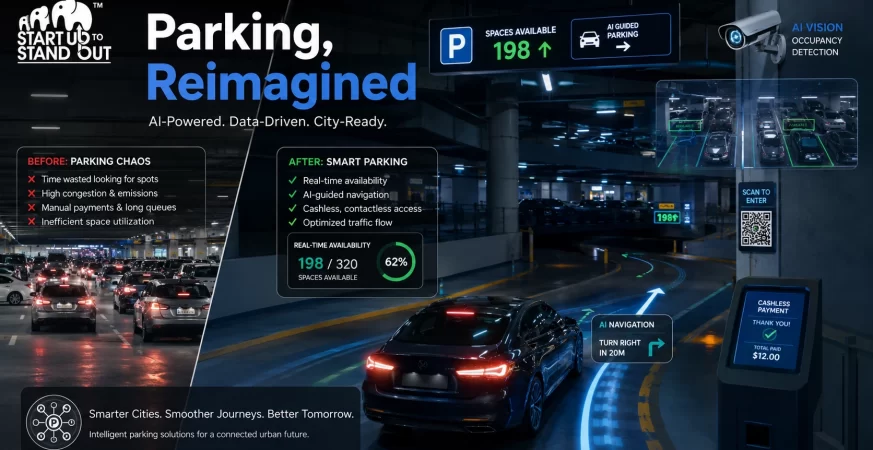
AI-powered smart parking system using computer vision and real-time parking availability data to guide drivers to empty spaces.
NextGen Innovators

How AI-Powered Smart Parking Could Transform Urban Mobility

How AI-Powered Smart Parking Could Transform Urban Mobility Introduction For many urban drivers, finding a parking space is often more frustrating than the journey itself. Drivers routinely spend valuable time circling parking lots, navigating crowded streets, and waiting in queues at parking entrances. The result is wasted fuel, increased congestion, higher emissions, and a poor overall experience. At the same time, parking operators often lack visibility into how efficiently their parking assets are being used. Empty spaces remain undiscovered, pricing remains static regardless of demand, and operational inefficiencies limit revenue potential. As cities become more crowded, parking is evolving from a simple infrastructure challenge into a data and mobility problem. AI-powered smart parking platforms are emerging as a solution by combining computer vision, analytics, automation, and digital payments to create a more efficient parking ecosystem. Why Parking Remains a Major Urban Problem Parking inefficiencies create ripple effects across entire cities. Common challenges include: Drivers wasting time searching for spaces Increased fuel consumption Traffic congestion around high-demand locations Long queues at entry and exit gates Manual ticketing delays Underutilized parking capacity These problems affect not only drivers but also businesses, municipalities, hospitals, airports, and commercial facilities that depend on efficient parking operations. The issue is often not a lack of parking spaces—it is a lack of visibility into where those spaces are available. The Shift Toward AI-Powered Parking Traditional parking systems often rely on expensive physical sensors installed throughout parking facilities. While effective, these systems can be costly to deploy and maintain. A newer approach uses computer vision technology. Instead of installing dedicated sensors in every parking spot, AI models analyze existing CCTV camera feeds to determine parking occupancy in real time. This approach offers several advantages: Lower Infrastructure Costs Existing cameras can often be used without requiring major hardware investments. Real-Time Visibility Parking operators gain instant insight into occupancy levels and traffic flow. Faster Deployment Facilities can implement smart parking capabilities without extensive construction or retrofitting. Scalable Growth The software-based model allows expansion across multiple locations with minimal additional infrastructure. Making Parking Easier for Drivers One of the most valuable aspects of smart parking is the user experience. Instead of driving around searching for available spaces, users receive real-time guidance. Features can include: Live parking availability Space reservation Navigation assistance QR-code entry WhatsApp-based interactions Cashless payments According to the proposal, drivers could potentially locate available parking in under two minutes through AI-assisted discovery and navigation tools. By reducing uncertainty, the system improves convenience while reducing traffic congestion. A New Revenue Model for Parking Operators Smart parking creates opportunities that extend beyond operational efficiency. For property owners and parking operators, data becomes a valuable business asset. Dynamic Pricing AI analytics enable pricing adjustments based on demand, helping maximize revenue during peak periods. SaaS Subscriptions Operators can subscribe to analytics dashboards that provide insights into parking utilization and customer behavior. Transaction Fees Digital payment systems create recurring revenue through small convenience charges. Data Services Parking utilization data can support broader transportation planning and urban mobility initiatives. This combination of recurring software revenue and transaction-based income creates a scalable business model that differs significantly from traditional parking management approaches. Smart Parking as Smart City Infrastructure Parking may seem like a localized issue, but its impact extends across urban transportation networks. Better parking management can contribute to: Reduced Congestion Drivers spend less time circulating in search of spaces. Lower Emissions Reduced vehicle idling decreases fuel consumption and carbon emissions. Improved Traffic Flow Real-time availability information helps distribute parking demand more efficiently. Better Urban Planning Aggregated parking data can support infrastructure investment and transportation policy decisions. These benefits align closely with broader smart city initiatives focused on improving urban mobility and sustainability. Building an Asset-Light Technology Business One of the strongest aspects of the proposed model is its asset-light approach. Rather than investing heavily in physical infrastructure, the business leverages: Existing CCTV systems Cloud computing platforms Payment gateways Navigation services Third-party hardware partners This reduces capital requirements while allowing the company to focus on its core competitive advantage: software and artificial intelligence. Such models are often more scalable because growth depends primarily on technology deployment rather than hardware ownership. Insights & Analysis The future of parking may increasingly resemble the evolution of ride-hailing and navigation services. Historically, parking has been treated as static infrastructure. Smart parking transforms it into a dynamic, data-driven service. The real value lies not only in helping drivers find spaces but also in creating a connected ecosystem where operators, businesses, municipalities, and consumers all benefit from better information. As cities become more digitally connected, infrastructure that generates actionable data will become increasingly valuable. Parking is one of the largest untapped datasets in urban mobility, making it a logical target for AI-driven innovation. Conclusion Parking may not be the first challenge people associate with technological disruption, but it is one of the most visible friction points in urban life. AI-powered smart parking systems offer a practical solution by combining computer vision, analytics, automation, and seamless digital experiences. For drivers, the benefits include reduced stress, faster parking, and lower travel friction. For operators, the technology unlocks better utilization, increased revenue, and deeper operational insights. For cities, it contributes to smarter transportation networks and more sustainable urban environments. As urban populations continue to grow, intelligent parking infrastructure may become an essential component of the broader smart city ecosystem. About the Authors This article was collaboratively prepared by: Suyash Joshi Adesh Jain Ashmit Jain Kavya Jain Sanjeevani Kadam Suyash Jadhav Janhvi Singh Mayur Kakde Naresh Indla

Creative Bharat is focused on entrepreneurship, business strategy, mindset, personal growth, discipline, creativity and leadership.

Contact Us

Email Us: manjula@creativebharat.com creativebharatgroup@gmail.com

Insta Feeds

COMING SOON!!!

Creative Bharat  @2026. All Rights Reserved.