









How Carbon Fibre Exoskeletons Could Redefine Mobility and Human Performance
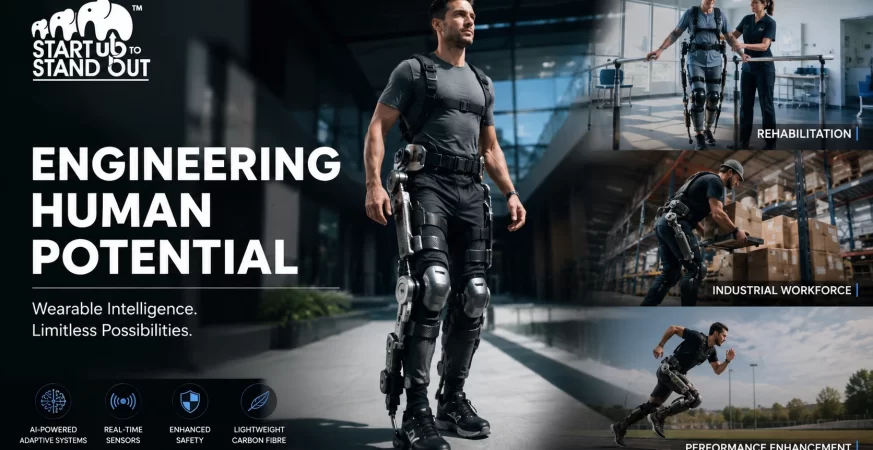
How Carbon Fibre Exoskeletons Could Redefine Mobility and Human Performance Introduction Technology has always expanded human capability. From the invention of the wheel to modern artificial intelligence, innovation has consistently helped people overcome physical limitations and accomplish tasks that once seemed impossible. Today, a new category of technology is emerging at the intersection of robotics, healthcare, and advanced materials: carbon fibre exoskeletons. These wearable robotic frameworks are designed to enhance movement, restore mobility, reduce physical strain, and improve human performance. While exoskeleton technology has existed for years, recent advances in lightweight materials, sensors, artificial intelligence, and energy-efficient systems are making it increasingly practical for real-world use. What was once considered science fiction is steadily becoming a viable solution for rehabilitation, workplace safety, and human augmentation. The Physical Limitation Challenge Millions of people face mobility challenges every day. For individuals with spinal cord injuries, muscular disorders, stroke-related impairments, or other physical disabilities, reduced mobility affects independence, quality of life, and social participation. At the same time, physically demanding industries face a different but equally significant challenge. Workers in construction, manufacturing, logistics, and warehousing routinely perform repetitive lifting, carrying, and movement tasks that place tremendous stress on the body. Over time, these activities contribute to fatigue, injuries, and musculoskeletal disorders that impact both workers and employers. Traditional solutions often address symptoms rather than underlying limitations. Wheelchairs, crutches, and ergonomic equipment provide assistance, but they do not fully restore physical capability or significantly enhance human endurance. Why Carbon Fibre Changes Everything The material choice behind modern exoskeletons is a major factor in their evolution. Carbon fibre offers several advantages that make it uniquely suited for wearable robotics. Lightweight Strength Carbon fibre provides exceptional strength while remaining significantly lighter than steel or aluminum. For wearable devices, reducing weight is critical because users may wear the equipment for extended periods. Improved Comfort A lighter structure places less strain on the user, improving comfort and encouraging longer usage durations. Corrosion Resistance Unlike many metal alternatives, carbon fibre is highly resistant to corrosion and environmental degradation. Reduced Maintenance Durable materials lower maintenance requirements and improve long-term reliability. These characteristics create a foundation for exoskeleton systems that are practical, comfortable, and suitable for everyday use. How Exoskeleton Technology Works Modern exoskeletons are far more than mechanical frames. They combine multiple technologies, including: Carbon fibre structures Electric motors Motion sensors Battery systems Artificial intelligence Adaptive control software Together, these components create systems capable of assisting movement in real time. Sensors detect user motion and intent, while software and motors provide precisely calibrated support. The result is a device that works alongside the human body rather than simply attaching to it. This intelligent interaction allows exoskeletons to adapt to different users and operating environments. Applications Beyond Healthcare While mobility restoration is one of the most powerful applications, exoskeleton technology extends far beyond rehabilitation. Healthcare and Rehabilitation Patients recovering from injuries, neurological conditions, or mobility impairments can benefit from enhanced movement and rehabilitation support. Industrial Workforce Support Exoskeletons can reduce fatigue and physical strain for workers performing repetitive tasks, helping improve productivity while reducing injury risk. Defense and Military Operations Lightweight wearable systems can improve endurance, mobility, and load-carrying capability in demanding operational environments. Research and Innovation Universities, laboratories, and technology organizations are increasingly exploring wearable robotics as a platform for human-machine interaction research. Building a Sustainable Business Model The commercial opportunity surrounding exoskeleton technology is substantial. Rather than relying solely on direct product sales, modern wearable robotics businesses can diversify revenue streams through: Product sales Equipment leasing Maintenance subscriptions Software services Government programs and subsidies The leasing model is particularly attractive because it reduces upfront costs for industrial clients while creating predictable recurring revenue. Subscription-based maintenance and software updates further strengthen long-term business sustainability by creating ongoing customer relationships beyond the initial purchase. Social Impact at Scale The true value of exoskeleton technology extends beyond commercial success. Restoring Independence For people with disabilities, improved mobility can significantly enhance independence, confidence, and participation in daily life. Improving Workplace Safety Reducing physical strain helps lower injury rates and improve worker well-being. Expanding Human Capability Wearable robotics can enable individuals to perform tasks that would otherwise be difficult, exhausting, or impossible. Supporting Inclusive Growth Accessible assistive technologies help ensure that physical limitations do not unnecessarily restrict opportunity. These outcomes position exoskeletons as both a technological innovation and a meaningful social advancement. Insights & Analysis Exoskeletons represent a broader shift toward human augmentation technologies. Historically, machines have been designed to replace human effort. Exoskeletons take a different approach: they enhance human capability rather than substitute for it. This distinction is important. The future of robotics may not be entirely autonomous systems operating independently from people. Instead, some of the most impactful innovations may be technologies that work directly alongside humans, amplifying strength, endurance, and mobility. Carbon fibre exoskeletons sit at the center of that evolution because they combine advanced materials, artificial intelligence, biomechanics, and practical usability into a single platform. As costs decrease and technology matures, wearable robotics could become as commonplace in rehabilitation centers and industrial facilities as modern computers are in offices today. Conclusion Carbon fibre exoskeletons offer a compelling glimpse into the future of human mobility and performance. By combining lightweight materials, intelligent software, advanced sensors, and wearable robotics, these systems have the potential to restore independence, improve workplace safety, and redefine how people interact with technology. The opportunity extends beyond healthcare. Industrial organizations, defense agencies, research institutions, and governments are all exploring ways to leverage wearable robotics to solve real-world challenges. As technology continues to advance, the question may no longer be whether exoskeletons become mainstream—but how quickly society adapts to a future where human capability can be enhanced through intelligent wearable systems. About the Authors This article was collaboratively prepared by: Aaroh Joshi Khush Agrawal Vikram Agrawal Janhavi Ahire Mayur Aldar Arush Koul Asmita Gogate Swarali Awalkar Tanish Belgalkar Mayuresh Bhalerao
manjula
- June 20, 2026
- 0 Comments
- 249 Views
-
