





Tag: Green building materials

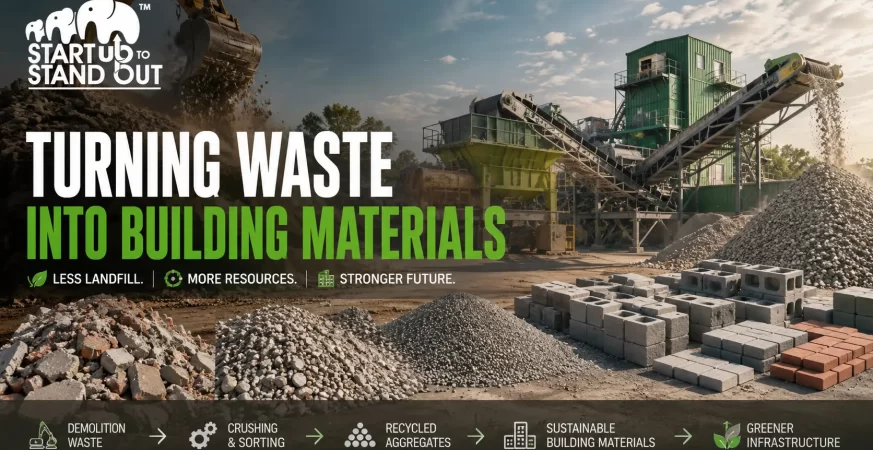
Construction and demolition waste recycling facility converting debris into recycled aggregates, bricks, and sustainable building materials.
NextGen Innovators

How Construction Waste Is Becoming a Valuable Resource

How Construction Waste Is Becoming a Valuable Resource Introduction Every construction project creates something new—but it also leaves something behind. Across cities worldwide, rapid urbanization has fueled unprecedented levels of construction activity. While this growth supports economic development, it also generates enormous quantities of construction and demolition (C&D) waste. Concrete rubble, broken bricks, steel scraps, wood, and other debris often end up in landfills, open dumping grounds, or illegal disposal sites. The environmental cost is significant. Valuable materials are wasted, natural resources continue to be extracted at scale, and cities face growing waste management challenges. But a new opportunity is emerging. Instead of viewing construction waste as a disposal problem, businesses are beginning to treat it as a resource. Construction and demolition waste recycling is creating a pathway toward more sustainable infrastructure while unlocking a profitable circular economy model. The Growing Construction Waste Challenge The construction industry is one of the world’s largest consumers of raw materials. Every building, road, bridge, and infrastructure project requires massive volumes of concrete, aggregates, sand, steel, and other resources. At the same time, demolition and renovation projects generate equally large quantities of waste. Unfortunately, much of this material is still discarded. Common environmental consequences include: Landfill overcrowding Land degradation Air pollution from dust and debris Increased transportation emissions Unnecessary extraction of virgin materials In many developing urban regions, recycling infrastructure for construction waste remains limited, resulting in valuable resources being permanently lost from the economic cycle. A Circular Economy Solution Construction and demolition waste recycling offers a practical alternative to traditional disposal methods. Instead of sending debris to landfills, recyclable materials are collected, sorted, processed, and transformed into new construction products. The process typically includes: Waste Collection Materials are gathered from construction sites, renovation projects, and demolition operations. Material Segregation Waste is separated into categories such as: Concrete Bricks Metals Wood Mixed construction debris Processing and Recycling Concrete and masonry waste are crushed and screened into recycled aggregates that can be used in roads, foundations, and other construction applications. Product Manufacturing Processed materials can be converted into: Recycled aggregates Bricks Paver blocks Other construction products This approach reduces waste while creating valuable materials that can re-enter the construction supply chain. Why Recycled Construction Materials Matter The demand for sustainable building materials is growing rapidly. Governments, developers, contractors, and infrastructure agencies are increasingly seeking ways to reduce environmental impact without sacrificing performance or cost efficiency. Recycled construction materials offer several advantages. Reduced Resource Extraction Using recycled aggregates decreases dependence on natural materials such as sand, gravel, and stone. Lower Environmental Impact Diverting waste from landfills helps reduce pollution and supports responsible waste management practices. Competitive Costs Recycled materials can often be produced at lower costs than virgin alternatives, creating economic advantages for both suppliers and buyers. Regulatory Compliance As environmental regulations become stricter, construction companies are increasingly required to adopt sustainable waste management practices. Building a Sustainable Business Model The commercial potential of construction waste recycling extends beyond environmental benefits. A well-designed recycling operation can generate revenue from multiple sources: Waste collection services Sale of recycled aggregates Recycled bricks and paver blocks Material processing contracts Consulting and advisory services The business ecosystem also benefits from partnerships with: Municipal authorities Demolition contractors Construction companies Equipment suppliers Environmental agencies These relationships help ensure a consistent supply of recyclable materials while supporting long-term operational growth. Market Demand Is Increasing Urban Expansion Growing cities require enormous quantities of building materials and infrastructure investment. Sustainability Targets Organizations are increasingly incorporating environmental objectives into procurement and project planning. Government Support Many governments are introducing regulations and incentives that encourage construction waste recycling and resource recovery. Circular Economy Adoption Businesses are increasingly recognizing waste as a resource rather than a disposal burden. These trends create favorable conditions for recycling businesses that can deliver reliable, high-quality products at competitive prices. Environmental and Social Impact The benefits of construction waste recycling extend far beyond financial returns. Reducing Landfill Dependency Recycling significantly lowers the volume of material sent to disposal sites. Conserving Natural Resources Every tonne of recycled aggregate reduces demand for virgin raw materials. Lowering Carbon Emissions Reduced extraction, transportation, and disposal activities contribute to lower environmental impacts. Creating Employment Recycling operations generate jobs across collection, transportation, processing, quality control, and manufacturing activities. Encouraging Industry Transformation Perhaps most importantly, recycling helps shift the construction sector toward more sustainable operating models and resource-efficient practices. Insights & Analysis Construction waste recycling demonstrates one of the most powerful principles of the circular economy: today’s waste can become tomorrow’s resource. Historically, construction waste has been treated primarily as a disposal challenge. However, advances in processing technology, increasing environmental awareness, and growing demand for sustainable materials are changing that perspective. The industry is moving away from a linear model of extraction, use, and disposal toward a system that prioritizes recovery, reuse, and resource optimization. As cities continue to expand and sustainability requirements become more stringent, businesses capable of transforming waste into valuable construction materials are positioned to play a critical role in the future of infrastructure development. Conclusion The construction industry’s waste problem is also one of its greatest opportunities. By converting demolition debris and construction waste into usable materials, recycling businesses can reduce environmental impact, conserve resources, and create new economic value. The model delivers benefits for governments, developers, contractors, communities, and the environment alike. As the construction sector embraces circular economy principles, waste recycling is no longer simply a sustainability initiative—it is becoming an essential component of modern infrastructure development. The future of construction may not be defined by how much we build, but by how effectively we reuse what has already been built. About the Authors This article was collaboratively prepared by: Tushar Kurhade Abhijit More Shivam More Shubham Nagane Prathmesh Dadas Sagar Dongare Aditya Patil Viren Patil Raj Cheri Omkar Sarokte

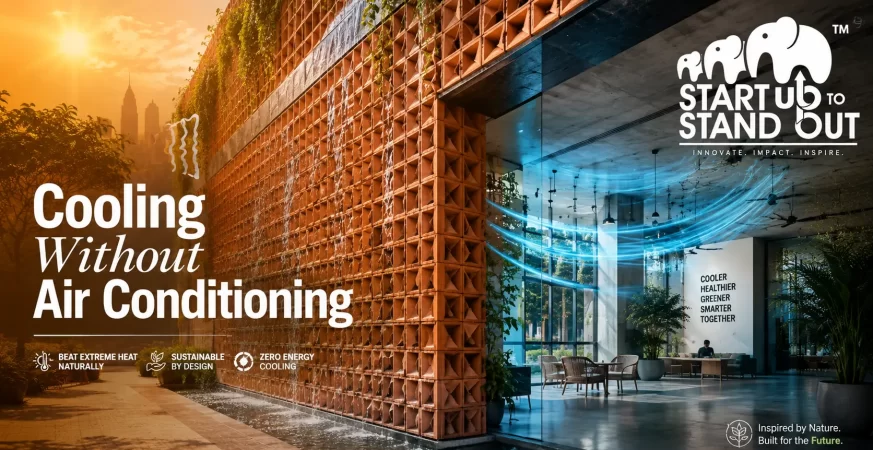
Earthen evaporative cooling wall made of terracotta modules using water circulation to naturally cool buildings in hot climates.
NextGen Innovators

Beating Heat Naturally: How Earthen Cooling Walls Could Redefine Sustainable Comfort

Beating Heat Naturally: How Earthen Cooling Walls Could Redefine Sustainable Comfort Introduction As global temperatures continue to rise, cooling is no longer a luxury—it is becoming a necessity. For millions of people living in hot climates, staying comfortable indoors often means relying on air conditioning. But conventional cooling comes with a cost: rising electricity bills, growing energy demand, and increasing environmental impact. This challenge has created an urgent need for solutions that can keep buildings cool without consuming large amounts of energy. One emerging approach combines centuries-old building wisdom with modern engineering: Earthen Evaporative Cooling Walls. By using natural materials and the science of evaporation, this technology offers a practical, affordable, and environmentally responsible way to improve indoor comfort while reducing dependence on mechanical cooling systems. The Growing Cooling Challenge Heatwaves are becoming more frequent and intense across many regions of the world. In areas where temperatures regularly reach 35–45°C, indoor thermal discomfort has become a serious quality-of-life issue. Traditional air conditioning helps solve this problem, but it introduces new challenges: High installation costs Rising electricity bills Increased energy demand Greater greenhouse gas emissions Dependence on refrigerants with environmental impacts For many households and small businesses, especially in developing regions, these costs can make effective cooling financially difficult. As cooling demand grows, the world faces a critical question: how can buildings stay comfortable without increasing energy consumption at the same pace? A Cooling Solution Inspired by Nature Earthen Evaporative Cooling Walls are designed around a simple natural principle: evaporation absorbs heat. The system combines porous earthen materials such as terracotta tiles and compressed stabilized earth blocks with a controlled water circulation mechanism. As water moves through the wall and gradually evaporates, heat is absorbed from the surrounding air. The result is a natural cooling effect that lowers surface temperatures and improves indoor comfort without relying on energy-intensive cooling equipment. According to the business model, the technology can: Reduce wall surface temperatures by 5–12°C Lower indoor temperatures by 2–5°C Cut cooling-related energy consumption by 20–40% Require only minimal electricity for water circulation Why Earthen Cooling Walls Stand Out Lower Energy Consumption Unlike traditional air conditioning systems that cool indoor air after heat has entered a building, earthen cooling walls help reduce heat transfer at the source. This preventive approach significantly reduces the amount of energy needed to maintain comfortable indoor conditions. Affordable Long-Term Operation While air conditioning often leads to recurring electricity expenses, passive cooling systems operate at a fraction of the cost. Homeowners can potentially save thousands of rupees annually through reduced cooling expenses while maintaining improved thermal comfort. Sustainable Building Materials The use of locally available earthen materials reduces embodied energy and supports environmentally responsible construction practices. Terracotta and earth-based materials also align well with growing demand for sustainable architecture and climate-responsive design. Scalable Applications The technology can be adapted across multiple building types: Residential homes Apartment developments Schools Offices Hostels Community buildings Its flexibility makes it suitable for both small-scale installations and large infrastructure projects. A Strong Business Opportunity Beyond its environmental benefits, earthen cooling technology presents a compelling commercial opportunity. The proposed business model generates revenue through multiple channels: Installation services Site-based cooling projects Component sales Design consulting Maintenance contracts This diversified approach creates recurring revenue while helping customers reduce operating costs. The model also benefits from strong margins due to relatively low material costs and increasing demand for energy-efficient building solutions. According to the projections in the source document, a growing operation could scale from local residential projects to large institutional developments while maintaining profitability. Environmental Impact at Scale Perhaps the most compelling aspect of earthen cooling walls is their potential impact when adopted widely. Reduced air conditioning usage directly translates into: Lower electricity consumption Reduced carbon emissions Decreased strain on power grids Less dependence on fossil fuels Because the system relies on natural cooling processes, it avoids many of the environmental concerns associated with conventional HVAC systems. As cities continue to urbanize and temperatures rise, passive cooling technologies could play an increasingly important role in creating more resilient and sustainable communities. Social Benefits Beyond Energy Savings Cooling is often discussed as an energy issue, but it is also a public health and economic issue. Improved indoor comfort can positively influence: Health outcomes during heatwaves Workplace productivity Learning environments Sleep quality Overall well-being Affordable cooling solutions are particularly important for low- and middle-income households that may not have access to expensive mechanical systems. In addition, the deployment of these systems creates opportunities in manufacturing, installation, maintenance, and green construction sectors, supporting local economic development. Insights & Analysis The future of cooling will likely depend on a combination of technologies rather than a single solution. Air conditioning will remain important in many environments, but rising energy costs and climate concerns are accelerating interest in passive cooling systems that reduce dependence on mechanical equipment. Earthen evaporative cooling walls are especially interesting because they merge traditional building knowledge with modern performance requirements. Instead of fighting heat with more energy, they use natural processes to prevent excessive heat buildup in the first place. As governments, developers, and homeowners increasingly prioritize sustainability, solutions that lower both operating costs and environmental impact are positioned for significant growth. Conclusion The cooling challenge of the future cannot be solved by increasing energy consumption alone. Earthen Evaporative Cooling Walls offer a smarter approach—one that leverages natural materials, passive design principles, and sustainable engineering to create comfortable indoor environments with minimal energy use. As temperatures continue to rise worldwide, innovations like these demonstrate that effective cooling does not always require more electricity. Sometimes, the most powerful solutions come from working with nature rather than against it. About the Authors This article was collaboratively prepared by: Samruddhi Yadav Pratik Shahu Shaman Tembhekar Shaurya Dubey Nirzara Shinde Bhakti Shirke Prutha Sonkusare Malhar D. Yadav Laxmi Saluke Juee Salunkhe

Creative Bharat is focused on entrepreneurship, business strategy, mindset, personal growth, discipline, creativity and leadership.

Contact Us

Email Us: manjula@creativebharat.com creativebharatgroup@gmail.com

Insta Feeds

COMING SOON!!!

Creative Bharat  @2026. All Rights Reserved.