









How Agricultural Robots Could Solve Farming’s Biggest Workforce Crisis
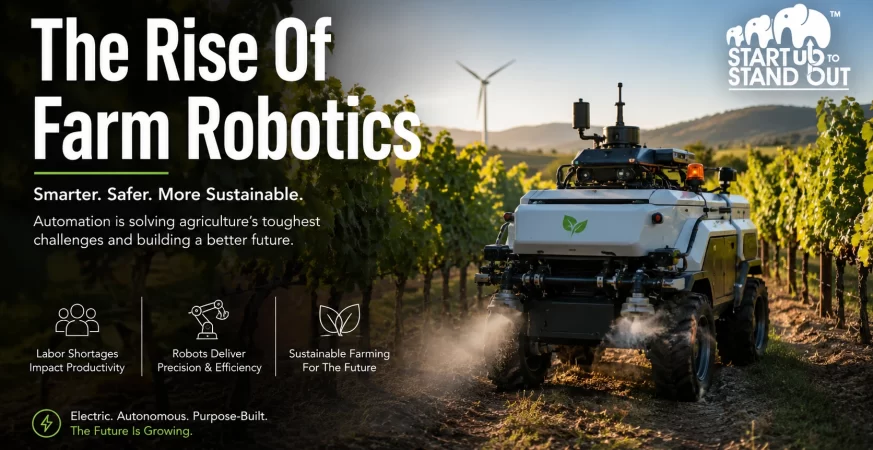
How Agricultural Robots Could Solve Farming’s Biggest Workforce Crisis Introduction Agriculture remains one of the world’s most essential industries, yet it faces a growing challenge that threatens productivity and long-term sustainability: labor scarcity. Across farming regions, labor costs continue to rise while younger generations increasingly move away from agricultural work. At the same time, farmers must manage narrow planting, spraying, and harvesting windows where timing directly affects crop quality and profitability. The result is a difficult reality. Farmers need greater efficiency, but traditional machinery is often too large, expensive, or unsuitable for specialized crops. This challenge is creating opportunities for a new generation of agricultural robotics companies. By combining automation, artificial intelligence, and electric mobility, autonomous farming robots are emerging as a practical solution for modern agriculture. One such example is AgMove Robotics, a startup focused on bringing robotic automation to India’s horticulture sector. The Growing Labor Challenge in Agriculture Agriculture has long depended on manual labor. However, demographic changes are reshaping rural economies. Younger workers increasingly pursue opportunities outside farming, creating significant labor shortages across agricultural regions. The consequences are substantial: Rising labor costs Delays in critical farm operations Reduced productivity Increased pressure on aging farmers Difficulty scaling agricultural operations For horticulture crops, the challenge becomes even more severe. Activities such as spraying, weeding, and interculture operations often require frequent manual intervention throughout the growing season. When labor is unavailable, crop yields and quality can suffer. Why Existing Machinery Isn’t Enough Traditional farm equipment has transformed large-scale agriculture, but many horticulture environments present unique constraints. Orchards and vineyards often feature: Narrow row spacing Uneven terrain Dense crop arrangements Specialized operational requirements Large tractors and conventional machinery may struggle to operate efficiently in these conditions. In addition, many small and medium-sized farmers cannot justify major capital investments in expensive agricultural equipment. The result is a technology gap where automation is needed most but remains difficult to access. Enter Autonomous Agricultural Robotics Agricultural robots are designed to perform repetitive field operations with minimal human intervention. Unlike traditional machinery that requires constant operation by a driver, autonomous systems use sensors, software, and electric powertrains to navigate fields independently. Tasks can include: Spraying Weeding Interculture operations Crop monitoring Data collection The technology combines robotics, artificial intelligence, navigation systems, and electric mobility into a single platform. According to the source document, AgMove Robotics has developed an autonomous electric robot specifically engineered for horticulture applications, enabling operation in narrow vineyard and orchard environments. A Different Business Model: Robots as a Service One of the biggest barriers to agricultural technology adoption is cost. Many farmers cannot afford large upfront investments in advanced equipment. To address this challenge, AgMove’s model focuses on a service-based approach rather than outright equipment sales. Pay Per Use Farmers pay only for specific operations, reducing financial risk. Seasonal Subscriptions Recurring service packages provide predictable access to robotic support throughout the growing season. No Ownership Burden Maintenance, upgrades, and technical management remain the responsibility of the service provider. This approach makes advanced technology accessible without requiring farmers to become technology specialists themselves. Beyond Productivity: Health and Safety Benefits Agricultural robotics delivers benefits that extend beyond operational efficiency. Many farming tasks expose workers to: Agricultural chemicals Repetitive strain injuries Long working hours Physically demanding conditions For example, repeated pesticide spraying can create long-term health risks for workers. By automating these activities, robots help reduce direct human exposure while improving overall workplace safety. This creates both economic and social value, particularly in labor-intensive farming sectors. Building a Scalable Agricultural Ecosystem Successful agricultural technology adoption requires more than innovative hardware. The AgMove model incorporates a network of village entrepreneurs who assist with deployment, support, and local operations. This structure offers several advantages: Stronger farmer trust Faster adoption Local technical assistance Reduced operational friction Greater rural employment opportunities Rather than replacing local communities, the technology creates new roles centered on operating and maintaining advanced agricultural systems. Insights & Analysis The future of agricultural technology may not be defined by selling more machines. Instead, it may be defined by delivering outcomes. The Robot-as-a-Service model reflects a broader trend seen across industries where customers increasingly prefer access over ownership. Similar models have transformed software, transportation, and industrial equipment markets. Agriculture appears poised for a similar shift. By combining automation with flexible pricing models, agricultural robotics companies can lower adoption barriers while creating recurring revenue streams. The opportunity is particularly significant in countries like India, where millions of farmers face labor shortages but remain highly sensitive to capital expenditure requirements. Conclusion Agricultural robotics represents more than a technological upgrade—it represents a new way of thinking about farm operations. Autonomous robots can help address labor shortages, improve safety, reduce costs, and increase productivity while making advanced technology accessible to farmers who need it most. As agriculture faces increasing pressure to feed growing populations with fewer resources, automation will likely play an increasingly important role in maintaining efficiency and competitiveness. The future of farming may not depend on finding more workers. It may depend on building smarter machines that work alongside farmers to achieve more with less. About the Authors This article was collaboratively prepared by: Pranav Bhandari Vishal Bhujbal Samruddhi Bodkhe Chirag Gujrathi Prachi Deole Nitesh Devali Yash Dharmik Soumya Dhote Malhar Dixit Bhavik Fulfagar
manjula
- June 20, 2026
- 0 Comments
- 185 Views
-
