








How Financial Simulations Could Transform the Way Students Learn About Money
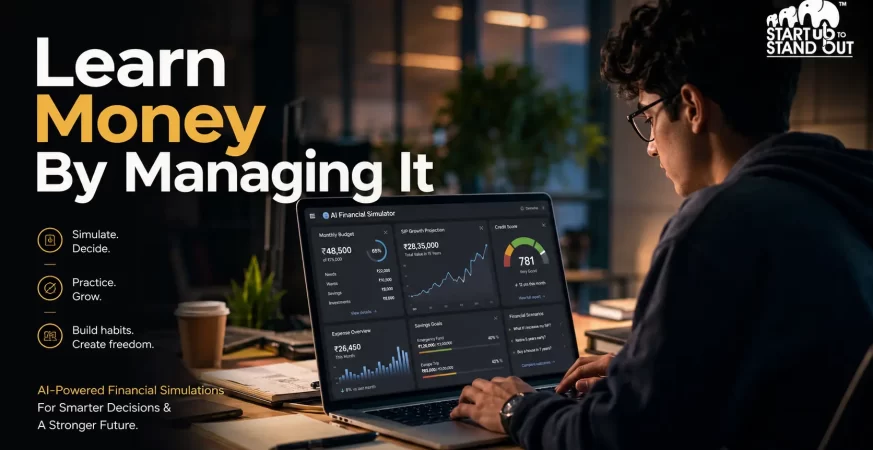
How Financial Simulations Could Transform the Way Students Learn About Money Introduction Financial literacy has become one of the most essential life skills of the modern economy. Yet despite its growing importance, millions of students complete their education without understanding how to manage money, build savings, evaluate investments, or make informed financial decisions. Schools and colleges often emphasize theoretical concepts while leaving practical financial education largely untouched. The consequences extend far beyond graduation. Young adults frequently enter the workforce without knowing how interest compounds, how credit works, how to prepare a budget, or how long-term investing creates wealth. These knowledge gaps often lead to poor financial habits, unnecessary debt, and avoidable financial stress. Traditional financial education has struggled to solve this problem because reading about money is fundamentally different from managing it. FinSim Edu approaches financial literacy from a different perspective. Rather than relying on lectures or textbooks alone, the platform uses interactive simulations that allow learners to experience real financial situations, make decisions, observe outcomes, and develop confidence in a completely risk-free environment. Why Financial Literacy Needs a Practical Approach Financial decisions influence nearly every stage of adult life. From managing monthly expenses to investing for retirement, financial confidence depends on practical understanding rather than memorized theory. However, many students graduate without exposure to concepts such as: Personal budgeting Savings planning Credit card management Loan repayment Investment strategies Financial risk management Without practical experience, learners often make important financial decisions for the first time only after entering the workforce. This reactive approach leaves little room for experimentation or learning from mistakes. Learning Through Simulation Instead of Memorization FinSim Edu replaces passive learning with interactive decision-making. Instead of simply explaining financial concepts, the platform allows users to experience them through realistic simulations. Students can explore scenarios such as: Monthly Budget Planning Managing income, expenses, savings, and unexpected costs. Credit Card Management Understanding interest accumulation, repayment behaviour, and long-term debt implications. Investment Decisions Experimenting with SIPs and long-term wealth creation strategies without financial risk. Emergency Financial Planning Responding to unexpected expenses while maintaining financial stability. Each decision immediately influences future outcomes, allowing learners to understand both short-term consequences and long-term financial impact. Making Complex Financial Concepts Easy to Understand One of the platform’s biggest strengths is its emphasis on visualization. Financial concepts often feel intimidating because learners struggle to see how money changes over time. FinSim Edu simplifies this through: Interactive graphs Growth projections Visual dashboards Scenario comparisons Progress tracking Instead of explaining compound growth abstractly, students can watch investments evolve over simulated years. Rather than reading about budgeting mistakes, they experience the consequences within a safe learning environment. This experiential approach makes financial education significantly more engaging and memorable. AI Makes Financial Learning More Personal Every learner approaches finance differently. Some struggle with budgeting, while others need help understanding investing or credit management. FinSim Edu integrates artificial intelligence to personalize learning through: Adaptive Guidance Recommendations based on individual learning progress. Simplified Explanations Complex financial concepts translated into beginner-friendly language. Personalized Feedback AI identifies mistakes and suggests better financial decisions. Continuous Learning Support Students receive guidance throughout every simulation rather than only at the end. This transforms financial education into an interactive coaching experience instead of a one-way lesson. Building an EdTech Platform With Multiple Revenue Streams FinSim Edu combines accessibility with commercial sustainability through a diversified business model. Revenue opportunities include: Institutional Subscriptions Educational institutions can provide platform access to students through annual licensing. Freemium Access Basic financial simulations remain free while advanced modules are available through premium subscriptions. Certification Programs Learners can earn recognized certifications after completing structured financial literacy programs. Platform Licensing Financial simulation modules can be integrated into existing EdTech platforms. Sponsored Educational Content Financial institutions and brands can support educational initiatives without compromising learning quality. This balanced approach supports long-term growth while keeping financial education widely accessible. Addressing a Growing Market Opportunity The demand for financial literacy is expanding rapidly. Several long-term trends support platforms like FinSim Edu: Increasing digital education adoption Growing interest in personal investing Rising financial independence among young adults Expansion of the EdTech sector Greater awareness of financial wellbeing As more learners begin investing, using digital payments, and managing credit at younger ages, financial education is becoming increasingly relevant beyond traditional academic settings. Future Growth Beyond Financial Literacy While the platform initially focuses on core personal finance education, its simulation-based architecture creates opportunities for future expansion. Potential developments include: Gamified learning experiences Mobile-first financial education Advanced investment simulations Integration with real financial tools School-level financial literacy programs International expansion As the platform evolves, it could become a broader ecosystem for lifelong financial learning rather than a single educational product. Insights & Analysis The most valuable aspect of FinSim Edu is not artificial intelligence. It is experience. Financial education has traditionally focused on teaching concepts. FinSim Edu focuses on building judgment. People rarely become financially confident simply by reading definitions. They become confident by making decisions, seeing consequences, adjusting strategies, and developing intuition over time. By creating a safe environment for experimentation, the platform helps learners develop practical financial instincts before they encounter real-world financial risks. That shift—from memorization to experience—may ultimately prove to be its strongest competitive advantage. Conclusion Financial literacy is no longer an optional life skill. As individuals take greater responsibility for budgeting, borrowing, investing, and long-term financial planning, practical financial education becomes increasingly important. FinSim Edu addresses this challenge through an interactive platform that combines simulations, visualization, artificial intelligence, and experiential learning to make finance both understandable and engaging. By allowing learners to experience financial decision-making rather than simply study it, the platform builds confidence alongside knowledge. As education continues shifting toward personalized and experience-driven learning, simulation-based financial literacy platforms may become an essential part of preparing future generations for economic independence. The future of financial education may not depend on teaching students more theories—it may depend on giving them a safe place to practice making smarter financial decisions. About the Authors Vaibhav Bariyar Vruti Moradiya Shrikant Dapke
manjula
- July 5, 2026
- 0 Comments
- 477 Views
-