





• Home  
  • How Robot Experience Centres Could Accelerate Automation Adoption for SMEs
- NextGen Innovators

How Robot Experience Centres Could Accelerate Automation Adoption for SMEs

How Robot Experience Centres Could Accelerate Automation Adoption for SMEs Introduction Automation is no longer a luxury reserved for large manufacturers. As global competition intensifies and labor costs continue to rise, businesses of all sizes are looking toward robotics and automation to improve productivity, consistency, and operational efficiency. Yet despite the clear advantages, adoption among small and medium enterprises (SMEs) remains surprisingly low. The reason is not always cost. For many business owners, the bigger challenge is uncertainty. Will the system actually work in their factory? Will it integrate with existing processes? Will the return on investment justify the expense? These unanswered questions often delay automation decisions for months—or prevent them entirely. Team Torana has identified this trust gap as one of the biggest barriers to automation adoption and proposes a solution designed around experience rather than sales pitches: Robot Experience & Demo Centres. The Hidden Problem Slowing Automation India’s manufacturing sector is undergoing rapid transformation. Businesses face increasing pressure to improve productivity, maintain quality standards, and remain competitive in both domestic and global markets. Automation offers a pathway to achieve these goals, yet adoption rates among SMEs remain relatively low. While automation systems have become more accessible, business owners still face significant concerns: High investment requirements Integration risks Technical complexity Uncertain performance outcomes Limited internal expertise These concerns create hesitation even when automation could generate long-term value. Why Trust Matters More Than Technology Most automation purchasing decisions are made under conditions of limited information. Manufacturers typically rely on: Vendor presentations Product brochures Controlled demonstrations Generic case studies Sales consultations While useful, these resources rarely reflect the specific realities of an individual business. Industrial automation is not a simple plug-and-play purchase. Every manufacturing environment has unique workflows, materials, production constraints, and operational requirements. As a result, decision-makers often struggle to determine whether a solution that works elsewhere will work for them. This creates a significant trust deficit between buyers and automation providers. The Cost of Delayed Decisions The consequences of uncertainty extend beyond hesitation. According to the proposal, automation purchasing decisions often take six months to a year due to repeated vendor evaluations, internal discussions, and comparative assessments. During this time: Productivity improvements are delayed Operational inefficiencies continue Competitive advantages are lost Technology evaluations become outdated Business growth opportunities are missed For SMEs operating in highly competitive markets, these delays can significantly impact long-term performance. The Torana Solution: Experience Before Commitment Torana’s model introduces a new approach to automation adoption. Instead of asking businesses to trust marketing materials or theoretical demonstrations, the company provides access to professionally managed Robot Experience & Demo Centres. These facilities allow companies to evaluate multiple automation solutions in realistic environments before making investment decisions. The focus is simple: Test first. Invest later. This approach transforms automation purchasing from a high-risk decision into a data-driven evaluation process. How the Experience Centre Works The customer journey begins with an assessment of the business’s operational needs. Experts analyze: Production workflows Process bottlenecks Operational goals Technical requirements Customers then bring actual materials or process samples into the experience centre. This enables side-by-side testing of different robotic systems under conditions that closely resemble real production environments. Key evaluation criteria include: Speed Accuracy Reliability Ease of integration Operational flexibility Instead of relying on assumptions, businesses gain firsthand performance data that supports more confident decision-making. Creating Value Across the Ecosystem One of the strongest aspects of the model is its ability to benefit multiple stakeholders simultaneously. For SMEs Reduced investment risk Faster purchasing decisions Better technology selection Access to independent expertise For Robot Manufacturers Qualified sales leads Shorter sales cycles Product validation opportunities Improved customer trust For the Economy Faster automation adoption Higher manufacturing productivity Increased competitiveness Workforce upskilling opportunities By serving all three groups, the model creates a balanced ecosystem rather than simply acting as a showroom. A Diversified Revenue Model The proposal outlines multiple revenue streams designed to support long-term sustainability. Demo Experience Fees Businesses pay for structured evaluation sessions. Corporate Workshops Training programs educate teams about automation opportunities and implementation strategies. Sales Commissions The centre earns commissions when customers purchase solutions after evaluation. Customization Services Additional consulting and adaptation services generate project-based revenue. Robot-as-a-Service (RaaS) Subscription-based automation offerings lower adoption barriers for smaller businesses. Maintenance and Support Long-term service contracts create recurring revenue streams. This diversified structure reduces dependence on any single source of income while strengthening customer relationships. Scaling Across India The long-term opportunity extends beyond individual centres. The model includes expansion strategies through: Franchise Centres Entrepreneurs can operate local centres using Torana’s framework and expertise. Strategic Partnerships Collaborations with industrial parks, educational institutions, and industry associations can accelerate market penetration. Regional Industrial Hubs Expansion into emerging manufacturing clusters increases accessibility for SMEs outside major metropolitan areas. This approach enables growth without requiring excessive capital investment from the parent organization. Insights & Analysis The most important innovation here is not robotics. It is trust infrastructure. Many automation providers focus on building better technology. Torana focuses on helping customers make better decisions. This distinction is important. Technology adoption often fails not because solutions are ineffective but because buyers lack confidence in implementation outcomes. By creating an environment where businesses can validate performance before making large investments, Torana addresses one of the most overlooked barriers to industrial innovation. As automation becomes increasingly important to India’s manufacturing future, businesses that reduce adoption friction may become just as valuable as the technology providers themselves. Conclusion Automation promises significant benefits for India’s manufacturing sector, but adoption requires more than technology availability. Businesses need confidence. Torana’s Robot Experience & Demo Centre model helps bridge the gap between curiosity and commitment by giving SMEs the opportunity to evaluate automation solutions in realistic environments before investing. The result is reduced risk, faster decision-making, and more successful automation deployments. As India’s manufacturing ecosystem continues to evolve, platforms that simplify technology adoption could play a critical role in accelerating productivity, competitiveness, and industrial growth. Sometimes the most valuable innovation is not building a better robot—it is helping

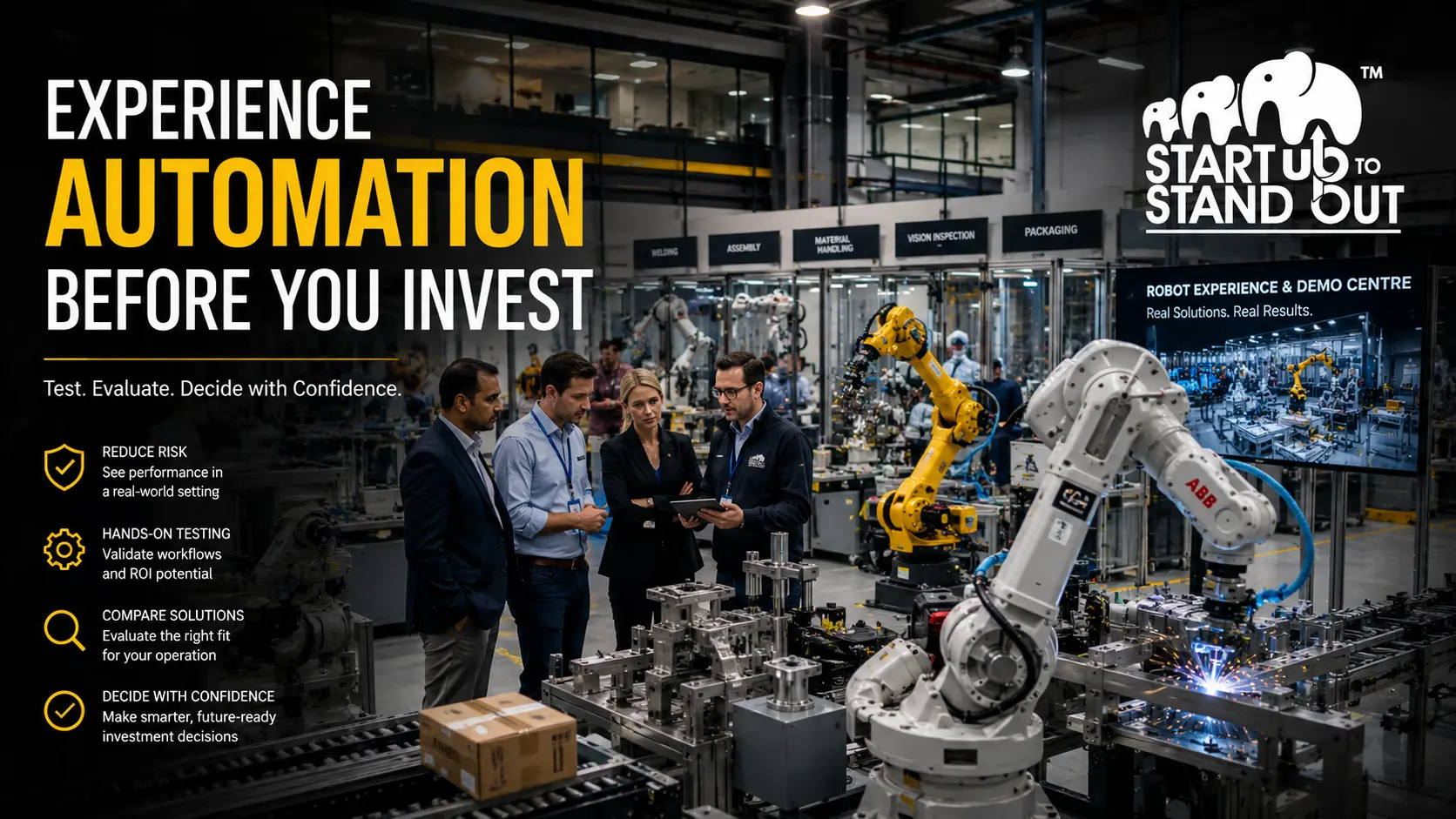
Manufacturing business owners testing industrial robots in a robot experience centre before investing in automation solutions.

How Robot Experience Centres Could Accelerate Automation Adoption for SMEs

Introduction

Automation is no longer a luxury reserved for large manufacturers.

As global competition intensifies and labor costs continue to rise, businesses of all sizes are looking toward robotics and automation to improve productivity, consistency, and operational efficiency. Yet despite the clear advantages, adoption among small and medium enterprises (SMEs) remains surprisingly low.

The reason is not always cost.

For many business owners, the bigger challenge is uncertainty.

Will the system actually work in their factory? Will it integrate with existing processes? Will the return on investment justify the expense? These unanswered questions often delay automation decisions for months—or prevent them entirely.

Team Torana has identified this trust gap as one of the biggest barriers to automation adoption and proposes a solution designed around experience rather than sales pitches: Robot Experience & Demo Centres.

The Hidden Problem Slowing Automation

India’s manufacturing sector is undergoing rapid transformation.

Businesses face increasing pressure to improve productivity, maintain quality standards, and remain competitive in both domestic and global markets.

Automation offers a pathway to achieve these goals, yet adoption rates among SMEs remain relatively low.

While automation systems have become more accessible, business owners still face significant concerns:

  • High investment requirements
  • Integration risks
  • Technical complexity
  • Uncertain performance outcomes
  • Limited internal expertise

These concerns create hesitation even when automation could generate long-term value.

Why Trust Matters More Than Technology

Most automation purchasing decisions are made under conditions of limited information.

Manufacturers typically rely on:

  • Vendor presentations
  • Product brochures
  • Controlled demonstrations
  • Generic case studies
  • Sales consultations

While useful, these resources rarely reflect the specific realities of an individual business.

Industrial automation is not a simple plug-and-play purchase. Every manufacturing environment has unique workflows, materials, production constraints, and operational requirements.

As a result, decision-makers often struggle to determine whether a solution that works elsewhere will work for them.

This creates a significant trust deficit between buyers and automation providers.

The Cost of Delayed Decisions

The consequences of uncertainty extend beyond hesitation.

According to the proposal, automation purchasing decisions often take six months to a year due to repeated vendor evaluations, internal discussions, and comparative assessments.

During this time:

  • Productivity improvements are delayed
  • Operational inefficiencies continue
  • Competitive advantages are lost
  • Technology evaluations become outdated
  • Business growth opportunities are missed

For SMEs operating in highly competitive markets, these delays can significantly impact long-term performance.

The Torana Solution: Experience Before Commitment

Torana’s model introduces a new approach to automation adoption.

Instead of asking businesses to trust marketing materials or theoretical demonstrations, the company provides access to professionally managed Robot Experience & Demo Centres.

These facilities allow companies to evaluate multiple automation solutions in realistic environments before making investment decisions.

The focus is simple:

Test first. Invest later.

This approach transforms automation purchasing from a high-risk decision into a data-driven evaluation process.

How the Experience Centre Works

The customer journey begins with an assessment of the business’s operational needs.

Experts analyze:

  • Production workflows
  • Process bottlenecks
  • Operational goals
  • Technical requirements

Customers then bring actual materials or process samples into the experience centre.

This enables side-by-side testing of different robotic systems under conditions that closely resemble real production environments.

Key evaluation criteria include:

  • Speed
  • Accuracy
  • Reliability
  • Ease of integration
  • Operational flexibility

Instead of relying on assumptions, businesses gain firsthand performance data that supports more confident decision-making.

Creating Value Across the Ecosystem

One of the strongest aspects of the model is its ability to benefit multiple stakeholders simultaneously.

For SMEs

  • Reduced investment risk
  • Faster purchasing decisions
  • Better technology selection
  • Access to independent expertise

For Robot Manufacturers

  • Qualified sales leads
  • Shorter sales cycles
  • Product validation opportunities
  • Improved customer trust

For the Economy

  • Faster automation adoption
  • Higher manufacturing productivity
  • Increased competitiveness
  • Workforce upskilling opportunities

By serving all three groups, the model creates a balanced ecosystem rather than simply acting as a showroom.

A Diversified Revenue Model

The proposal outlines multiple revenue streams designed to support long-term sustainability.

Demo Experience Fees

Businesses pay for structured evaluation sessions.

Corporate Workshops

Training programs educate teams about automation opportunities and implementation strategies.

Sales Commissions

The centre earns commissions when customers purchase solutions after evaluation.

Customization Services

Additional consulting and adaptation services generate project-based revenue.

Robot-as-a-Service (RaaS)

Subscription-based automation offerings lower adoption barriers for smaller businesses.

Maintenance and Support

Long-term service contracts create recurring revenue streams.

This diversified structure reduces dependence on any single source of income while strengthening customer relationships.

Scaling Across India

The long-term opportunity extends beyond individual centres.

The model includes expansion strategies through:

Franchise Centres

Entrepreneurs can operate local centres using Torana’s framework and expertise.

Strategic Partnerships

Collaborations with industrial parks, educational institutions, and industry associations can accelerate market penetration.

Regional Industrial Hubs

Expansion into emerging manufacturing clusters increases accessibility for SMEs outside major metropolitan areas.

This approach enables growth without requiring excessive capital investment from the parent organization.

Insights & Analysis

The most important innovation here is not robotics.

It is trust infrastructure.

Many automation providers focus on building better technology. Torana focuses on helping customers make better decisions.

This distinction is important.

Technology adoption often fails not because solutions are ineffective but because buyers lack confidence in implementation outcomes.

By creating an environment where businesses can validate performance before making large investments, Torana addresses one of the most overlooked barriers to industrial innovation.

As automation becomes increasingly important to India’s manufacturing future, businesses that reduce adoption friction may become just as valuable as the technology providers themselves.

Conclusion

Automation promises significant benefits for India’s manufacturing sector, but adoption requires more than technology availability.

Businesses need confidence.

Torana’s Robot Experience & Demo Centre model helps bridge the gap between curiosity and commitment by giving SMEs the opportunity to evaluate automation solutions in realistic environments before investing.

The result is reduced risk, faster decision-making, and more successful automation deployments.

As India’s manufacturing ecosystem continues to evolve, platforms that simplify technology adoption could play a critical role in accelerating productivity, competitiveness, and industrial growth.

Sometimes the most valuable innovation is not building a better robot—it is helping businesses trust one.

Creative Bharat is focused on entrepreneurship, business strategy, mindset, personal growth, discipline, creativity and leadership.

Contact Us

Email Us: manjula@creativebharat.com creativebharatgroup@gmail.com

Insta Feeds

COMING SOON!!!

Creative Bharat  @2026. All Rights Reserved.