









How Sustainable Pearl Farming Is Redefining Luxury and Marine Conservation
Introduction
Pearls have symbolized elegance, rarity, and luxury for centuries.
Yet behind their beauty lies a lesser-known environmental challenge. Traditional pearl harvesting depended heavily on wild oyster populations, leading to overexploitation of marine ecosystems and declining biodiversity. As demand for natural pearls increased, coastal communities became increasingly reliant on harvesting practices that were difficult to sustain over the long term.
The consequences extended beyond pearl production.
Oysters play a critical ecological role by naturally filtering seawater, improving water quality, and supporting marine biodiversity. As wild populations declined, surrounding ecosystems suffered, affecting both marine life and the livelihoods of communities dependent on healthy coastal environments.
Today, sustainable pearl farming offers a different path.
Instead of extracting pearls from the wild, cultured pearl aquaculture allows oysters to produce pearls within carefully managed environments, creating a model that balances environmental conservation with commercial opportunity. This shift has transformed pearl production from an extractive industry into a sustainable aquaculture business capable of generating long-term ecological and economic value.
The Environmental Cost of Traditional Pearl Harvesting
Natural pearl harvesting has historically depended on collecting oysters directly from oceans and coastal waters.
Over time, this practice created several challenges:
- Declining wild oyster populations
- Marine habitat degradation
- Reduced biodiversity
- Increased water pollution
- Economic instability for coastal communities
Because oysters naturally filter impurities from seawater, their decline also weakens one of nature’s most effective water purification systems. This ecological imbalance affects numerous marine species that depend on healthy coastal ecosystems.
The challenge is therefore much larger than pearl production alone—it concerns the long-term health of marine environments.
Pearl Farming: A Sustainable Alternative
Pearl farming replaces extraction with cultivation.
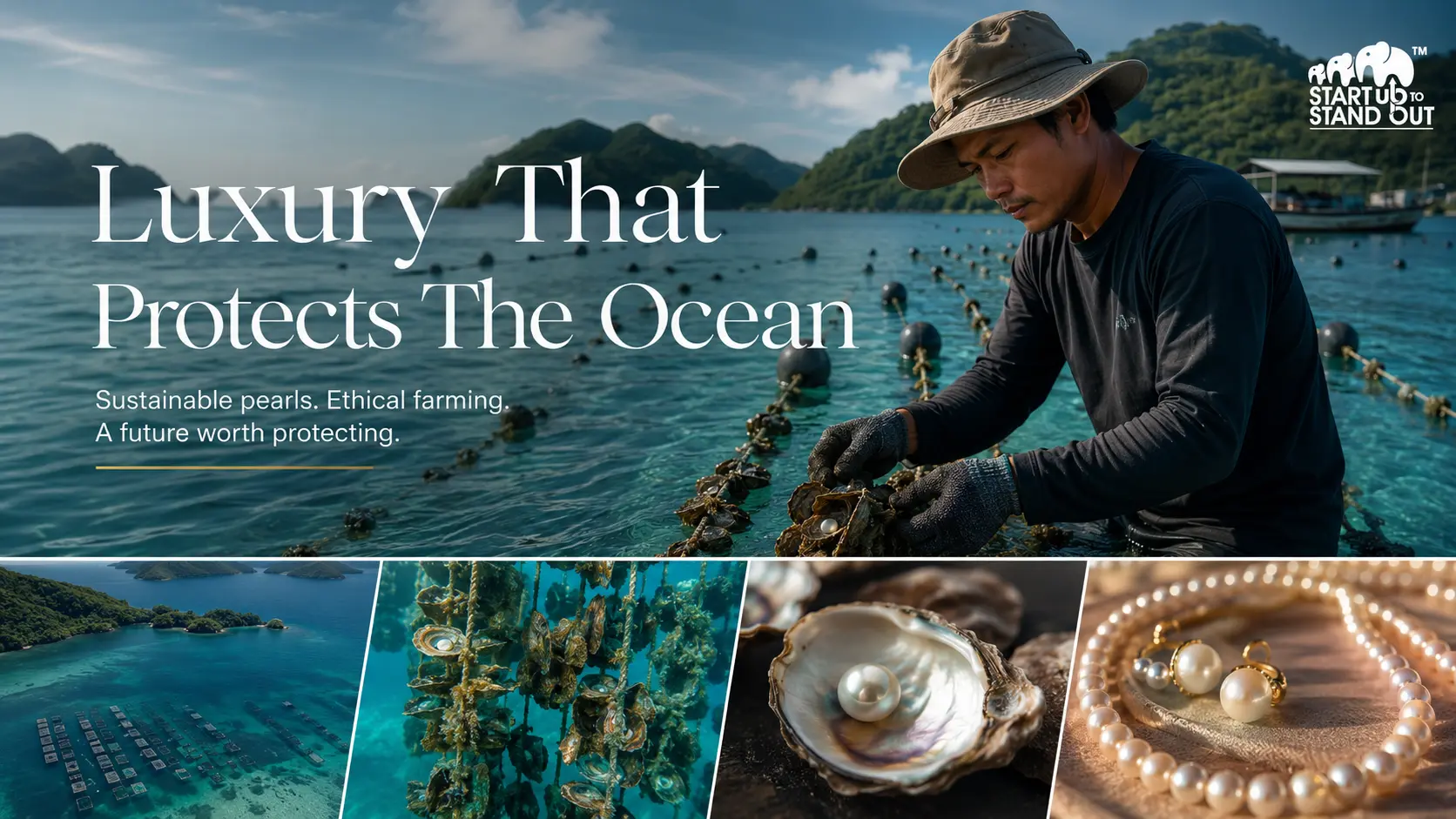
Instead of removing oysters from natural ecosystems, farmers cultivate them within controlled marine environments designed to support both pearl production and oyster health.
The process involves carefully inserting a small nucleus into the oyster, which naturally forms a pearl over time.
Unlike traditional harvesting, this approach enables oysters to continue contributing to the surrounding ecosystem while producing commercially valuable pearls.
The result is a production system that reduces pressure on wild oyster populations while meeting growing global demand for pearls.
Environmental Benefits Beyond Pearl Production
One of the strongest advantages of pearl farming is that its environmental value extends beyond the final product.
Farmed oysters actively contribute to healthier marine ecosystems by:
Improving Water Quality
Oysters naturally filter suspended particles and impurities from seawater.
Supporting Marine Biodiversity
Healthy oyster populations create habitats that benefit numerous marine organisms.
Reducing Wild Harvesting Pressure
Cultivated production lowers dependence on extracting oysters from natural habitats.
Enabling Integrated Aquaculture
Pearl farming can operate alongside fish farming and seaweed cultivation, creating balanced multi-species marine systems that improve overall ecosystem resilience.
These ecological benefits position pearl farming as a form of regenerative aquaculture rather than simply another seafood industry.
Building a Sustainable Luxury Business
Consumer expectations within the luxury market are changing.
Today’s buyers increasingly seek products that combine premium quality with responsible sourcing.
Pearl farming aligns well with this shift through a value proposition centered on:
- Ethically produced cultured pearls
- Sustainable aquaculture practices
- Environmentally responsible luxury
- Long-term income opportunities for coastal communities
Rather than competing solely on product quality, sustainable pearl businesses differentiate themselves through transparency and environmental stewardship.
Serving Multiple High-Value Markets
The proposal identifies several attractive customer segments.
Jewelry Brands
Premium jewelry manufacturers increasingly seek responsibly sourced materials.
Export Markets
International demand for cultured pearls remains strong across luxury markets.
Fashion Industry
Designers continue incorporating pearls into contemporary fashion collections.
Retail Consumers
Environmentally conscious buyers increasingly value ethical luxury products.
This diversified customer base reduces dependence on any single sales channel.
Creating Value Beyond Raw Pearls
The strongest businesses rarely sell only raw materials.
Pearl farming offers opportunities to move further up the value chain.
Potential revenue streams include:
Cultured Pearl Sales
Direct sales to wholesalers and jewelry manufacturers.
Export Revenue
Supplying premium cultured pearls to international markets.
Finished Jewelry Products
Designing and selling branded jewelry significantly increases profit margins.
Premium Sustainable Branding
Ethically sourced pearls can command higher prices among environmentally conscious consumers.
Vertical integration allows businesses to capture greater value throughout the production process.
Partnerships Drive Long-Term Success
Pearl farming depends on collaboration across multiple industries.
Key partners include:
- Local fishermen
- Marine biologists
- Jewelry manufacturers
- Export networks
- Government agencies
These relationships provide technical expertise, market access, regulatory support, and operational stability.
Together, they create a stronger ecosystem capable of supporting sustainable business growth.
A Business That Becomes More Efficient Over Time
Although pearl farming requires substantial upfront investment, its economics improve as operations mature.
Primary costs include:
- Farming infrastructure
- Oyster cultivation systems
- Skilled labour
- Boats and marine equipment
- Maintenance
- Transportation
As production scales and operational efficiencies improve, fixed costs are distributed across greater output, improving overall profitability.
This scalability strengthens the long-term business case.
Insights & Analysis
The most valuable product in pearl farming is not the pearl.
It is trust.
Luxury consumers increasingly seek assurance that premium products are sourced responsibly and produced with minimal environmental impact.
Sustainable pearl farming transforms environmental stewardship into a competitive advantage by combining ethical aquaculture with high-value luxury products.
Businesses that can demonstrate transparent sourcing, marine conservation, and responsible farming practices are likely to build stronger brands than those competing on product quality alone.
As sustainability becomes a defining factor in purchasing decisions, responsibly cultivated pearls represent not only a premium product but also a new standard for the future of luxury.
Conclusion
For generations, pearls represented luxury born from nature.
Today, they also represent an opportunity to rethink how luxury products are produced.
Sustainable pearl farming replaces extraction with cultivation, creating a business model that protects marine ecosystems while supporting profitable commercial growth.
By combining aquaculture, environmental conservation, ethical sourcing, and premium product positioning, pearl farming demonstrates how sustainability and profitability can reinforce one another rather than compete.
As global demand for responsibly produced luxury products continues to rise, businesses that invest in regenerative aquaculture may help shape the future of both marine conservation and the luxury jewelry industry.
The most valuable pearl of the future may not simply be the rarest one—but the one produced with the greatest respect for the ocean.
Author Name(s)
Aditya Pisal
Swapnil Munde
Swaraj Gole
Atharv Jagtap