









How AI-Powered Talent Retention Could Reduce Employee Attrition
Introduction
Hiring great talent is difficult.
Keeping it has become even harder.
Across industries, organizations invest heavily in recruitment, onboarding, training, and employee development, only to watch experienced professionals leave months or years later. Every resignation represents more than an empty desk—it means lost knowledge, disrupted projects, declining team morale, and the significant cost of replacing skilled employees.
Traditional HR practices often respond only after an employee has submitted a resignation.
By then, it is usually too late.
As organizations become increasingly data-driven, businesses are beginning to ask a different question: What if employee exits could be predicted before they happen?
AI-powered talent retention platforms are built around this idea. By combining behavioral analytics, machine learning, workforce data, and real-time employee insights, these platforms help organizations identify employees at risk of leaving and recommend personalized interventions before attrition becomes inevitable.
Why Employee Attrition Is a Business Problem
Employee turnover affects far more than HR departments.
Replacing experienced professionals often involves:
- Recruitment expenses
- Extended hiring timelines
- Productivity losses
- Onboarding and training costs
- Knowledge transfer challenges
- Reduced team morale
For fast-growing organizations, frequent resignations can significantly slow innovation and business growth.
Beyond direct financial costs, high attrition often impacts customer relationships, project continuity, and employer reputation, making retention a strategic business priority rather than simply an HR responsibility.
The Limitations of Traditional HR Practices
Most organizations rely on reactive approaches to employee retention.
Common methods include:
- Annual engagement surveys
- Exit interviews
- Manager observations
- Generic retention policies
While useful, these approaches often identify problems only after employee dissatisfaction has already intensified.
Traditional HR systems typically struggle to:
- Detect early warning signs
- Personalize retention strategies
- Continuously monitor workforce sentiment
- Predict future resignations
As a result, organizations frequently respond after valuable employees have already decided to leave.
How AI Predicts Employee Attrition
The proposed platform continuously analyzes workforce data to identify behavioral patterns associated with employee turnover.
Rather than depending on intuition, the system evaluates multiple signals simultaneously.
Workforce Data Collection
The platform gathers information such as:
- Attendance patterns
- Leave records
- Performance reviews
- Employee feedback
- Promotion history
- Salary progression
- Manager interactions
- Workplace communication trends
This creates a continuously updated view of employee engagement and organizational health.
Machine Learning Risk Prediction
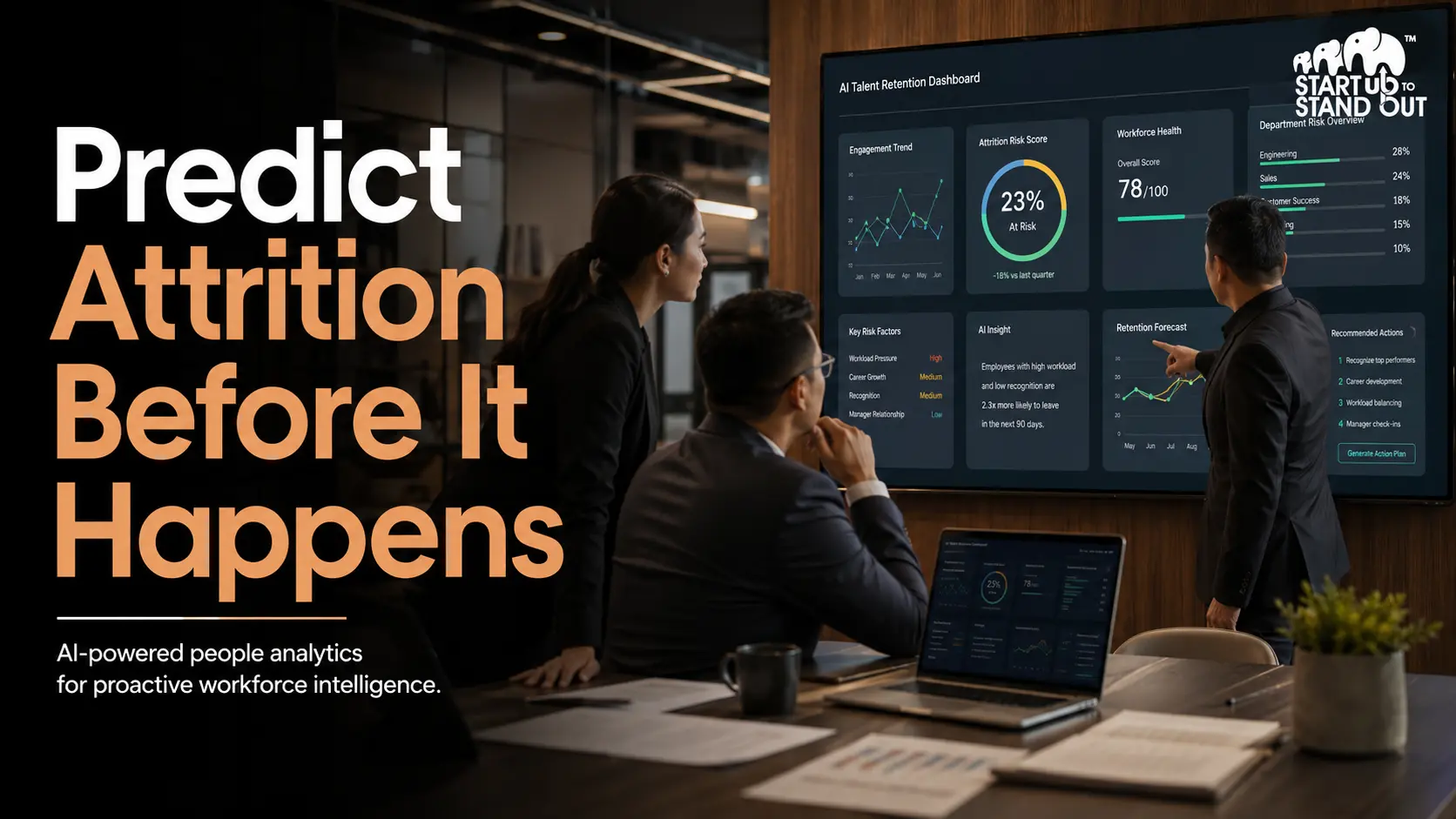
AI models analyze historical workforce behavior to assign each employee an attrition risk score.
Instead of identifying resignations after they occur, the platform can highlight employees who may be considering leaving months in advance, allowing organizations to take proactive action.
Personalized Retention Strategies
One-size-fits-all retention programs rarely solve individual problems.
Employees leave for different reasons.
Some seek career growth.
Others struggle with management, workload, compensation, or workplace culture.
The platform generates tailored recommendations such as:
Career Development Opportunities
Learning programs and internal mobility options for employees seeking growth.
Compensation Reviews
Salary benchmarking for employees whose compensation no longer reflects market conditions.
Project Reassignment
New responsibilities for employees showing signs of disengagement.
Manager Coaching
Recommendations that improve communication and leadership effectiveness.
Instead of offering identical retention incentives to every employee, organizations can focus interventions where they are most likely to succeed.
Continuous Learning Improves Accuracy
One of AI’s greatest advantages is its ability to improve over time.
Every retention outcome provides additional learning data.
The platform continuously measures:
- Retention improvements
- Employee engagement
- Intervention effectiveness
- Prediction accuracy
- Organizational trends
These insights are fed back into the machine learning models, allowing predictions and recommendations to become increasingly accurate as the platform gains experience.
Building a Scalable HRTech SaaS Business
The platform follows a Software-as-a-Service (SaaS) subscription model designed for enterprise adoption.
Potential revenue streams include:
SaaS Subscriptions
Organizations pay recurring fees based on workforce size.
Enterprise Implementation
Onboarding, customization, and HR system integration services.
Advanced Analytics
Premium workforce intelligence dashboards and predictive reporting.
HR Benchmarking
Aggregated workforce insights that help organizations compare performance across industries.
Because the platform is cloud-based, it can serve organizations of different sizes while maintaining predictable recurring revenue and low incremental operating costs.
A Market With Growing Demand
Several long-term trends are accelerating demand for AI-powered workforce analytics.
These include:
- Increasing competition for skilled talent
- Rising employee expectations
- Growth of hybrid and remote work
- Greater investment in people analytics
- Expanding adoption of AI within enterprise software
Organizations are increasingly recognizing that retaining experienced employees is often significantly less expensive than continuously replacing them.
This shift creates a favorable environment for HR technology focused on predictive workforce management.
Insights & Analysis
Predictive talent retention represents a shift from reactive HR to proactive workforce strategy.
While many organizations already collect extensive employee data, few transform that information into timely interventions that reduce attrition.
The real value of AI lies not simply in predicting which employees may leave, but in identifying the underlying factors contributing to disengagement and recommending personalized actions before those concerns escalate.
As workforce analytics continues to mature, organizations that combine data-driven insights with thoughtful employee engagement strategies will be better positioned to improve retention, reduce hiring costs, and build stronger organizational cultures.
Conclusion
Employee retention has become one of the defining challenges of modern organizations, affecting productivity, profitability, customer relationships, and long-term business performance.
AI-powered talent retention platforms demonstrate how machine learning, workforce analytics, and behavioral insights can help organizations move beyond reactive HR practices toward proactive employee engagement.
By enabling businesses to identify retention risks early and implement personalized interventions, these platforms create value for both employers and employees while strengthening organizational resilience.
As competition for skilled talent continues to intensify, predictive workforce intelligence is likely to become an essential component of modern human resource management, helping organizations retain their most valuable asset—their people.
About the Authors
- Adusupalli Manasa
- Aryan Garad
- Ashish Kumar Pandey
- Bimal Bahadur Nepali
- Dipesh Yadav
- Hemraj Patil
- Hrushikesh Shivtare
- Janhvi Pachupate
- Jayveer Pawar
- Leena Patil
- Lokesh Kolhapure
- Mandakini Chavan
- Rajale Rutuja
- Raghav Tale