









How AI-Powered Social Intelligence Platforms Could Redefine Student Success
Introduction
Student life is often described as the most transformative phase of a person’s journey.
It is a time filled with new opportunities, friendships, ambitions, and personal growth. Yet behind the excitement of campus life lies a reality that many institutions struggle to address: students are increasingly connected digitally but often feel disconnected socially.
Academic pressure, career uncertainty, relocation to unfamiliar cities, hostel life, and evolving social dynamics have created new challenges for young people. While educational institutions focus heavily on academic performance, far less attention is given to helping students develop communication skills, build meaningful relationships, and create strong support networks.
As a result, loneliness, social anxiety, low confidence, and weak peer connections have become common experiences for many students.
AuraSpark aims to address this challenge through an AI-powered social intelligence ecosystem designed specifically for student growth, belonging, and meaningful relationship building.
The Hidden Challenge Behind Student Life
Students today face far more than academic responsibilities.
Alongside coursework and examinations, they must navigate:
- Career planning
- Internships and placements
- Social relationships
- Family expectations
- Personal identity development
- Emotional wellbeing
For many students, the most difficult challenge is not academics—it is building a sense of belonging.
Common problems include:
- Difficulty finding compatible friends
- Social anxiety during conversations
- Loneliness in hostels and new campuses
- Weak networking opportunities
- Struggles maintaining relationships
- Lack of confidence in social situations
These issues often remain invisible, yet they can significantly impact motivation, happiness, academic performance, and long-term personal development.
Why Traditional Social Platforms Fall Short
Students already have access to countless social media platforms.
However, most existing platforms are optimized for:
- Content consumption
- Entertainment
- Messaging
- Short-term engagement
Few are designed to help users actively build stronger relationships.
Many platforms prioritize attention and screen time rather than meaningful connection.
As a result, students may accumulate hundreds of online contacts while still feeling isolated in their daily lives.
AuraSpark approaches the problem differently.
Rather than functioning as another social network, it positions itself as a social intelligence platform focused on helping students connect, communicate, and grow.
AI Compatibility Matching: Finding the Right People
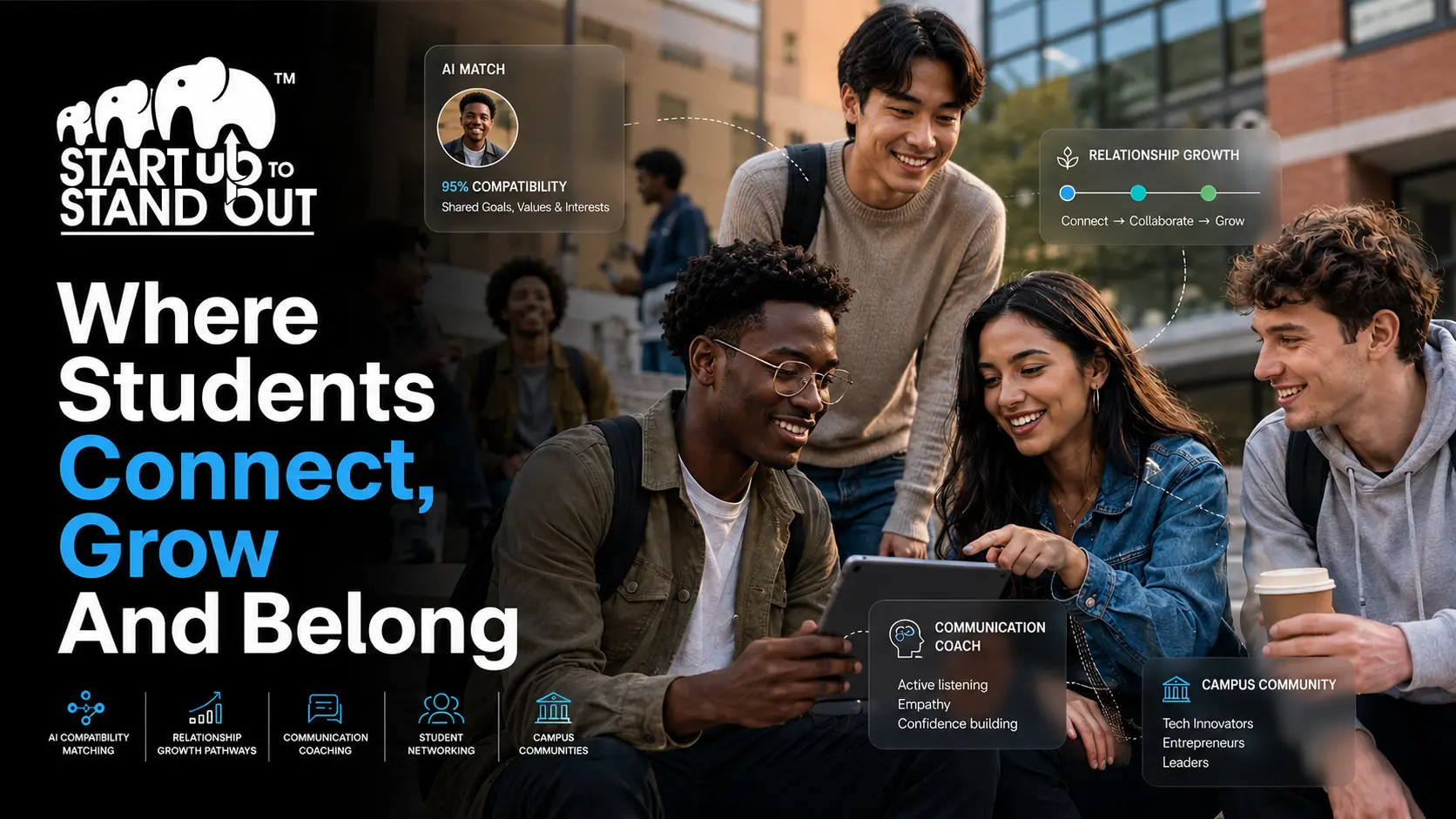
One of AuraSpark’s core innovations is its AI-powered compatibility engine.
Instead of relying solely on mutual connections or random discovery, the platform analyzes factors such as:
- Interests
- Personality traits
- Social energy levels
- Academic goals
- Lifestyle habits
- Communication preferences
- Growth mindset characteristics
Using these inputs, the system generates compatibility recommendations that help students connect with peers who are more likely to form meaningful and lasting relationships.
This transforms networking from a process of chance into a process guided by data and behavioral insights.
Building Confidence Through Conversation Coaching
Meeting people is only the first step.
Many students struggle with maintaining conversations, building trust, and expressing themselves effectively.
AuraSpark introduces an AI-powered Conversation Growth Coach designed to help users:
Start Conversations More Comfortably
Suggestions reduce hesitation and social anxiety.
Improve Communication Quality
Users receive guidance on clarity, tone, and engagement.
Build Stronger Relationships
The system encourages healthier communication habits over time.
Develop Social Confidence
Repeated positive interactions help strengthen interpersonal skills.
Rather than replacing human interaction, the technology supports it.
Turning Relationships Into a Growth Journey
Perhaps the platform’s most distinctive feature is its Relationship Progression System.
Traditional social platforms treat every connection similarly.
AuraSpark introduces structured relationship development through stages such as:
- New Connect
- Trusted Friend
- Inner Circle
- Growth Partner
- Lifelong Bond
These progression pathways encourage deeper engagement and long-term relationship building.
The goal is not simply to create more connections, but to create stronger ones.
Gamification That Encourages Real Interaction
Most gamification systems focus on maximizing user activity.
AuraSpark applies gamification to strengthen relationships.
Features include:
Connection Streaks
Users maintain consistency through regular interactions.
Check-In Reminders
The platform encourages ongoing communication.
Shared Milestones
Friendships are reinforced through meaningful moments.
Recognition Systems
Users earn points, badges, and rewards for positive engagement.
By rewarding healthy social behaviors, the platform seeks to create lasting habits rather than temporary engagement spikes.
A Student-Centric Business Model
Primary Users
- College students
- University students
- Hostel residents
- Competitive exam aspirants
- Fresh graduates
- Interns
Secondary Customers
- Universities
- Student clubs
- Campus communities
- Youth-focused brands
- Recruiters and mentors
The platform generates revenue through:
- Premium subscriptions
- In-app purchases
- Community memberships
- Sponsored campaigns
- Brand collaborations
- Campus partnerships
- Event access passes
This diversified model supports recurring revenue while maintaining accessibility for students.
Beyond Social Networking: Creating Positive Campus Communities
The long-term impact of platforms like AuraSpark extends beyond individual users.
Potential benefits include:
Reduced Loneliness
Students gain easier access to compatible peer groups.
Improved Communication Skills
Confidence grows through guided social interactions.
Better Mental Wellbeing
Stronger support networks improve resilience.
Healthier Campus Culture
Communities become more collaborative and inclusive.
Expanded Networking Opportunities
Students build relationships that can support academic and career growth.
These outcomes create value not only for users but also for educational institutions and broader student ecosystems.
Future Opportunities
The proposal outlines several future expansion possibilities.
Potential enhancements include:
- Voice-based AI social coaching
- Mood-aware recommendations
- Mentor matching systems
- Campus event networking
- Internship communities
- Young professional networks
- Global student ecosystems
These additions could transform AuraSpark from a student-focused platform into a broader relationship and growth ecosystem.
Insights & Analysis
The most important insight behind AuraSpark is that student success is not determined solely by academic performance.
Relationships matter.
Research consistently shows that social belonging, peer support, communication skills, and professional networks play major roles in personal and career development.
Yet most educational systems provide little structured support in these areas.
AuraSpark attempts to fill that gap by treating social intelligence as a skill that can be developed through technology, behavioral science, and guided engagement.
Its real competitive advantage is not AI matching alone.
It is the combination of compatibility discovery, relationship progression, communication coaching, and gamification into a single ecosystem focused on student growth rather than passive consumption.
If executed effectively, the platform could create a category that sits somewhere between social networking, personal development, and student wellbeing.
Conclusion
Modern students face challenges that extend far beyond academics.
Loneliness, social anxiety, weak networks, and communication barriers can significantly impact confidence, wellbeing, and long-term success.
AuraSpark offers a compelling response to these challenges by combining artificial intelligence, behavioral science, and gamified engagement to help students build stronger and more meaningful relationships.
Rather than competing for attention, the platform seeks to improve connection.
Rather than maximizing screen time, it aims to strengthen social confidence.
As student life becomes increasingly complex, platforms that help young people connect, belong, and grow may become just as important as the educational tools they use every day.
The future of student success may not depend solely on what students learn—but also on who they connect with along the way.
About the Authors
This article was collaboratively prepared by:
- Sheetal Ambre
- Abhishek Ballure
- Balaji Bansude
- Digvijay Sawant
- Sarthak Mangire
- Sahil Wadar
- Deepali Kakade