









How AI-Powered Mentorship Could Democratize Career Success in India
Introduction
Talent is everywhere. Opportunity is not.
Across India, millions of students graduate every year with ambition, determination, and technical skills. Yet many struggle to access one resource that often determines career success: meaningful mentorship.
Students from elite institutions frequently benefit from alumni networks, industry exposure, and professional connections. Others, particularly those from Tier 2 and Tier 3 cities, often navigate career decisions with limited access to experienced professionals.
The result is a significant opportunity gap.
Technology is now creating new ways to bridge that divide. AI-powered mentorship platforms are emerging as a scalable solution that connects learners with experienced professionals, making career guidance more accessible, personalized, and actionable than ever before. GuruLink is one example of this evolving model, combining mentorship with artificial intelligence to help learners make more informed career decisions.
Why Traditional Career Guidance Falls Short
Most career guidance systems were designed for a different era.
Students often rely on:
- College placement cells
- Generic career counseling
- Online content
- Peer recommendations
- Social media advice
While these resources can provide direction, they rarely offer personalized insights from someone actively working in a desired role.
Career decisions today are increasingly complex.
Professionals frequently switch industries, acquire new skills, and adapt to rapidly changing job markets. As a result, static guidance models often fail to address individual goals and circumstances.
What many learners need is direct access to professionals who have already navigated similar career paths.
The Rise of AI-Powered Mentorship
Digital mentorship platforms are transforming how career guidance is delivered.
Instead of requiring personal networks or geographic proximity, users can connect directly with verified industry professionals through structured online sessions.
The innovation becomes even more powerful when artificial intelligence is added to the process.
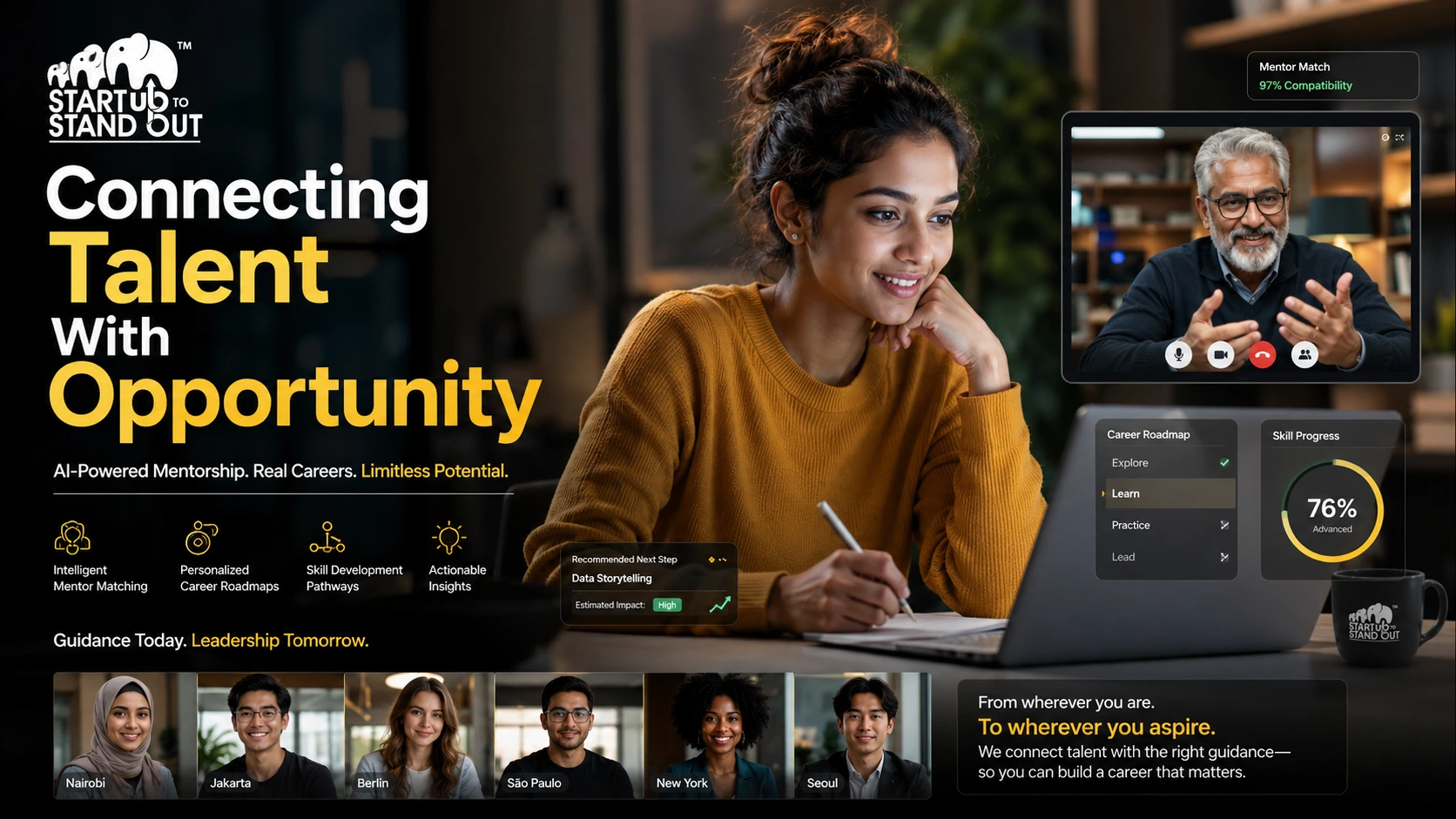
Intelligent Mentor Matching
Rather than manually searching through hundreds of profiles, AI systems analyze factors such as:
- Career goals
- Skills
- Industry preferences
- Learning objectives
- Previous interactions
This enables more relevant mentor recommendations and increases the likelihood of productive mentorship relationships.
Turning Conversations Into Action
One of the biggest challenges in mentorship is translating advice into results.
Many people leave valuable conversations with good intentions but no structured follow-up plan.
AI-powered platforms address this challenge by generating:
- Session summaries
- Key takeaways
- Recommended next steps
- Personalized action plans
These tools help users retain information and maintain momentum after each interaction.
Rather than a one-time conversation, mentorship becomes an ongoing learning process supported by technology.
Expanding Access Beyond Major Cities
Geography remains one of the biggest barriers to professional networking.
Individuals living in smaller cities often have fewer opportunities to connect with industry leaders, founders, hiring managers, or experienced professionals.
Digital mentorship platforms eliminate this limitation.
A student in Nashik, Nagpur, or Bhubaneswar can access the same expertise available to someone in Mumbai, Bengaluru, or Delhi.
This democratization of access is one of the most significant long-term impacts of online mentorship ecosystems.
A Business Model Built Around Human Capital
Unlike many technology platforms, mentorship marketplaces create value by facilitating human interactions rather than replacing them.
GuruLink’s model includes multiple revenue streams:
- Pay-per-session bookings
- Monthly subscriptions
- Corporate upskilling programs
- College licensing partnerships
- Premium mentor visibility services
The document’s projected revenue mix shows pay-per-session bookings contributing approximately 35% of revenue, followed by subscriptions at 25%, corporate programs at 20%, institutional licensing at 12%, and premium mentor placement services at 8%.
This diversified structure helps create predictable revenue while serving multiple customer segments.
Why Mentors Matter More Than Ever
Information is no longer scarce.
Courses, tutorials, certifications, and educational content are widely available online.
What remains difficult to access is context.
Mentors provide:
- Real-world insights
- Industry expectations
- Career navigation strategies
- Interview preparation
- Professional confidence
They help learners avoid mistakes, identify opportunities, and accelerate decision-making.
In many cases, a single conversation can save months of uncertainty.
This is why mentorship increasingly complements traditional education rather than competing with it.
Insights & Analysis
The long-term advantage of mentorship platforms is not technology alone.
Many competitors can build scheduling systems, video calls, or AI tools.
The true competitive advantage lies in trust and network effects.
As more successful mentorship interactions occur, platforms accumulate:
- Better matching data
- Stronger mentor communities
- Higher user trust
- More referrals
- Better outcomes
These factors create a self-reinforcing growth cycle that becomes increasingly difficult for competitors to replicate.
The future of career development may not revolve solely around learning new skills. It may depend equally on connecting with the right people at the right time.
Conclusion
Career success has always been influenced by access to knowledge, opportunity, and guidance.
For too long, access to experienced mentors has been unevenly distributed, creating barriers for talented individuals without strong professional networks.
AI-powered mentorship platforms offer a scalable solution.
By combining intelligent matching, verified professionals, affordable access, and actionable post-session insights, they make mentorship available to far more people than traditional models ever could.
As technology continues to remove geographic and social barriers, the future of career growth may become less dependent on where someone comes from—and more dependent on what they choose to learn and who they choose to learn from.
About the Authors
This article was collaboratively prepared by: