









Why Homebuyers Need a Property Inspection Before Signing the Deal
Introduction
Buying a home is one of the largest financial decisions most people will ever make.
Yet despite investing years of savings, many buyers spend more time evaluating paint colors, amenities, and interior design than they do assessing the actual condition of the building itself.
The result is a costly reality that countless homeowners discover too late: hidden structural defects, water seepage, electrical hazards, and construction issues that can turn a dream purchase into a financial burden.
As property prices continue to rise across India’s major cities, buyers need more than market knowledge—they need technical certainty. That’s where professional pre-purchase property inspections are becoming increasingly valuable. By identifying risks before the transaction is completed, buyers gain the information necessary to make smarter, safer investment decisions.
The Problem Most Buyers Never See
Property purchases are often driven by emotion.
Location, interior finishes, amenities, and builder reputation tend to dominate decision-making. While these factors matter, they can distract buyers from the most important question:
Is the Building Actually Sound?
Most buyers lack the technical expertise needed to assess:
- Structural integrity
- Foundation performance
- Waterproofing quality
- Electrical safety
- Plumbing systems
- Long-term maintenance risks
As a result, critical issues often remain hidden until after possession.
By that point, repair costs, legal disputes, and safety concerns become the buyer’s responsibility. According to the source document, unexpected repairs can consume a significant percentage of a property’s value within the first few years of ownership.
Why Hidden Defects Are So Expensive
Unlike cosmetic issues, structural defects rarely remain isolated.
A small crack may indicate deeper foundation movement. Minor water seepage can evolve into extensive dampness, mold growth, and concrete deterioration. Electrical faults can create serious safety hazards.
Common Hidden Issues
- Structural cracks
- Foundation settlement
- Water leakage
- Dampness and mold
- Electrical defects
- Plumbing failures
- Corrosion and reinforcement damage
What initially appears to be a minor problem can quickly escalate into repair bills worth lakhs of rupees.
The challenge is that most of these issues are invisible during a standard property walkthrough.
The Rise of Property Risk Advisory Services
Pre-purchase property inspection services are designed to bridge the knowledge gap between buyers and buildings.
Instead of relying solely on sales presentations or visual impressions, buyers receive an independent technical assessment conducted by qualified professionals.
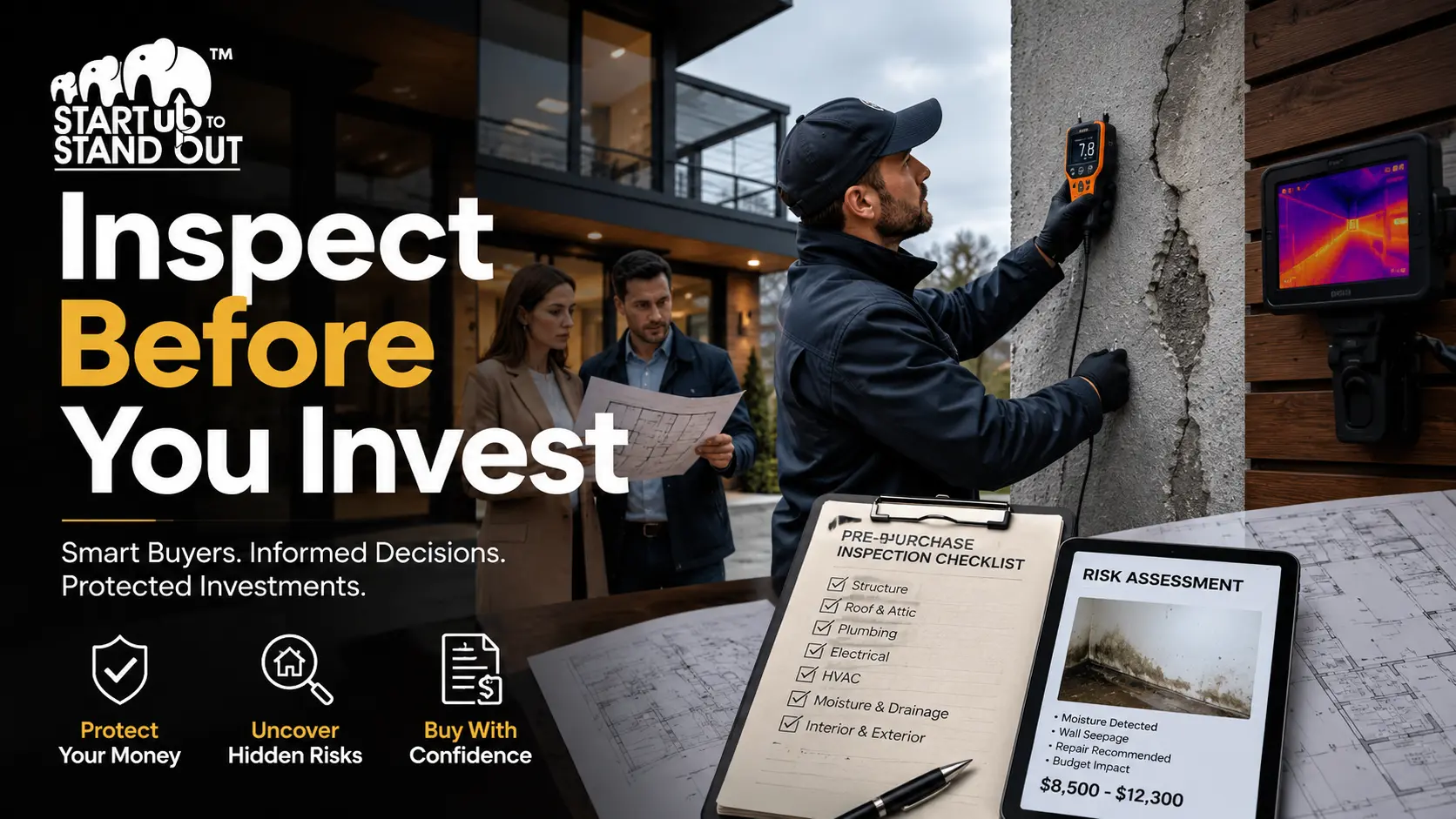
A comprehensive inspection typically evaluates:
Structural Safety
Engineers assess columns, beams, walls, foundations, and load-bearing elements to identify signs of structural distress.
Water and Moisture Issues
Specialized tools can detect hidden dampness, leakage, and waterproofing failures that may not be visible to occupants.
Electrical and Plumbing Systems
Safety risks and maintenance concerns within building services are identified before purchase.
Overall Building Health
The inspection provides a complete picture of the property’s condition, helping buyers understand both current issues and future risks.
Beyond Inspection: Decision Support
The most valuable inspections do more than identify problems.
They help buyers make decisions.
According to the model presented in the source document, inspection findings can be translated into a practical framework:
- Buy – The property is in acceptable condition.
- Negotiate – Defects justify price adjustments.
- Avoid – Risks outweigh the value of the purchase.
This approach transforms technical information into actionable guidance.
Instead of uncertainty, buyers gain clarity.
How Inspections Can Save Money
Many buyers initially view inspections as an additional expense.
In reality, they are often one of the lowest-cost forms of risk management available in real estate.
Professional inspections can create financial value through:
Better Negotiation Power
When defects are documented, buyers can negotiate repair credits or purchase price reductions.
Repair Cost Forecasting
Detailed assessments provide realistic estimates of future repair requirements.
Avoiding Bad Investments
The greatest savings often come from identifying properties that should never be purchased in the first place.
Long-Term Peace of Mind
Knowing the true condition of a property reduces uncertainty and protects buyers from unexpected financial shocks.
Who Benefits Most?
Although every buyer can benefit from professional inspections, certain groups face higher levels of risk.
First-Time Buyers
Limited experience often makes first-time purchasers more vulnerable to hidden defects.
Property Investors
Investors need accurate information to evaluate returns, maintenance costs, and long-term asset value.
NRIs and Remote Buyers
Purchasing property from another city or country significantly increases information risk.
Older Property Buyers
Aging buildings often contain maintenance challenges that require specialized evaluation.
Insights & Analysis
The property market has evolved dramatically over the past two decades, but buyer due diligence has not kept pace.
Consumers routinely inspect used vehicles, electronics, and machinery before making purchases. Yet many property transactions worth tens of lakhs—or even crores—still occur without any independent technical evaluation.
That gap creates unnecessary risk.
As real estate markets mature, pre-purchase inspections are likely to become as standard as legal verification and financial due diligence.
The value proposition is straightforward: spending a relatively small amount upfront can prevent far larger losses later.
In an increasingly complex housing market, information has become one of the most valuable forms of protection.
Conclusion
A home purchase should be based on facts, not assumptions.
While location, amenities, and aesthetics influence lifestyle, the long-term value of a property ultimately depends on its structural condition, safety, and durability.
Pre-purchase property inspections provide buyers with independent technical insights that most people simply cannot obtain on their own.
They uncover hidden risks, strengthen negotiation positions, and help prevent expensive mistakes.
In a market where a single decision can impact finances for decades, professional property inspections are no longer a luxury—they are becoming an essential part of responsible home buying.
About the Authors
This article was collaboratively prepared by: